
Artificial Intelligence
The Chinese startup that launched GLM-5.2 reaches another milestone: its own 1-gigawatt data center
2026-07-22 · 6 min read
By Redacción KingNews
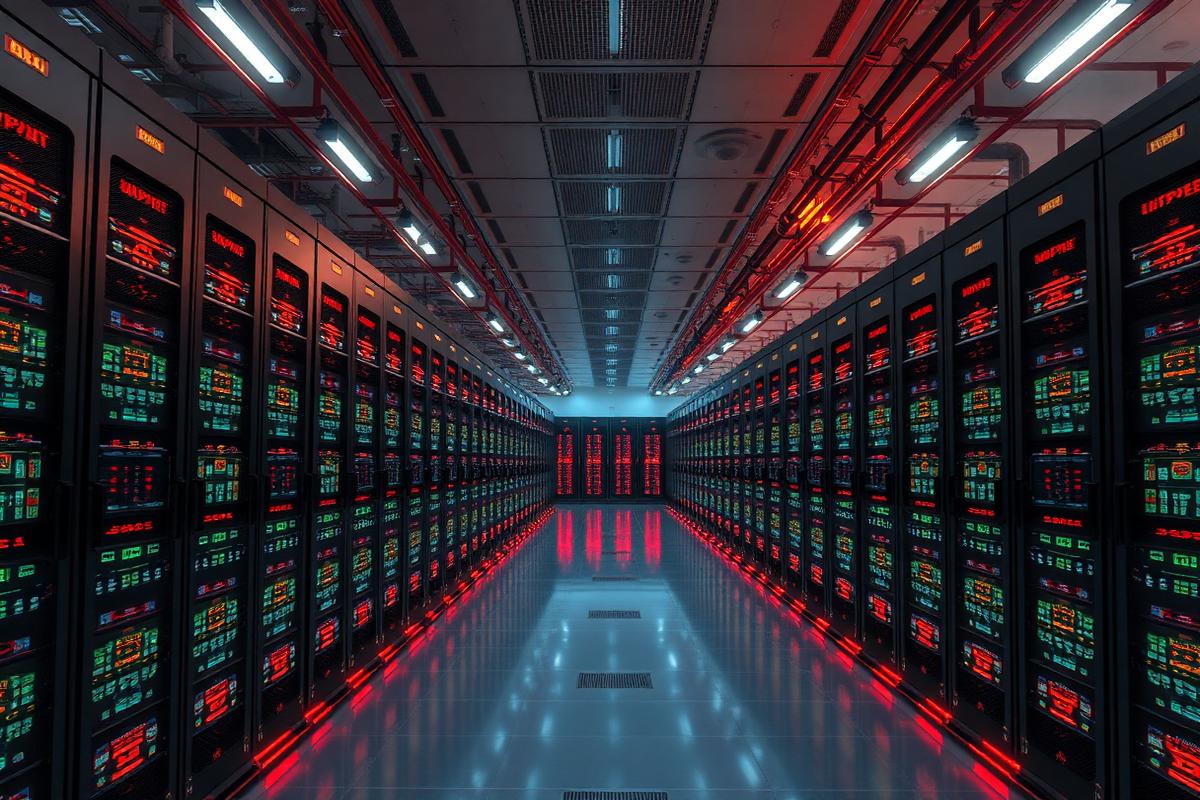
Z.AI finishes building a 1 GW data center that will operate exclusively on semiconductors manufactured in China, completely dispensing with Nvidia.
Z.AI has made major headlines in recent weeks, especially after the launch of its extremely powerful language model GLM-5.2. Formerly known as Zhipu, the company has just finished building a massive 1-gigawatt data center that will run exclusively on semiconductors manufactured in China. To date, it is the most ambitious bid by a Chinese tech startup to completely dispense with Nvidia.
They cannot buy Nvidia chips
Since January 2025, Z.AI has been on the United States Department of Commerce's entity list, preventing it from legally purchasing Nvidia chips. Interestingly, far from slowing it down, the veto has pushed it to build its entire future infrastructure relying solely on domestic suppliers.
The move aligns with Beijing's strategy to reduce its technological dependence on Washington in the midst of the artificial intelligence race.
As much electricity as 750,000 homes
The data center has already begun operating partially and is designed to train and deploy the company's GLM family of models. With a capacity of 1 gigawatt at full performance, the facility could consume as much electricity as that needed by some 750,000 homes, making it one of the largest data centers ever built by a Chinese AI startup.
For now, the company has installed at least 10,000 chips from China there, although there is no information on what proportion of the planned total that figure represents.
All signs point to Huawei
Although it has not been detailed which company supplies the chips, all signs point to Huawei. Z.AI already unveiled its GLM-5.2 model in June, trained entirely with Ascend accelerators and without relying on Nvidia hardware. The model pulled ahead of the rest in open-source rankings such as Design Arena.
The problem is that Chinese chips like the Ascend still perform worse per watt than Nvidia's current Blackwell: in practice, one gigawatt of Chinese power does not equate to the same computing capacity.
The bottleneck is in the factory
SMIC's most advanced and stable process (equivalent to a 7-nanometer node) is already operating above 93% of its capacity, and the shortage of domestically produced HBM memory limits how many accelerators Huawei can assemble, which last year shipped around 812,000 AI chips.
Huawei plans to manufacture about 1.6 million Ascend cores in 2026, enough for about 600,000 chips of its flagship model, the 910C, while Cambricon has set a target of half a million accelerators this year. In short: China can build data centers faster than it is capable of manufacturing the chips needed to fill them.
A sweet moment and a much larger plan
Z.AI is experiencing strong financial momentum: it is on track to reach 1 billion dollars in annual recurring revenue after meeting its sales target for 2026 this month, and has recently bolstered its capital with an IPO in Hong Kong and a subsequent expansion. Its shares closed up by as much as 37%, coinciding with the news of the new data center.
The development is part of a broader plan: Beijing is preparing a five-year investment of about 2 trillion yuan (nearly 295 billion dollars) to build a national network of AI data centers, with at least 80% of the technology coming from Chinese suppliers.
Get KingNews in your inbox
Tech and gaming digest, no noise. Unsubscribe anytime.
Want to send us a news story?
Tell us your story. Our editorial team reviews it and gets back to you.
Would you like to advertise with us?
Write to us and we'll send you ad options and audience data.
More stories
Comercio electrónico · Eventos · Colombia
Feria Effix 2026: Medellín se convierte en la capital del comercio electrónico
Robótica · Inteligencia artificial · Sistemas autónomos
La colmena blindada: robots terrestres que podrían comandar enjambres de drones
Agrotecnología · Inteligencia artificial · Ganadería
La granja autónoma toma forma: IA, drones y robots llegan al campo

Inteligencia artificial · Empresas · Opinión
BMW adelgaza su dirección con IA: ¿ha llegado la hora del gerente artificial supervisado?
Inteligencia física · Agricultura · Robótica industrial
Polybot enseña a un robot a cosechar tomates mirando cómo trabajan los humanos
Inteligencia física · Robótica · Aprendizaje autónomo