
Agrotechnology · Artificial intelligence · Livestock
The autonomous farm takes shape: AI, drones and robots reach the field
2026-10-05 · 9 min read
By Álvaro AbrilCEO de Geniales.co · Director de KingNews.online
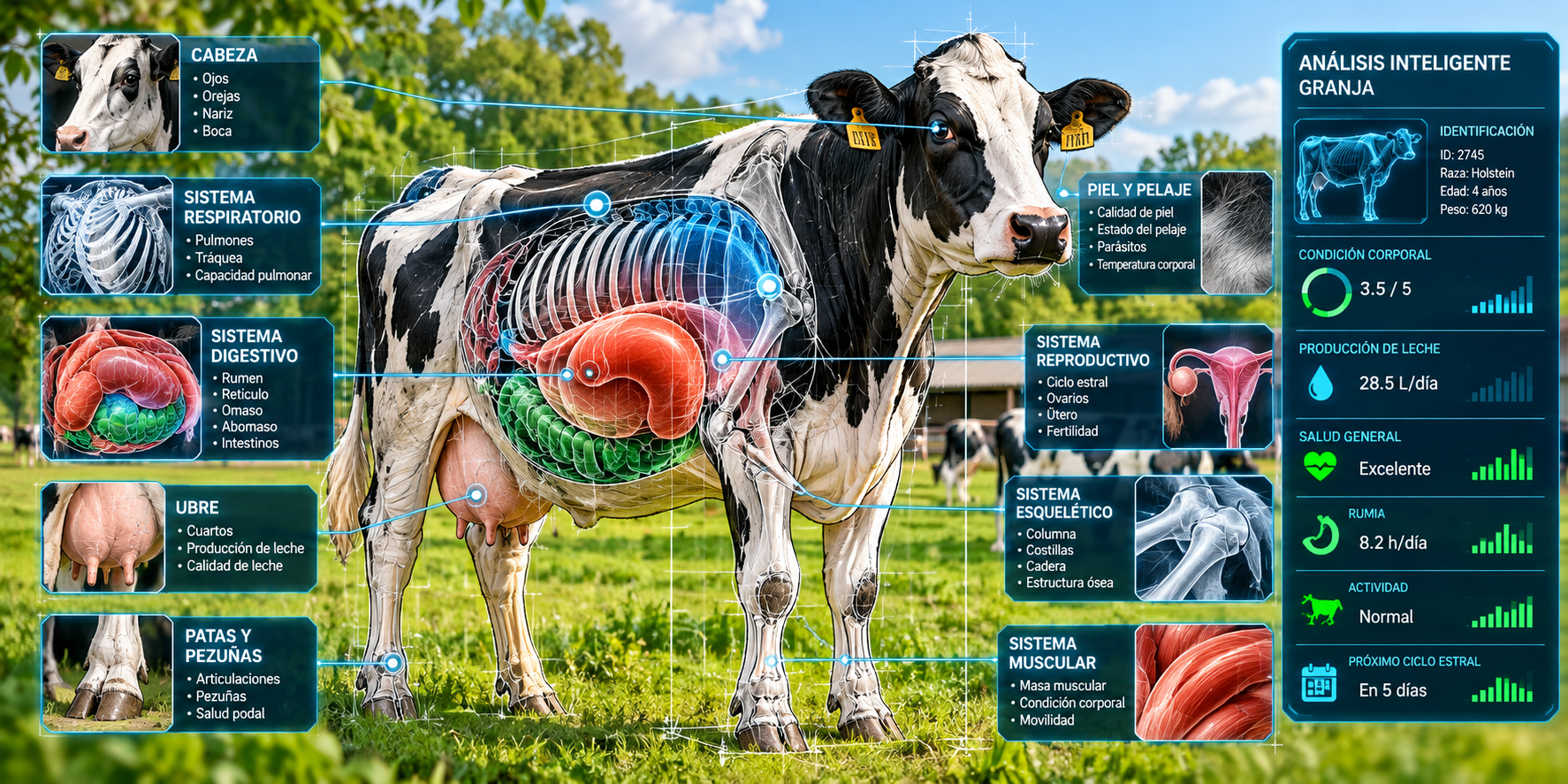
Sensors, artificial vision, drones and robots already automate parts of agricultural work. The fully autonomous farm does not yet exist, but its pieces are beginning to connect under human supervision.
Autonomy Is Not a Switch
Talking about an autonomous farm may suggest a property without people, managed from start to finish by artificial intelligence. That image still belongs to the conceptual realm. What does exist is a growing sum of specialized systems: electronic collars and ear tags, scales, weather stations, milk meters, cameras, milking robots, auto-guided machinery, and management platforms.
Each technology solves one part of the process. The real challenge is connecting them without turning the farm into a collection of incompatible screens. That is where the software layer comes in: gathering data, recognizing relevant changes, ordering priorities, and presenting an understandable recommendation to whoever knows the animals, the crops, and the land.
From Isolated Data to a Useful Alert
A cow that walks less, changes its rumination pattern, reduces production, or runs a higher temperature does not provide a diagnosis on its own. However, the combination of these signals can justify an early checkup. An AI system can compare current behavior with the history of both the animal and the herd, detect a deviation, and notify the manager or the veterinarian.
The potential gain lies in time. An early alert can guide an inspection before the problem becomes obvious, while continuous monitoring makes it possible to evaluate feeding, reproduction, mobility, and welfare with greater context. Technology observes patterns; the professional examines, interprets, and decides.
Which pieces are already working
Automation is not limited to livestock. In agriculture, drones make it possible to monitor plant vigor, water stress, or areas requiring inspection; guided machinery reduces overlaps; and robots can take on repetitive, well-defined tasks. In barns, sensors and cameras help track activity, feeding, milking, and environmental conditions.
Value emerges when an observation leads to a concrete task: checking an animal, adjusting ventilation, confirming a leak, inspecting an area of the crop, or scheduling maintenance. An alarm without context only adds noise; a well-designed application must explain what changed, since when, with what level of confidence, and what the suggested action is.
| Tecnología | Aplicación posible | Decisión humana |
|---|---|---|
| Sensores y aretes | Actividad, rumia, temperatura e identificación | Examinar el animal y definir tratamiento |
| Cámaras e IA | Condición corporal, locomoción y cambios visibles | Validar la alerta y descartar falsos positivos |
| Drones | Recorrido de lotes, mapas e inspección remota | Priorizar la visita y decidir la intervención |
| Robots | Ordeño o tareas repetitivas y delimitadas | Configurar, mantener y detener ante una anomalía |
| Aplicación central | Unificar datos, alertas, órdenes e historial | Autorizar acciones y conservar trazabilidad |
The dashboard must show the farm, not hide it
The more connected an operation is, the more important a shared view becomes. A map or digital twin can locate the event, identify the animal or equipment involved, display the evidence, and record who addressed the recommendation. It is not about decorating data in three dimensions, but about reducing the time between detecting, understanding, and acting.
The application must also work with intermittent connectivity, sync when the signal returns, and maintain clear permissions. The field worker needs to log an update in just a few steps; the veterinarian, review trends; and management, measure costs, productivity, inventory, and compliance without duplicating information.
Geniales.co can build the missing application
The agricultural industry does not always need to purchase another closed platform. Often, it needs an application built around its specific operation: integrating existing sensors and equipment, connecting inventory, ERP, maintenance, and traceability, generating mobile alerts, operating partially offline, and presenting distinct indicators for operators, veterinarians, and executives.
Geniales.co can build these custom applications and transform real agricultural needs into clear digital workflows: from data capture and individual animal tracking to production dashboards, analytics, automation, and artificial intelligence integration. The starting point should not be the available technology, but rather the problem the producer needs to solve.
As a developer, I believe the greatest breakthrough will not be a farm that replaces people, but an operation where no one wastes hours gathering data that the system already holds. Automation should free up time to observe, care, repair, and make better decisions.
Welfare, security, and data ownership
An automated recommendation can be mistaken due to a faulty sensor, incomplete data, or conditions the model has never seen. That is why health decisions, the use of medications, and actions affecting animal welfare must retain professional oversight, escalation protocols, and an effective stop button.
It also matters who controls the farm's information, how long it is retained, and whether it can be transferred to another provider. Interoperability, cybersecurity, and the logging of every change are operational requirements, not afterthoughts. A connected farm that relies on a single service without a contingency plan can gain efficiency and lose resilience at the same time.
The economics will decide how far it goes
Adoption will depend less on technological spectacle than on verifiable return: fewer losses, timely maintenance, better use of feed and water, reduction of hazardous tasks, greater traceability, and faster decision-making. Every automation must be measured against its cost, support, lifespan, and ability to integrate with what already works.
The fully autonomous farm remains a promise. The augmented farm—with people supported by sensors, software, AI, and machines—is already a tangible direction. Its success will depend on technology being reliable, repairable, and useful for those who work every day with the complexity of the living world.
Enlaces
Get KingNews in your inbox
Tech and gaming digest, no noise. Unsubscribe anytime.
Want to send us a news story?
Tell us your story. Our editorial team reviews it and gets back to you.
Would you like to advertise with us?
Write to us and we'll send you ad options and audience data.
More stories

Inteligencia artificial · Empresas · Opinión
BMW adelgaza su dirección con IA: ¿ha llegado la hora del gerente artificial supervisado?
Inteligencia física · Agricultura · Robótica industrial
Polybot enseña a un robot a cosechar tomates mirando cómo trabajan los humanos
Inteligencia física · Robótica · Aprendizaje autónomo
El robot de Skild AI que aprendió a jugar fútbol contra sí mismo durante 140 años simulados

Movilidad eléctrica · Arabia Saudita
Ceer EXOBOT: Arabia Saudita presenta su primer auto eléctrico y quiere construir una potencia automotriz
Inteligencia Artificial · Lenguas · India
¿Puede la IA preservar las lenguas de India? El mapa cultural de sus 121 idiomas

Materiales · Industria textil