
Architecture · Biodiversity · Sustainable Cities
Bee Bricks: The Brick That Turns Every Wall into a Sanctuary for Solitary Bees
2026-11-02 · 6 min read
By Álvaro AbrilCEO de Geniales.co y director de KingNews.online
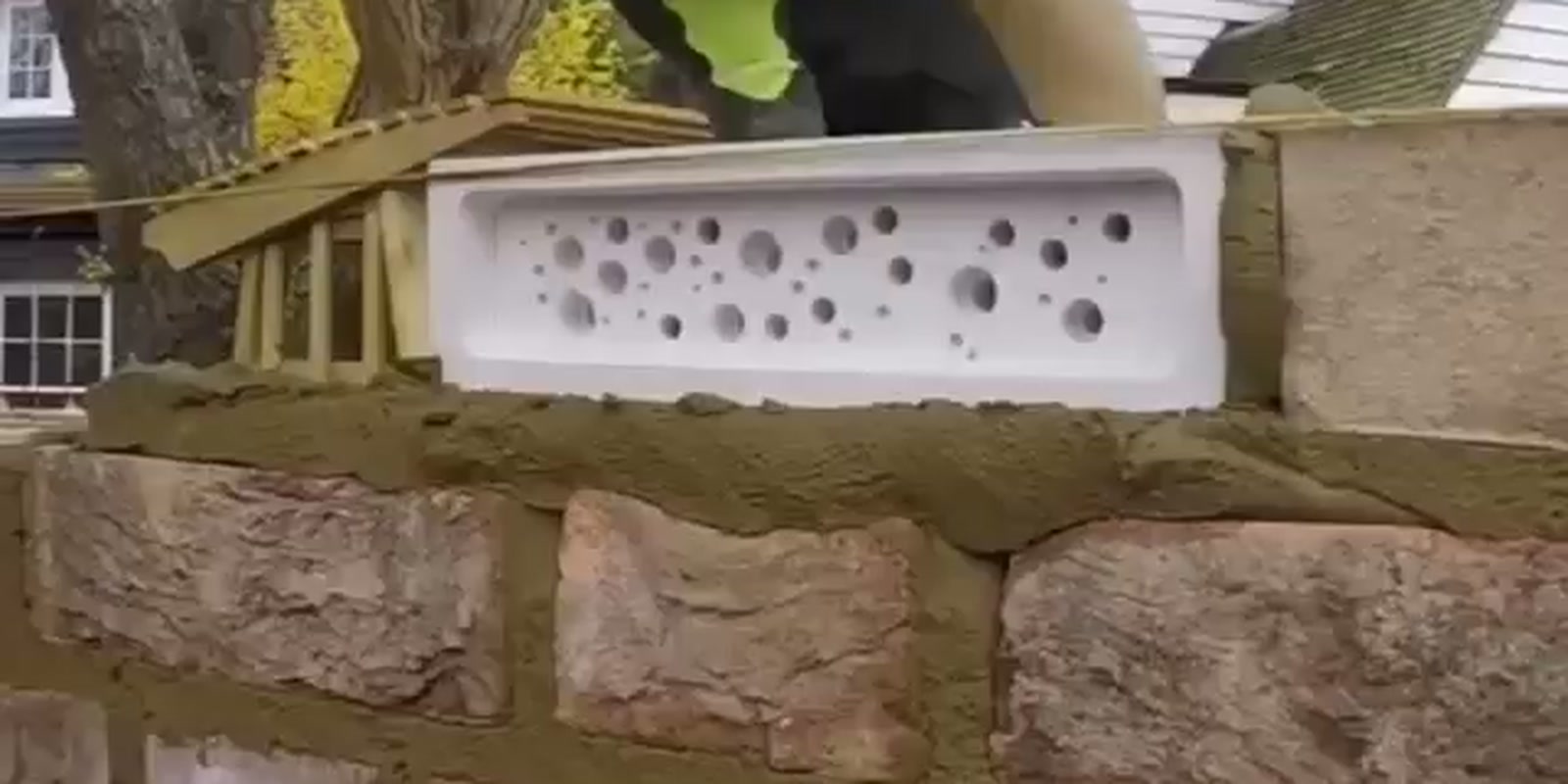
A block the size of a standard brick, with cavities of varying diameters, allows certain solitary bees to nest in urban facades and walls. We explain how it works, what the research says, why Brighton requires it in new developments, and what care it needs to truly help.
A marvel made of concrete and common sense
At first glance, it looks like a decorative brick: a light-colored block with a constellation of holes. But each cavity is an invitation. Bee Bricks are construction elements featuring tunnels of various diameters, designed for certain species of solitary bees to lay their eggs, seal the cells with mud or leaves, and raise the next generation.
The need is real. As cities grow, the dead wood, hollow stems, and bare soil where these insects nest disappear. The Bee Brick proposes turning the problem around: if construction eliminates shelters, let construction itself replace them, integrated into the facade rather than as an added ornament.
Where the idea came from
The product was created by designer Kate Christman and her studio Green&Blue as part of a research project at Falmouth University (United Kingdom) initiated in 2014, in collaboration with bioscientists from the universities of Exeter and Plymouth. The team studied both structural requirements—size, shape, material, cost—and biological ones: which materials and cavities bees prefer.
It is made of cast concrete, largely from locally sourced recycled materials, and has the dimensions of a standard brick, so a bricklayer can install it just like any other. There are about 250 bee species in the United Kingdom; around 90% are solitary, and only a small fraction nest in cavities. The design is aimed at that group—mason bees (Osmia) or leafcutter bees (Megachile), for example. Solitary bees have no queen or hive, rarely sting, and are highly effective pollinators.
Brighton: When biodiversity enters regulations
In 2020, Brighton & Hove City Council approved a planning condition requiring the inclusion of bee bricks and swift boxes in new buildings over five meters in height. It was one of the first times a city turned wildlife habitat into a construction requirement rather than a good intention.
The measure sparked debate. Some scientists warned that, if not cleaned, the cavities could accumulate mites, parasites, or fungi and transmit diseases, and that the depth of the tunnels matters. The conclusion of several experts was nuanced: Brighton represents an excellent research opportunity, but there is still a lack of evidence to mandate its adoption across all cities.
Good design makes the difference
A Bee Brick does not work miracles on its own. To provide a genuine benefit, it is best to follow a few rules: choose a model suitable for local species—in Latin America, native bees differ from European ones—; install it facing the morning sun, at a height of approximately one meter or more and without vegetation blocking the entrances; and avoid areas exposed to direct rain or splashing.
In addition, the shelter needs food nearby: native flowers and plants with nectar and pollen within a few hundred meters, because many solitary bees only fly short distances. And it requires maintenance: inspecting and cleaning the cavities, or choosing designs with replaceable tubes, to avoid turning the nest into a breeding ground for parasites. Without flowers or care, the brick remains merely a symbol.
Buildings for people… and for everything that lives around them
The most interesting aspect of Bee Bricks is not the block itself, but the shift in mindset: designing every building thinking not only of those who will inhabit it, but also of the wildlife that can thrive around it. Along with green roofs, pollinator gardens, bird and bat boxes, and ecological corridors, they are part of an architecture that adds rather than subtracts.
For construction companies, developers, and municipalities in our region, the lesson is clear: integrating biodiversity costs little when planned from the beginning, and it can be measured. Cities with more pollinators are cities with more gardens, more productive urban orchards, and a better quality of life. Would you support making biodiversity a standard part of every building's design? At KingNews.online, we believe it is a question that deserves an answer soon.
Sources and credits
Falmouth University, Bee Brick research project; Christman, Shaw, and Hodsdon, “The Bee Brick: building habitat for solitary bees,” International Journal of Sustainable Design (2022); The Guardian, coverage of Brighton's planning condition and scientists' warnings (January 2022); Alton and Ratnieks, University of Sussex, on the effectiveness of pollinator products (2020).
Writing and analysis: Álvaro Abril for KingNews.online. Video provided for this publication.
Enlaces
Get KingNews in your inbox
Tech and gaming digest, no noise. Unsubscribe anytime.
Want to send us a news story?
Tell us your story. Our editorial team reviews it and gets back to you.
Would you like to advertise with us?
Write to us and we'll send you ad options and audience data.
More stories

Ciencia ficción · Conciencia · Futuros posibles
¿Y si ya estuvieras viviendo otra vida?

Gamificación · Fidelización · Marketing interactivo
GenerativeGames.online: juegos a medida que convierten clientes ocasionales en una comunidad fiel

Opinión · Automatización · Política fiscal
Que los robots también coticen: por qué la automatización necesita reglas fiscales, no prohibiciones

Economía · Inteligencia artificial · Futuro del trabajo
Microsoft ofrece salidas voluntarias a 60.000 empleados: qué hay detrás de la cifra y qué abre para las startups

Comercio electrónico · Eventos · Colombia
Feria Effix 2026: Medellín se convierte en la capital del comercio electrónico
Robótica · Inteligencia artificial · Sistemas autónomos