
Economy · Artificial intelligence · Future of work
Microsoft offers voluntary departures to 60,000 employees: what is behind the figure and what it opens up for startups
2026-10-27 · 5 min read
By Álvaro AbrilCEO de KingNews.online y Geniales.co

According to DW, some 60,000 employees could access Microsoft's new exit program: there are 60,000 confirmed layoffs. Álvaro Abril analyzes the redistribution of tasks, opportunities for startups and how to finance the transition towards automation.
Álvaro Abril’s Opinion: Do Not Halt Automation, but Organize Its Benefits
From my perspective, automation is an unstoppable transformation. AI agents, robots, drones, cobots, robotic arms, autonomous vehicles, and other equipment powered by artificial intelligence will take on increasingly more tasks. I do not believe the answer is trying to prevent it, but rather regulating its use, demanding accountability, and establishing a tax contribution that helps support the workforce transition.
We are not merely facing the replacement of people with machines; we are facing a redistribution of labor. A portion of repetitive work will be automated, while the need for integration, supervision, maintenance, cybersecurity, and specialized expertise continues to grow. That does not erase the impact on those who lose their jobs; it demands investing in professional retraining and real opportunities, not just rhetoric about the future.
I envision a world with many more startups providing services to large corporations: small businesses connecting agents to an ERP, developing industry-specific applications, operating autonomous fleets, auditing decisions, or maintaining robotic systems. An organization may handle fewer internal tasks and contract more external capabilities instead. This possibility does not guarantee that new jobs will offset all those that disappear, but it does open up an entrepreneurial landscape that we must prepare for.
My proposal is to study a tax contribution linked to the business use of automation and its economic benefits, with resources allocated to training, social protection, and productive adaptation. I would not put an arm that prevents an accident and a fleet that replaces an entire operation in the same category. Nor would I count software agents as if they were employees: they can be duplicated or run for seconds. A verifiable base, proportionality, and rules that do not stifle startups are needed.
The decisive question is not whether we allow technology to advance, but how we ensure that its productivity also benefits people. Automating should allow us to work better and create new businesses, not leave underfunded the solidarity mechanisms that today depend largely on human employment. This is my editorial position, not an official explanation of Microsoft's program nor an existing tax regulation.
What Microsoft Announced and What the 60,000 Figure Means
Microsoft has proposed a new voluntary departure program for approximately 60,000 employees in the United States, Canada, India, and the United Kingdom, according to information published by Deutsche Welle regarding the October 26, 2026 announcement. The news describes an incentivized separation offer: those who decide to accept it would receive terms comparable to severance pay.
It is important to distinguish between two figures that are often confused. The 60,000 represents the individuals to whom the offer could be directed, not the number of departures already agreed upon. Nor does it refer to 60,000 layoffs already executed. The outcome will depend on how many eligible employees participate and the applicable terms.
DW notes that the proposal encompasses roles from vice presidents on down, with exclusions for specific groups, including certain data center, sales, and marketing employees. Unlike the U.S. program from April, the new offer would not impose age or tenure requirements. These details come from DW's reporting and should not be construed as an offer available to the entire global workforce.
Lower labor costs, more infrastructure: a tension that warrants attention
The news places the move in a phase of heavy technological investment. DW reports investments of up to US$41 billion in the April-to-June quarter, largely allocated to data centers and AI chips. It also notes a headcount of 223,000 people at the end of June and a year-over-year reduction of 5,000 employees.
These are signs of a reallocation of resources, but they do not prove an automatic link between each departure and an AI agent. According to DW, Microsoft stated in July, referring to the previous program, that those jobs were not being replaced by artificial intelligence. That statement corresponds to the prior plan: it does not allow extrapolating a single cause for all subsequent changes.
The most prudent reading is that companies are reviewing structures, investments, and staffing needs in a rapidly changing economy. AI is part of the context; attributing any workforce reduction solely to it would be to oversimplify decisions that may also stem from costs, strategy, and organization.
Startups can become the new layer of enterprise services
A large company does not need to develop every solution it uses in-house. Specialization opens opportunities for small providers that solve specific problems: integrating inventory and purchasing, supervising customer service agents, detecting equipment failures, managing inspection drones, or verifying the traceability of an automated decision.
The value will lie less in selling a generic AI promise and more in delivering a measurable service: response times, availability, error reduction, security, and human intervention capabilities. Connecting these services with ERP systems and other applications will be just as important as the artificial intelligence model that powers them.
From Geniales.co, this scenario represents a field of application development and integrations for enterprises. At KingNews.online, we see this as a transformation of the productive fabric: new companies can emerge around needs that were previously handled exclusively by internal departments.
There is an indispensable condition: outsourcing should not serve to shift all insecurity onto the worker or the small vendor. Balanced contracts, timely payments, data protection, and training are all part of a sustainable transition.
Are There Taxes on Robots? The South Korean Precedent
There is a frequently cited tax precedent, but it requires precision. South Korea's 2017 reform, with changes taking effect from 2018, reduced tax benefits for certain investments in productivity enhancement and automation. Various analyses referred to it as an indirect "robot tax".
It was neither an invoice for each installed robot nor a tax for each replaced worker. The mechanism consisted of reducing tax credits: certain investments received a smaller tax advantage. The 2017 report from the IBK economic research institute and subsequent studies distinguish that reduction in incentives from a specific levy on the use of machines.
Therefore, there is indeed experience with tax policies that alter the incentive to automate, but it would be inaccurate to claim that South Korea created a universal fee per robot. Nor does this precedent demonstrate the existence today of a global tax, or a general rate applicable indiscriminately to AI agents, drones, cobots, and autonomous vehicles.
How to design a contribution without penalizing innovation
The tax debate must resolve what is taxed and who pays. An industrial robot has an identifiable physical presence; a digital agent can be part of a cloud service used by thousands of companies. Charging per unit can prove arbitrary and encourage name or architecture changes to circumvent the rule.
Among the alternatives that can be discussed are reviewing investment incentives, taxing corporate profits consistently, or establishing sectoral contributions to fund retraining and social protection. These are public policy options, not taxes already announced in Microsoft's case. Any design must examine productivity, employment, competition, and enforcement capacity.
There are also risks: a poorly designed burden could delay safety improvements, favor large corporations capable of absorbing it, or shift operations to other countries. That is why evaluation, international coordination, and mechanisms are needed to ensure that collected funds reach practical training and verifiable job opportunities.
Automating should not exempt anyone from being held accountable for accidents, discriminatory decisions, or security failures. Taxation complements, but does not replace, liability rules and human oversight.
Sources and Credits
Main source: Deutsche Welle (DW), “Microsoft offers voluntary redundancies to 60,000 employees”, reporting on the October 26, 2026 announcement. The original report credits jc and the agencies AFP, EFE, DPA, and AP. The program details and corporate figures in this article are attributed to that coverage.
Fiscal context: 2017 report by the IBK Economic Research Institute on the robot tax debate in South Korea; 2025 academic study on tax reform and investment in automation; European Parliament resolution of February 16, 2017, and Reuters coverage on the rejection of the tax proposal; interview with Bill Gates distributed by the World Economic Forum in 2017.
Writing and original editorial analysis: Álvaro Abril for KingNews.online. The initial opinion reflects his stance on automation, entrepreneurship, and tax contribution; it is separated from the factual reporting. Featured image provided by the author. Links to the consulted sources below.
Enlaces
Get KingNews in your inbox
Tech and gaming digest, no noise. Unsubscribe anytime.
Want to send us a news story?
Tell us your story. Our editorial team reviews it and gets back to you.
Would you like to advertise with us?
Write to us and we'll send you ad options and audience data.
More stories

Gamificación · Fidelización · Marketing interactivo
GenerativeGames.online: juegos a medida que convierten clientes ocasionales en una comunidad fiel

Opinión · Automatización · Política fiscal
Que los robots también coticen: por qué la automatización necesita reglas fiscales, no prohibiciones
Comercio electrónico · Eventos · Colombia
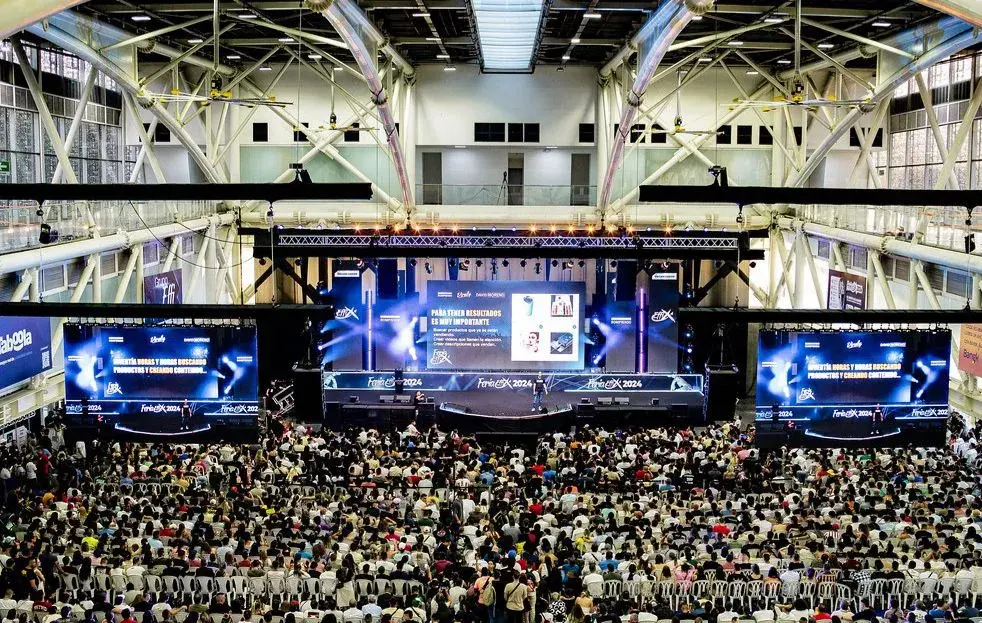
Feria Effix 2026: Medellín se convierte en la capital del comercio electrónico
Robótica · Inteligencia artificial · Sistemas autónomos
La colmena blindada: robots terrestres que podrían comandar enjambres de drones
Agrotecnología · Inteligencia artificial · Ganadería
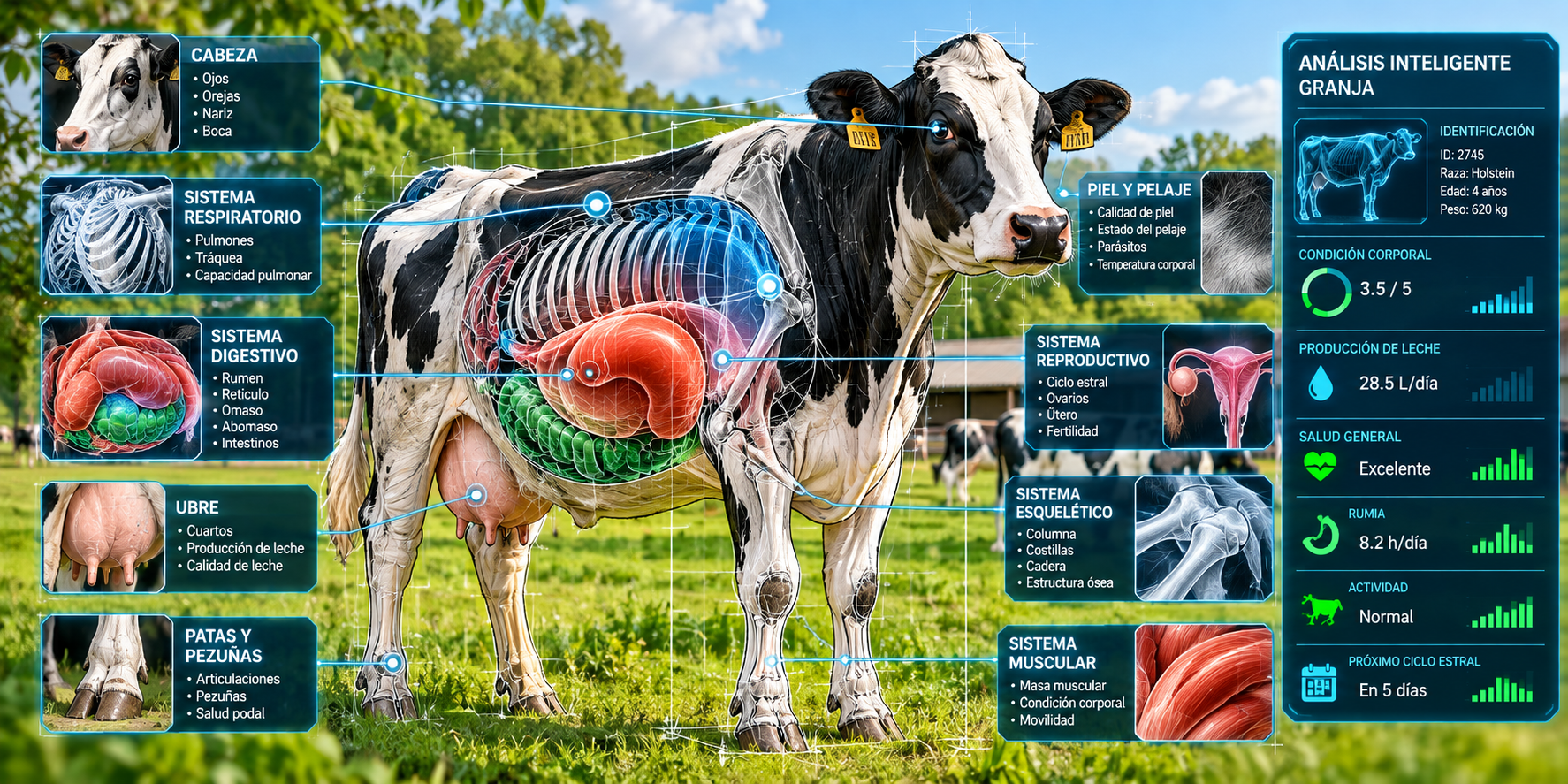
La granja autónoma toma forma: IA, drones y robots llegan al campo

Inteligencia artificial · Empresas · Opinión