
Physical intelligence · Agriculture · Industrial robotics
Polybot teaches a robot to harvest tomatoes by watching humans work
2026-09-25 · 9 min read
By Álvaro AbrilCEO de Geniales.co · Director de KingNews.online
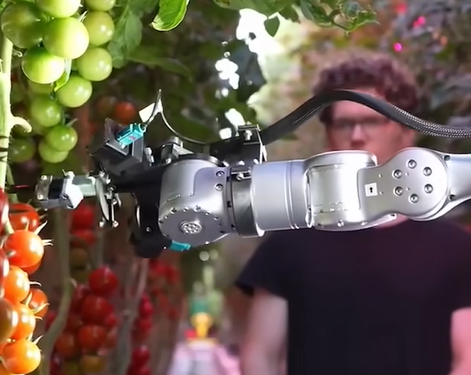
The German startup replaces thousands of handwritten instructions with human demonstrations: its robot observes the cut, learns which cues matter, and applies that knowledge across entire greenhouse rows. The commercial target is set for 2027, but the decisive test will be sustaining precision, speed, and fruit care throughout real workdays.
The Tomato Is Not Programmed: The Work Is Demonstrated
A greenhouse is not a perfectly repeatable assembly line. Two clusters can have different shapes; leaves conceal the cutting point; the light shifts; the fruit moves when the tool touches it. Solving every exception with a new rule consumes engineering time and can result in a fragile system.
Polybot is testing a different approach. An operator carries out the harvest, and the system records the relationship between what the robot sees and the action performed. According to co-founder Martin Kiefel, the machine receives demonstrations of the movement, but no one needs to explicitly describe what a tomato is to it. With enough examples, the model learns regularities: the red color, the geometry of the cluster, and the right moment to cut.
That does not mean the robot understands the tomato like a human. It means it learns an action policy from visual and motor data, rather than relying solely on hand-coded conditions. The difference is significant: teaching new examples can be faster than reprogramming a long list of edge cases.
From a single tomato to full rows in seven months
The timeline reported by Polybot illustrates the speed of development. Laboratory work began in January 2025. In May, the machine autonomously picked its first tomato in a real greenhouse. By December, the company claimed it could reliably navigate and harvest entire rows.
The next planned step is a fully integrated pilot with growers during the summer of 2026. The company aims to deliver the first commercial systems in early 2027. These last two dates are corporate targets, not milestones already achieved, and will depend on sustained performance outside a controlled demonstration.
| Fecha | Hito | Estado |
|---|---|---|
| Enero de 2025 | Inicio del desarrollo en laboratorio | Reportado por Polybot |
| Mayo de 2025 | Primer tomate recogido autónomamente | Demostración de la empresa |
| Diciembre de 2025 | Cosecha de filas completas | Resultado comunicado por la empresa |
| Verano de 2026 | Piloto integrado con productores | Objetivo anunciado |
| Principios de 2027 | Primeros sistemas comerciales | Meta, todavía por verificar |
From the laboratories of Tübingen to the greenhouse
Polybot emerged from the environment of the ELLIS Institute Tübingen and the Max Planck Institute for Intelligent Systems, with support from the Tübingen AI Center and the Cyber Valley network. The initial idea is linked to researcher Wieland Brendel; the founding team includes Martin Kiefel, Claudio Michaelis, Maike Kaufman, and Sebastian Blaes. Georg Martius and Brendel serve as advisors.
In 2025, SPRIND—the German Federal Agency for Disruptive Innovation—awarded the project a seven-month validation contract for approximately 220,000 euros to facilitate the leap from research to company. Upon incorporating as a spin-off in December, the project announced an additional one million euros in backing from SPRIND.
Public funding makes it possible to test a technology that combines computer vision, imitation learning, a robotic arm, and a platform that runs on the cart rails already installed in many greenhouses. Leveraging that infrastructure reduces a practical barrier: farmers would not have to completely rebuild their operation to introduce the machine.
The tomato is a particularly demanding industrial test
Harvesting is not just about locating something red. The machine must approach without hitting other fruits, identify the correct stem, position the tool, cut, and deposit the cluster without damaging it. It must also distinguish ripeness, operate among occlusions, and repeat the cycle for hours with an economically acceptable error rate.
Polybot claims to have achieved roughly human speed and aims to multiply it by 1.5. It is also considering related tasks such as de-leafing, winding, and tying of plants. There are still not enough public metrics regarding fruits per hour, percentage of correct cuts, damage caused, human interventions, energy consumption, or availability over a full workday.
The absence of these figures does not invalidate the visible progress, but it does limit what can be concluded. The video demonstrates a concrete capability; a commercial operation will need to prove repeatability, safety, simple maintenance, and an overall cost that is lower than or competitive with manual labor.
Teaching trades could change the economics of automation
Polybot's interest goes beyond tomatoes as a crop. Many tasks were never automated because their volume did not justify months of programming or because the environment changed too much. If an experienced worker can generate data by teaching the process, the cost of adapting a robot to local variations could drop substantially.
The same logic is relevant to short-run manufacturing, logistics sorting, visual inspection, order fulfillment, and warehouse operations. However, these extensions are an interpretation of the potential of learning by demonstration: Polybot has only presented public evidence in agriculture and has not announced commercial deployments in those other sectors.
| Área | Trabajo candidato | Desafío antes de automatizar |
|---|---|---|
| Agricultura | Cosecha, poda, deshojado y control de malezas | Variabilidad biológica y manipulación delicada |
| Manufactura | Ensamblajes variables y lotes pequeños | Tolerancias, seguridad y control de calidad |
| Logística | Clasificación y preparación de pedidos | Objetos desconocidos y ritmos de operación |
| Inspección | Recorridos y detección visual de anomalías | Falsos negativos y trazabilidad |
| Almacenes | Manipulación y reposición | Convivencia segura con personas |
Worker knowledge must not disappear within the model
Learning through observation makes the practical experience of those who know the crop valuable. It also raises questions: who decides which demonstrations are correct, how that knowledge is compensated, what happens when a bad practice enters the data, and who is accountable when the system fails.
From Geniales.co and KingNews.online, we see here a shift in the interface between humans and machines. For decades, automating meant translating a trade into formal instructions. Physical intelligence proposes another possibility: having the expert demonstrate the work and allowing the system to extract a strategy. The programmer does not disappear; their role shifts toward data, objectives, validation, boundaries, and safety.
The real breakthrough will not be a robot cutting a bunch in front of a camera. It will be producers without a large robotics team being able to teach it new varieties, greenhouses, and tasks without starting each project from scratch.
What Polybot Would Have to Prove Before 2027
The company has built a compelling narrative and a visible demonstration: learning from humans, rapid progression, and the use of existing agricultural infrastructure. To turn it into a product, it will need to publish or allow verification of data on productivity, damage, error recovery, maintenance, safety, return on investment, and performance across varieties and seasons.
If it passes that test, its greatest contribution may not be a tomato harvester. It could be a method for bringing automation to complex tasks where coding every step was always too slow and costly. In that scenario, the most useful language for programming an industrial robot would simply be showing it how the work is done.
Enlaces
Get KingNews in your inbox
Tech and gaming digest, no noise. Unsubscribe anytime.
Want to send us a news story?
Tell us your story. Our editorial team reviews it and gets back to you.
Would you like to advertise with us?
Write to us and we'll send you ad options and audience data.
More stories
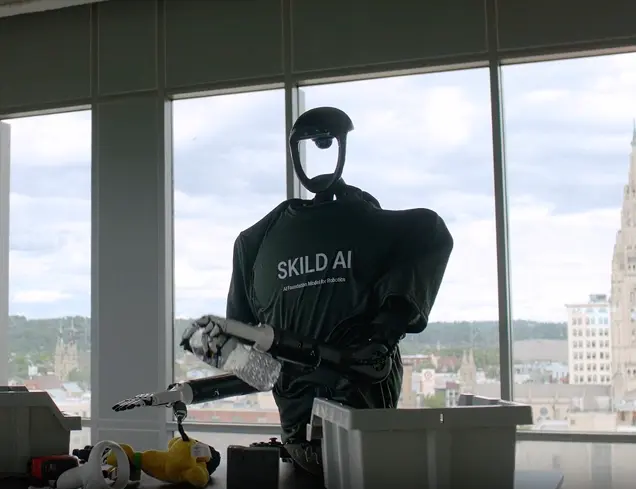
Inteligencia física · Robótica · Aprendizaje autónomo
El robot de Skild AI que aprendió a jugar fútbol contra sí mismo durante 140 años simulados

Movilidad eléctrica · Arabia Saudita
Ceer EXOBOT: Arabia Saudita presenta su primer auto eléctrico y quiere construir una potencia automotriz
Inteligencia Artificial · Lenguas · India
¿Puede la IA preservar las lenguas de India? El mapa cultural de sus 121 idiomas

Materiales · Industria textil
Del bambú a una camiseta suave: la transformación que no siempre nos cuentan
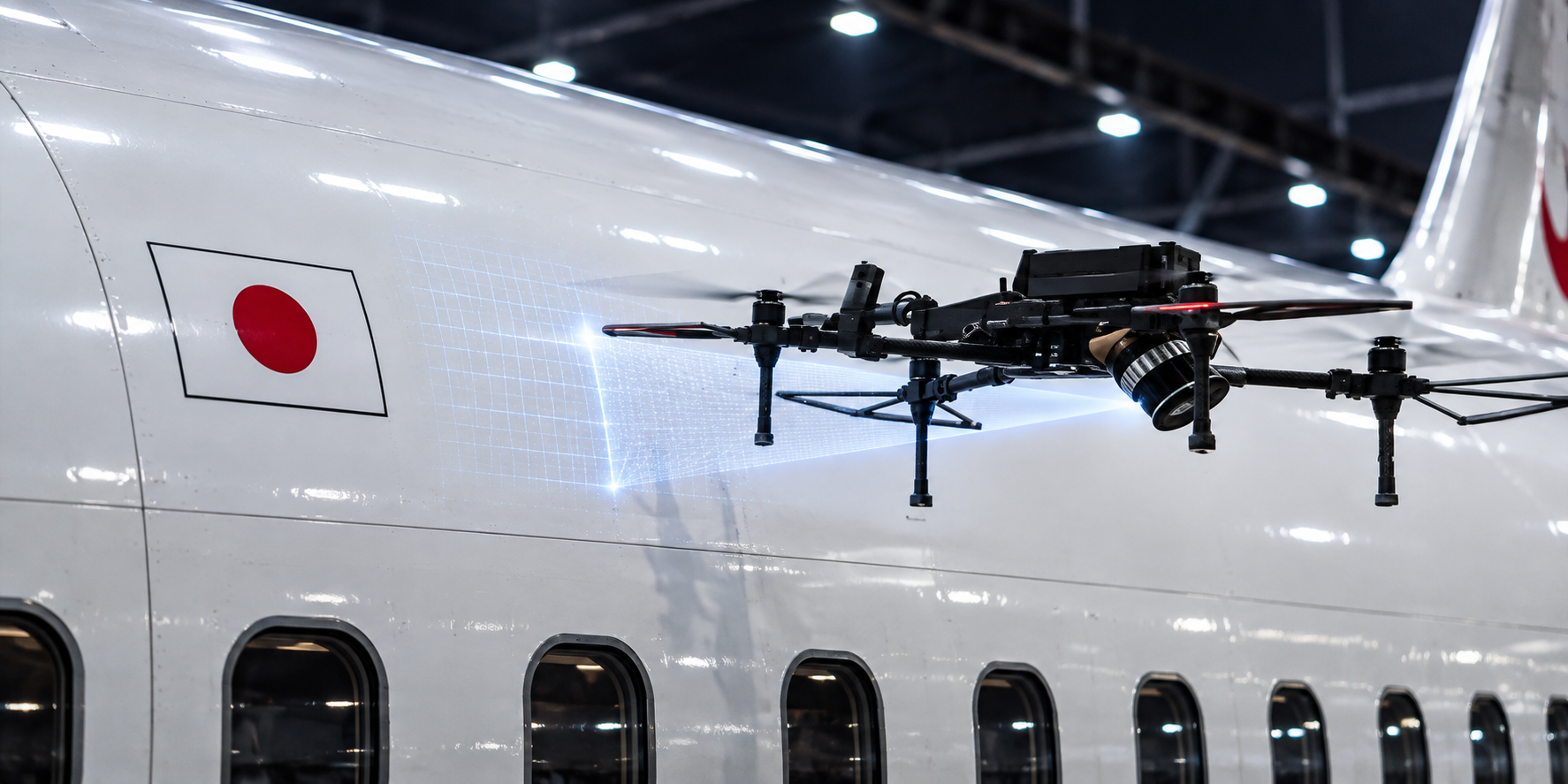
Aviación · Robótica
Japan Airlines pone ojos autónomos sobre sus aviones

Gaming · Guía de compra