Digital culture
Sargon Tarot: the four methods of consultation of an oracle inspired by Mesopotamia
2026-07-26 · 7 min read
By Álvaro AbrilCEO · Geniales.co
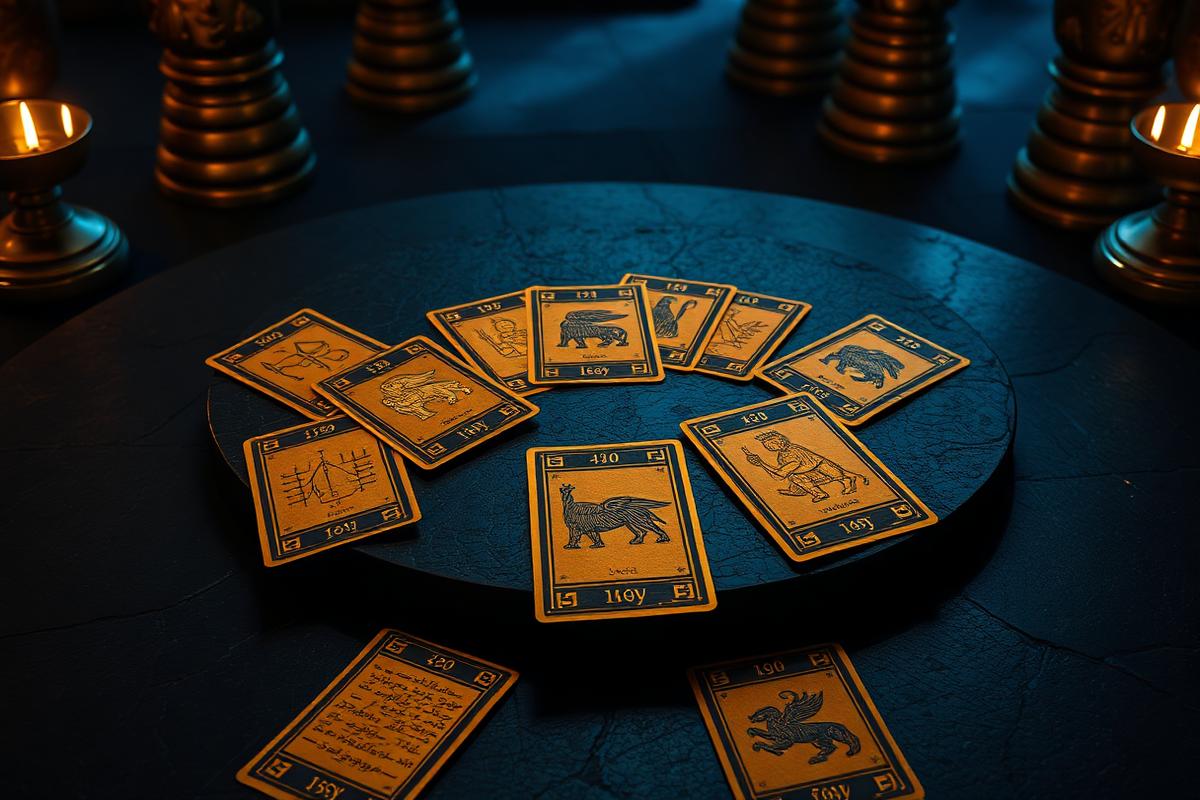
A digital oracle that recovers Sumerian and Babylonian symbology and combines it with generative AI for daily, three-card, five-card cross and personalized readings.
Before the European tarot there were millennia of oracular practices in Mesopotamia: hepatoscopy, Babylonian astrology, lists of omens on clay tablets. That is the material from which Tarot Sargón starts.
The project takes the name of Sargon of Akkad, the first empire builder in recorded history, and transfers his symbolic universe—the winged lamassu, the lion of Ishtar, the ziggurat, cuneiform writing—to a digital deck with its own logic.
Method 1: the letter of the day
The simplest and most used query. A single card that sets a focus of attention for the day: it does not predict, it guides. It works as an exercise in deliberate attention, closer to a reflective journal than to divination.
The interpretation is generated with AI based on the extracted symbol and the context that the user wants to provide, with a sober tone and without absolute promises.
Method 2: three cards
Past, present and future in its classic version; or situation, obstacle and path in its practical version. Three positions are enough to construct a readable causal narrative.
It is the method that best balances depth and time: two minutes of reading that leaves a usable mental structure to make a decision.
Method 3: the cross of five
Five positions: the core of the issue, the force that drives it, the force that holds it back, what is not being seen and the probable outcome if nothing changes.
Here the oracle behaves as a tool of analysis: it forces us to name the conflict, its tensions and the blind spot. Many users use it for professional rather than sentimental decisions.
Method 4: Custom reading
The user asks his question in natural language and the system puts together an ad hoc spread: he chooses how many cards, what each position means and how to articulate the final synthesis.
It is the modality where generative AI provides the most value, because it adapts the oracle structure to the problem instead of forcing the problem into a fixed template.
Design, not superstition
Tarot Sargon is explicitly presented as a cultural and introspection experience, not as a prediction service. That honesty of framing is what allows it to be used as a piece of serious entertainment and as an example of applied generative narrative.
Technically, it is a progressive web application with illustrated cards, memory of previous runs and readings in several languages, within the same ecosystem of generative games that we develop at Geniales.
Enlaces
Get KingNews in your inbox
Tech and gaming digest, no noise. Unsubscribe anytime.
Want to send us a news story?
Tell us your story. Our editorial team reviews it and gets back to you.
Would you like to advertise with us?
Write to us and we'll send you ad options and audience data.
More stories

Comercio electrónico · Eventos · Colombia
Feria Effix 2026: Medellín se convierte en la capital del comercio electrónico
Robótica · Inteligencia artificial · Sistemas autónomos
La colmena blindada: robots terrestres que podrían comandar enjambres de drones

Agrotecnología · Inteligencia artificial · Ganadería
La granja autónoma toma forma: IA, drones y robots llegan al campo

Inteligencia artificial · Empresas · Opinión
BMW adelgaza su dirección con IA: ¿ha llegado la hora del gerente artificial supervisado?
Inteligencia física · Agricultura · Robótica industrial
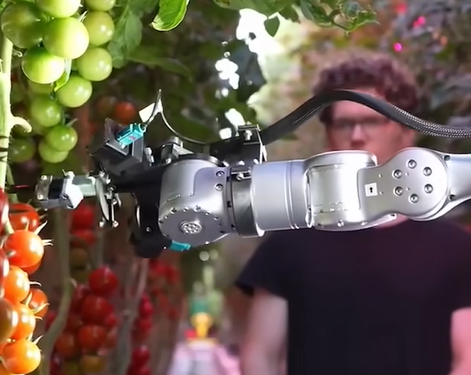
Polybot enseña a un robot a cosechar tomates mirando cómo trabajan los humanos

Inteligencia física · Robótica · Aprendizaje autónomo