
Technology
PsiQuantum wants to build an impossible quantum computer: one that calculates with particles of light
2026-07-25 · 6 min read
By Redacción KingNews
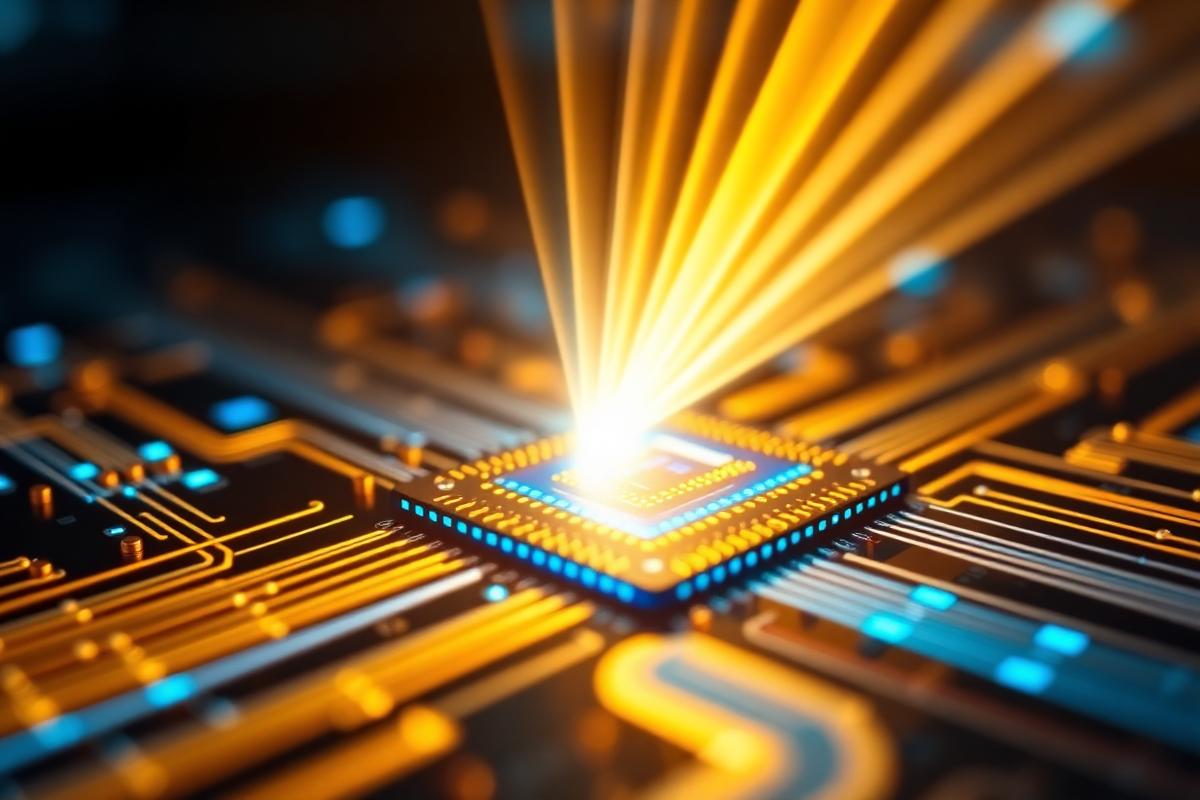
In south Chicago, a 6,000-square-meter building is rising that could house the world's first fault-tolerant, utility-scale quantum computer, built with photons.
In South Chicago, on the site of a former steel plant, a 6,000-square-meter building is being erected that could house the world's first fault-tolerant, utility-scale quantum computer. Behind it is PsiQuantum, a Palo Alto startup that has decided to bet on something almost no one else is trying: building the machine using particles of light.
Quantum computing has spent decades promising to solve problems that would take today's computers millions of years, from drug design to the simulation of materials or batteries. The obstacle is that existing prototypes remain too small and error-prone to be useful. PsiQuantum wants to skip that intermediate phase and build a large-scale machine directly.
Why photons and not superconductors
While IBM, Google, or Amazon build their qubits with superconducting circuits, and other companies turn to trapped ions or atoms, PsiQuantum has opted for photons. It is a path it shares practically only with Canada's Xanadu among the major players in the sector.
The advantage, according to Terry Rudolph, one of the four physicists who founded the company in 2016, is that photons maintain their quantum state for a long time. The drawback is that they barely interact with each other, something essential for computing. The solution came in 2001, when a team from Los Alamos and the University of Queensland demonstrated that these interactions could be simulated by sending light through a network of mirrors and detectors. That breakthrough is the foundation of all of PsiQuantum's technology.
A Million Qubits All at Once
Unlike its competitors, which gradually scale up increasingly larger systems, PsiQuantum has focused its efforts on developing all at once the technology and manufacturing capacity required for a system of around one million physical qubits. Its CEO, Victor Peng, admits that the company needs to have nearly the entire process operational before building the first machine, which extends initial timelines but, he argues, subsequently makes replication on a larger scale easier.
To achieve this, it manufactures its own chips alongside GlobalFoundries, etched with channels that direct light instead of wires, and incorporates barium titanate, a ceramic compound that allows photons to be switched with high precision. Another advantage of the optical approach: only the detectors measuring the photons need to be cooled near absolute zero, whereas other technologies require cooling the entire system.
Political Backing and Timelines
Illinois Governor JB Pritzker has championed the Illinois Quantum and Microelectronics Park with $500 million in state funding to turn the area into a quantum hub comparable to what Stanford Research Park was for Silicon Valley. Pritzker does not want to repeat the mistake of the 1990s, when talent trained at Illinois universities—such as the creators of the Mosaic web browser, among others—ended up leaving for California. The park already has six other committed tenants, including IBM, and will host a DARPA testing program.
PsiQuantum has raised more than $1 billion in funding and received $100 million from the U.S. government through the CHIPS Act, in addition to building a second facility in Brisbane, Australia. The company has tempered its promises: it no longer claims it will have a functional quantum computer by 2027, but rather "operational" facilities, with cooling systems ready for hardware installation.
DARPA, which has been evaluating its technology since 2023, is increasingly optimistic about the sector: its current lead, Micah Stoutimore, has gone so far as to state that someone could build a quantum computer of useful scale by around 2033. If PsiQuantum meets its deadlines, Chicago could be the place where that machine is born.
Get KingNews in your inbox
Tech and gaming digest, no noise. Unsubscribe anytime.
Want to send us a news story?
Tell us your story. Our editorial team reviews it and gets back to you.
Would you like to advertise with us?
Write to us and we'll send you ad options and audience data.
More stories
Comercio electrónico · Eventos · Colombia
Feria Effix 2026: Medellín se convierte en la capital del comercio electrónico
Robótica · Inteligencia artificial · Sistemas autónomos
La colmena blindada: robots terrestres que podrían comandar enjambres de drones
Agrotecnología · Inteligencia artificial · Ganadería
La granja autónoma toma forma: IA, drones y robots llegan al campo

Inteligencia artificial · Empresas · Opinión
BMW adelgaza su dirección con IA: ¿ha llegado la hora del gerente artificial supervisado?
Inteligencia física · Agricultura · Robótica industrial
Polybot enseña a un robot a cosechar tomates mirando cómo trabajan los humanos
Inteligencia física · Robótica · Aprendizaje autónomo