Advertising · Major accounts
PepsiCo awards Publicis Groupe its $1.7 billion global media account
2026-09-04 · 7 min read
By Álvaro AbrilCEO de Geniales.co · Director de KingNews.online
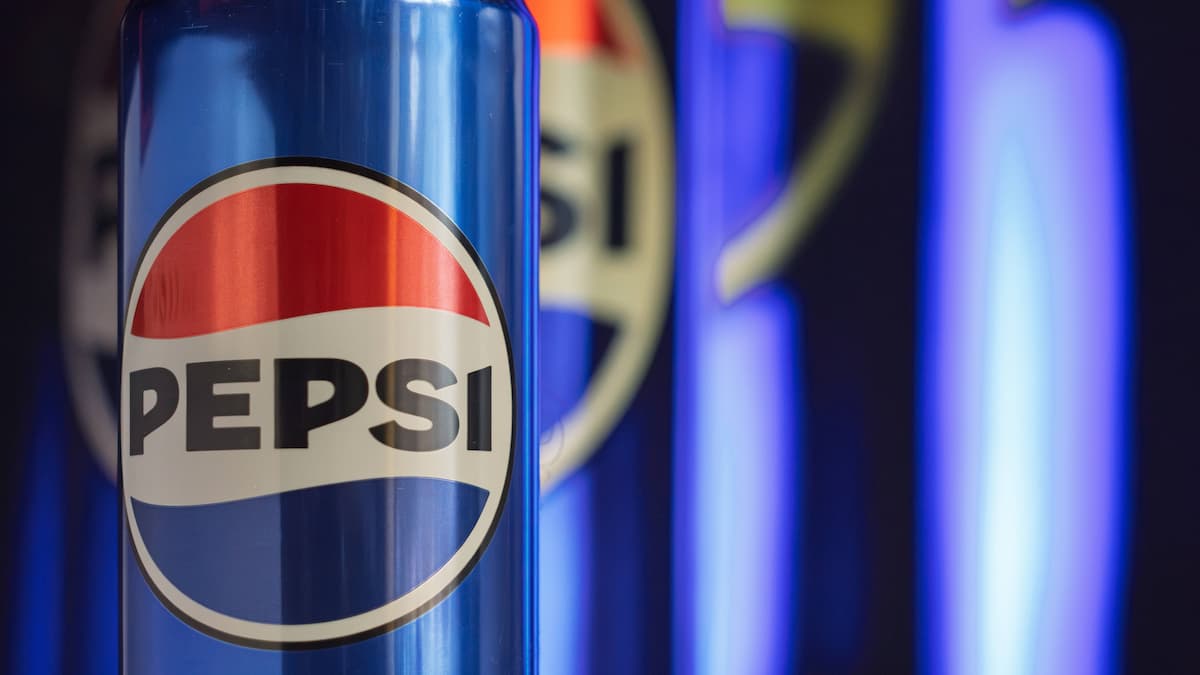
After more than two decades with OMD, the owner of Pepsi, Gatorade, Lay's, and Doritos consolidates all its media planning and buying with the French group under a single model called "One PepsiCo", built on data and artificial intelligence.
An Account That Changes Hands After Twenty Years
PepsiCo has named Publicis Groupe as its exclusive global media partner, concluding a review that the industry had been tracking for months. The account had been held by OMD, Omnicom's media agency, for more than two decades, and involves around $1.7 billion in global advertising spend according to COMvergence estimates for 2025.
The assignment covers strategy, planning, activation, connected identity, and technology, brought together under one roof. PepsiCo has internally dubbed it the "One PepsiCo" model: a single operator across all brands and all markets, rather than the patchwork of agencies and regional contracts that was customary for companies of this scale.
This refers to a portfolio that includes Pepsi, Gatorade, Lay's, Doritos, Quaker, Tropicana, and Mountain Dew, among others. When such a portfolio is consolidated under a single partner, it is not just the provider that changes: it changes the way the company measures, buys, and learns from every dollar invested.
What PepsiCo Actually Bought
What has been awarded is not a discount on media space purchases. It is an infrastructure. Publicis's commitment involves building a media model supported by PepsiCo's first-party data, connected identity, and artificial intelligence applied to real-time investment decision-making.
That detail explains why major consumer brands are rewriting their contracts. Media buying is no longer a volume negotiation, but rather a data engineering challenge: identifying cookieless audiences, attributing sales in retail media, adjusting creative assets by market, and doing so with a latency that no manual structure can withstand.
PepsiCo also arrives in the midst of an internal transformation, driven by an efficiency program aimed at freeing up resources and concentrating investment on fewer fronts with greater impact. Consolidating media under a single partner is a decision aligned with that goal: less coordination, less duplication, and more aggregate buying power.
Publicis Groupe: the leader that reshaped the industry
Publicis Groupe was founded in Paris in 1926 and today is the world's largest communications group by net revenue, ahead of Omnicom, WPP, and Interpublic. It employs more than 100,000 people across a hundred countries and operates under a model that the company itself calls "The Power of One": a single team per client that integrates creativity, media, data, and technology instead of selling them separately.
Its competitive advantage was not born from a campaign, but from two strategic acquisitions that seemed expensive at the time and are seen today as visionary: Sapient in 2015, which gave it consulting and digital transformation muscle, and Epsilon in 2019, which provided it with one of the largest consumer identity databases on the planet. While the competition debated whether an advertising holding company should be a technology company, Publicis had already paid to become one.
On that foundation, it built Marcel, its internal AI platform, and a data layer connecting more than 2.3 billion consumer profiles globally. That asset is exactly what an advertiser like PepsiCo needs when looking to measure a launch in Mexico and Indonesia using the same logic.
The numbers underpinning leadership
Publicis has spent several consecutive financial years outperforming its rivals in organic growth and expanding its operating margin, a rare feat in an industry that has weathered a decade of price pressure. In parallel, its competitors have opted for the route of scale: Omnicom and Interpublic announced their merger in an attempt to match size, a rather telling sign of who is setting the pace.
The PepsiCo award also comes with an unusual move: Publicis withdrew from the review of the Coca-Cola account. Giving up one of the world's largest brands to secure the other is a positioning decision, not a revenue one. A group that can afford to choose its clients is, by definition, a group in a position of strength.
For the rest of the market, the message is uncomfortable but clear: the consolidation of global accounts rewards those who possess first-party data, proprietary technology, and the ability to operate across a hundred markets with the same standard. Fewer and fewer players meet all three conditions.
| Grupo | Sede | Posición | Activo diferencial |
|---|---|---|---|
| Publicis Groupe | París | Líder por ingresos netos | Epsilon, Sapient y la plataforma Marcel |
| Omnicom | Nueva York | Segundo, en fusión con IPG | Red creativa y OMD en medios |
| WPP | Londres | En reestructuración | GroupM, la mayor red de compra de medios |
| Interpublic (IPG) | Nueva York | Integrándose en Omnicom | Acxiom en datos de consumidor |
| Dentsu | Tokio | Líder en Asia | Fuerte posición en Japón y APAC |
What this deal teaches any advertiser
The first lesson is that the criteria for selecting an agency has shifted its focus. Fifteen years ago, choices were made based on creativity and bargaining power; today, selection is driven by data quality and the ability to activate it. PepsiCo did not hire an agency: it hired a decision-making architecture.
The second is that consolidation comes with a cost that should be faced head-on. Putting the entire global budget into a single partner simplifies operations and improves pricing, but it reduces competitive tension and concentrates risk. It works when the advertiser retains ownership of its data and measurement; it becomes dangerous when it does not.
And the third, which I apply at Geniales.co with our entertainment and gaming clients: artificial intelligence in marketing does not perform because of the model you use, but because of the cleanliness of the data you feed into it. Publicis has spent ten years and several billion dollars building that data. That is the real reason it won PepsiCo's 1.7 billion.
What to watch in the coming months
First, the transition timeline. Migrating a global account of this size from OMD will take months and usually brings friction in secondary markets; a quiet execution would be the best possible news for Publicis.
Second, the ripple effect. Major reviews tend to arrive in clusters, and several consumer goods advertisers have contracts nearing expiration. If Publicis strings together consecutive wins, the gap with second place becomes structural.
Third, Omnicom's response. Losing PepsiCo after twenty years hurts in revenue, but it hurts even more as a market signal just as it integrates Interpublic. The merger will soon have to demonstrate that size also buys technology, and not just scale.
Enlaces
Get KingNews in your inbox
Tech and gaming digest, no noise. Unsubscribe anytime.
Want to send us a news story?
Tell us your story. Our editorial team reviews it and gets back to you.
Would you like to advertise with us?
Write to us and we'll send you ad options and audience data.
More stories
Comercio electrónico · Eventos · Colombia
Feria Effix 2026: Medellín se convierte en la capital del comercio electrónico
Robótica · Inteligencia artificial · Sistemas autónomos
La colmena blindada: robots terrestres que podrían comandar enjambres de drones
Agrotecnología · Inteligencia artificial · Ganadería
La granja autónoma toma forma: IA, drones y robots llegan al campo

Inteligencia artificial · Empresas · Opinión
BMW adelgaza su dirección con IA: ¿ha llegado la hora del gerente artificial supervisado?
Inteligencia física · Agricultura · Robótica industrial
Polybot enseña a un robot a cosechar tomates mirando cómo trabajan los humanos
Inteligencia física · Robótica · Aprendizaje autónomo