
Papua New Guinea · Land-Based
Papua New Guinea could open its first casino 20 years after legalizing it
2026-08-28 · 6 min read
By Redacción KingNews
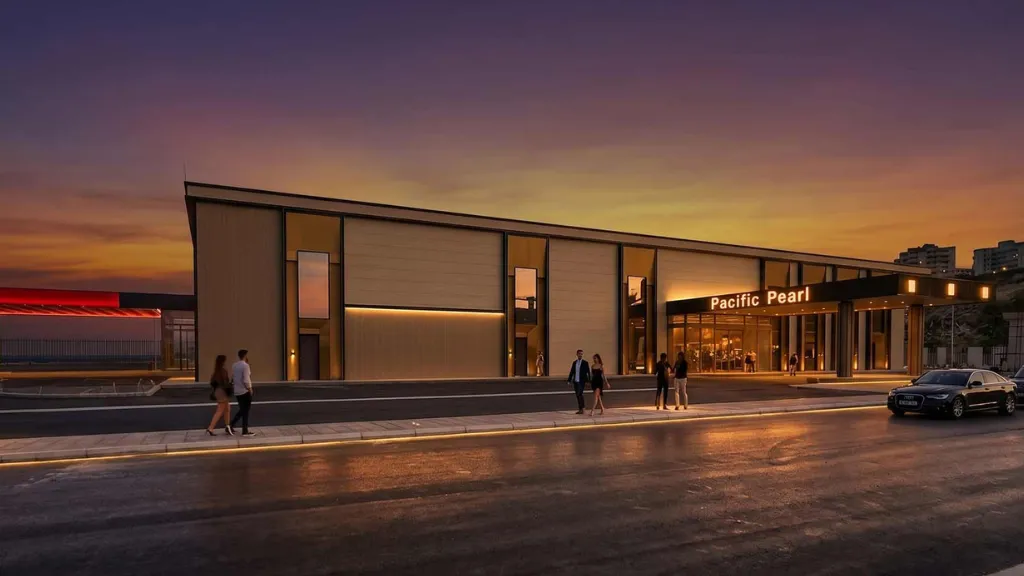
Pacific Pearl, located in the Paga Hill Special Economic Zone next to Port Moresby, is already hiring staff to open this year with around 100 machines and 20 tables. The license is still pending. The country has had a legal framework since the Gaming Control Act of 2007 and has never had an operational casino.
Papua New Guinea is close to opening its first land-based casino, nearly 20 years after establishing the sector's legal framework with the Gaming Control Act of 2007. The project is called Pacific Pearl and occupies a waterfront property in the Paga Hill Special Economic Zone, next to Port Moresby.
The property has already begun posting job vacancies as preparations advance for a possible opening this year. The not-so-minor detail: it still needs a license before it can operate.
Who is behind it: Chinese capital and an operator with an Asian track record
The project is backed by a Chinese developer involved in Paga Hill, acting as the main investor. Fortuna Investments comes in as a co-investor and will manage the casino, having already expressed confidence in securing the license.
Fortuna is no newcomer: it has experience across several Asia-Pacific markets, including Tiger Palace in Nepal and Jade Club in Hanoi, Vietnam. In other words, an operator accustomed to frontier markets, young regulatory frameworks, and a predominantly expatriate clientele—exactly the profile of Port Moresby.
Twenty years of law without a single casino
The island nation has had casino legislation since 2007, but an operational establishment has never existed. The first concrete proposal emerged in 2021 and clashed with strong opposition from churches and community groups that cited the risk of addiction and social harm. Added to this were economic constraints and regulatory caution, which dragged out implementation for another decade and a half.
The local market, however, is not virgin territory: an estimated 5,000 slot machines operate in small premises across the country, and horse racing betting is well established among local gamblers.
An integrated resort in a compact version
In its first phase, Pacific Pearl includes a restaurant, around 100 gaming machines, and 20 tables, as well as several VIP rooms. The Chinese expatriate community in Port Moresby appears as one of the primary customer groups.
The casino will also target local players and Australian and New Zealand expatriates working in the country, particularly those in the oil and gas sector, a segment with high spending power and few nightlife alternatives in the city.
| Componente | Fase 1 |
|---|---|
| Máquinas de juego | ~100 |
| Mesas de juego | 20 |
| Salas VIP | Varias |
| Food & beverage | Restaurante |
| Fase 2 proyectada | Hasta 5 veces el tamaño inicial |
The government's argument: repatriating gambling spending
The development was discussed by Prime Minister James Marape in 2024, when construction began. Marape stated that the government's focus is on attracting international visitors and residents, including Asian visitors for whom gambling is a common recreational activity.
He also argued that a licensed casino would offer a regulated space in response to concerns over casino-style gambling that already takes place unchecked in private settings. And there is a fiscal calculation behind it: the government hopes to reduce overseas gambling spending by high-net-worth Papua New Guineans, who currently travel to Cairns, Brisbane, Singapore, and Manila to gamble.
Rugby, tourism, and a much larger second phase
The schedule coincides with a broader development cycle in Port Moresby and the planned arrival of the PNG Chiefs into the National Rugby League in 2028 as the competition's 19th team. That entry drives recurring travel, hotel bookings, and Australian visitors.
The initial operation is planned as a relatively small first phase, but the project could expand substantially, with a second stage potentially five times larger. Long-term plans include turning the site into a broader tourist destination and eventually adding a Leagues Club alongside the casino.
In parallel, another group is reportedly evaluating operating a casino on a floating vessel off the country's coast, although that project is at a very early stage and far from being operational.
KingNews Reading
Papua New Guinea is a textbook case of why a law does not create a market. It had a regulatory framework since 2007 and lacked the three things that actually matter: capital willing to take on country risk, an operator with experience in frontier markets, and sufficient social legitimacy to survive pressure from the churches.
The design of Phase 1 is sensible: 20 tables and 100 machines is a scale that can be sustained solely by oil and gas expats, the Chinese community, and rugby tourism, without relying on an international flow that does not yet exist. The real risk is not demand, it is the license: hiring staff before having it is an aggressive bet on the regulator's political will.
Enlaces
Get KingNews in your inbox
Tech and gaming digest, no noise. Unsubscribe anytime.
Want to send us a news story?
Tell us your story. Our editorial team reviews it and gets back to you.
Would you like to advertise with us?
Write to us and we'll send you ad options and audience data.
More stories
Robótica · Inteligencia artificial · Sistemas autónomos
La colmena blindada: robots terrestres que podrían comandar enjambres de drones
Agrotecnología · Inteligencia artificial · Ganadería
La granja autónoma toma forma: IA, drones y robots llegan al campo

Inteligencia artificial · Empresas · Opinión
BMW adelgaza su dirección con IA: ¿ha llegado la hora del gerente artificial supervisado?
Inteligencia física · Agricultura · Robótica industrial
Polybot enseña a un robot a cosechar tomates mirando cómo trabajan los humanos

Inteligencia física · Robótica · Aprendizaje autónomo
El robot de Skild AI que aprendió a jugar fútbol contra sí mismo durante 140 años simulados

Movilidad eléctrica · Arabia Saudita