
Electric Mobility · Saudi Arabia
Ceer EXOBOT: Saudi Arabia Unveils Its First Electric Car and Aims to Build an Automotive Powerhouse
2026-09-22 · 9 min read
By Álvaro AbrilCEO de Geniales.co · Director de KingNews.online
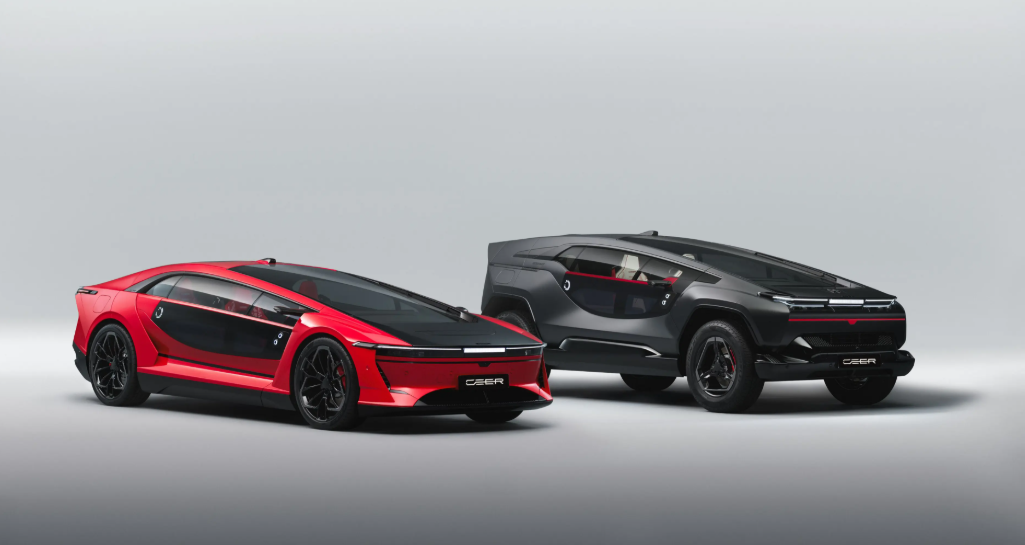
The first Saudi automotive brand showcased an 850-horsepower electric sedan and SUV, featuring a 112 kWh battery and an 800-volt architecture. But the real product is bigger than the vehicles: a factory, a supplier chain, and the attempt to convert oil capital into industrial capacity.
Two cars; a declaration of industrial independence
On September 21, 2026, Saudi Arabia unveiled the first vehicles from Ceer, its national automotive brand: an electric sedan and an electric SUV called EXOBOT. The milestone matters because the kingdom had never managed to establish its own manufacturer, despite previous talks with companies such as Jaguar Land Rover and Toyota.
Ceer was created in November 2022 as a joint venture between the Public Investment Fund (PIF) and Hon Hai Precision Industry, the Taiwanese firm globally known as Foxconn. BMW licenses component technology, and Foxconn participates in developing the electrical and electronic architecture. It is not, therefore, an isolated car designed for an exhibition: it is a network of imported knowledge that Saudi Arabia is seeking to transform into local engineering, manufacturing, and employment.
The name Ceer originates from Arabic and conveys the idea of moving forward. EXOBOT represents the first chapter of a projected portfolio of seven models by 2030, spanning compact and midsize vehicles with various powertrain options. Initial sales in Saudi Arabia are scheduled for early 2027; pricing has not yet been disclosed.
A Luxury Electric Vehicle with Supercar Figures
The inaugural edition utilizes three electric motors, all-wheel drive, 850 horsepower, and 1,000 Nm of torque. Ceer announces an acceleration from 0 to 100 km/h in 2.6 seconds for the sedan and 2.9 seconds for the SUV. The 112 kWh battery offers, under the brand's declared NEDC cycle, up to 670 kilometers for the sedan and 560 kilometers for the SUV.
The 800-volt electrical architecture supports charging from 10% to 80% in under 30 minutes. The steer-by-wire system eliminates the conventional mechanical connection between the steering wheel and the wheels, reduces steering travel from 400 to 160 degrees, and pairs with rear-wheel steering and adaptive air suspension.
Inside, a 48-inch curved 8K resolution display spans the dashboard, accompanied by a 10.4-inch central screen and another for rear passengers. The voice assistant understands Arabic and English. These are striking figures, though range, charging, and thermal performance will have to be confirmed in independent testing and under the real heat of the Gulf.
| EXOBOT First Edition | Sedán | SUV |
|---|---|---|
| Potencia y torque | 850 hp · 1.000 Nm | 850 hp · 1.000 Nm |
| Aceleración 0–100 km/h | 2,6 segundos | 2,9 segundos |
| Batería | 112 kWh | 112 kWh |
| Autonomía anunciada (NEDC) | Hasta 670 km | Hasta 560 km |
| Carga rápida | 10–80% en menos de 30 min | 10–80% en menos de 30 min |
Saudi design, global suppliers
EXOBOT aims to be recognizable before having to explain its passport. Its doors open upward, the laminated windshield extends over the roof, and the front incorporates 32 light bars—a reference to 1932, the year of the unification of the Kingdom of Saudi Arabia. The wheels feature a triangular motif inspired by openings in traditional Al-Lahuj architecture.
Beneath that local identity lies a deliberately international value chain. Hyundai Transys agreed to supply integrated electric powertrain systems that combine the motor, inverter, and reduction gear. Rimac Technology is involved in high-performance systems, while Siemens, ABB, Schuler, and Dürr provide automation and industrial machinery.
The strategy makes no secret of this combination: Saudi Arabia does not intend to invent every single part of the car in four years, but rather to attract proven technology, integrate it on Saudi territory, and master the complete process. The difference between assembling foreign components and building an indigenous industry will depend on how much knowledge, engineering, and supply capacity truly remain in the country.
A US$1.3 Billion Factory Facing the Red Sea
The vehicles will be produced at the Ceer Manufacturing Complex, located within King Abdullah Economic City, north of Jeddah and near King Abdullah Port. The complex covers more than one million square meters of land, with approximately 530,000 square meters of covered area and facilities for stamping, body shop, paint, assembly, logistics, water treatment, and testing.
The initial construction contract was valued at 5 billion Saudi riyals, around US$1.3 billion. Ceer also purchased the land for 359 million riyals. The location enables the reception of components via the port and the clustering of suppliers around the plant, an essential condition for the project to be more than just a final assembly line.
The economic roadmap presented upon Ceer's founding projects up to 30,000 direct and indirect jobs, more than US$150 million in foreign direct investment, and an US$8 billion contribution to Saudi GDP by 2034. These are targets, not completed outcomes, and will need to be measured against production, sales, exports, and effective local content.
Oil Is Financing the Car That Aims to Surpass It
The paradox is evident: one of the largest oil exporters is using its sovereign wealth fund to enter electric mobility. However, Vision 2030 does not seek to abandon crude oil overnight; it seeks to use its revenue to create sectors capable of generating income, technology, and employment when the relative weight of hydrocarbons decreases.
Ceer shares industrial territory with Lucid Motors, which is also backed by the PIF. The bet is that two distinct projects—one international and the other domestic—will help train technicians, develop suppliers, logistics, charging infrastructure, and an industrial culture. The automobile acts as a driving industry: metallurgy, polymers, electronics, software, maintenance, and financial services grow around a manufacturing plant.
From Geniales.co and KingNews.online, we see in Ceer a case of technological sovereignty through integration: the country purchases access to global capabilities, but attempts to capture their learning and turn it into a regional platform. Success will not be decided by the spectacle of the launch, but by the ability to manufacture thousands of consistent units, provide service, and sustain a competitive supply chain.
The decisive test begins when orders open
Ceer arrives at the most competitive moment in the history of the electric vehicle. Chinese manufacturers are cutting costs and shortening development cycles; traditional brands are defending scale, distribution, and reputation; and the premium segment demands stable software, manufacturing quality, and flawless after-sales service. Having 850 horsepower turns heads, but it guarantees neither volume nor margin.
There is also a timeline that calls for caution. In 2022, there was talk of vehicles being available starting in 2025; subsequent announcements pushed production toward 2026, and the current launch schedule places the first deliveries in 2027. It is an understandable rescheduling for a factory built from scratch, but it demonstrates the distance between unveiling a prototype and stabilizing an industrial operation.
The EXOBOT has already accomplished its first mission: making it visible that Saudi Arabia wants to manufacture and not just import. Now come the tough questions: price, homologation, real-world range, production speed, quality, local content, and demand outside the Saudi market. If it answers them well, Ceer will not merely be the kingdom's first electric car; it will be the nucleus of a new regional automotive economy.
Enlaces
Get KingNews in your inbox
Tech and gaming digest, no noise. Unsubscribe anytime.
Want to send us a news story?
Tell us your story. Our editorial team reviews it and gets back to you.
Would you like to advertise with us?
Write to us and we'll send you ad options and audience data.
More stories
Inteligencia Artificial · Lenguas · India
¿Puede la IA preservar las lenguas de India? El mapa cultural de sus 121 idiomas

Materiales · Industria textil
Del bambú a una camiseta suave: la transformación que no siempre nos cuentan
Aviación · Robótica
Japan Airlines pone ojos autónomos sobre sus aviones

Gaming · Guía de compra
Cómo elegir el monitor táctil correcto para una máquina de casino

Pagos Digitales · Biometría
Alipay+ GlassPay: pagar con la mirada desde unas gafas inteligentes

Inteligencia Artificial · Empresas