
Engineering · Artificial Intelligence
No-code and AI in mechanical engineering: when describing a part is enough to design it
2026-09-06 · 10 min read
By Álvaro AbrilCEO de Geniales.co · Director de KingNews.online
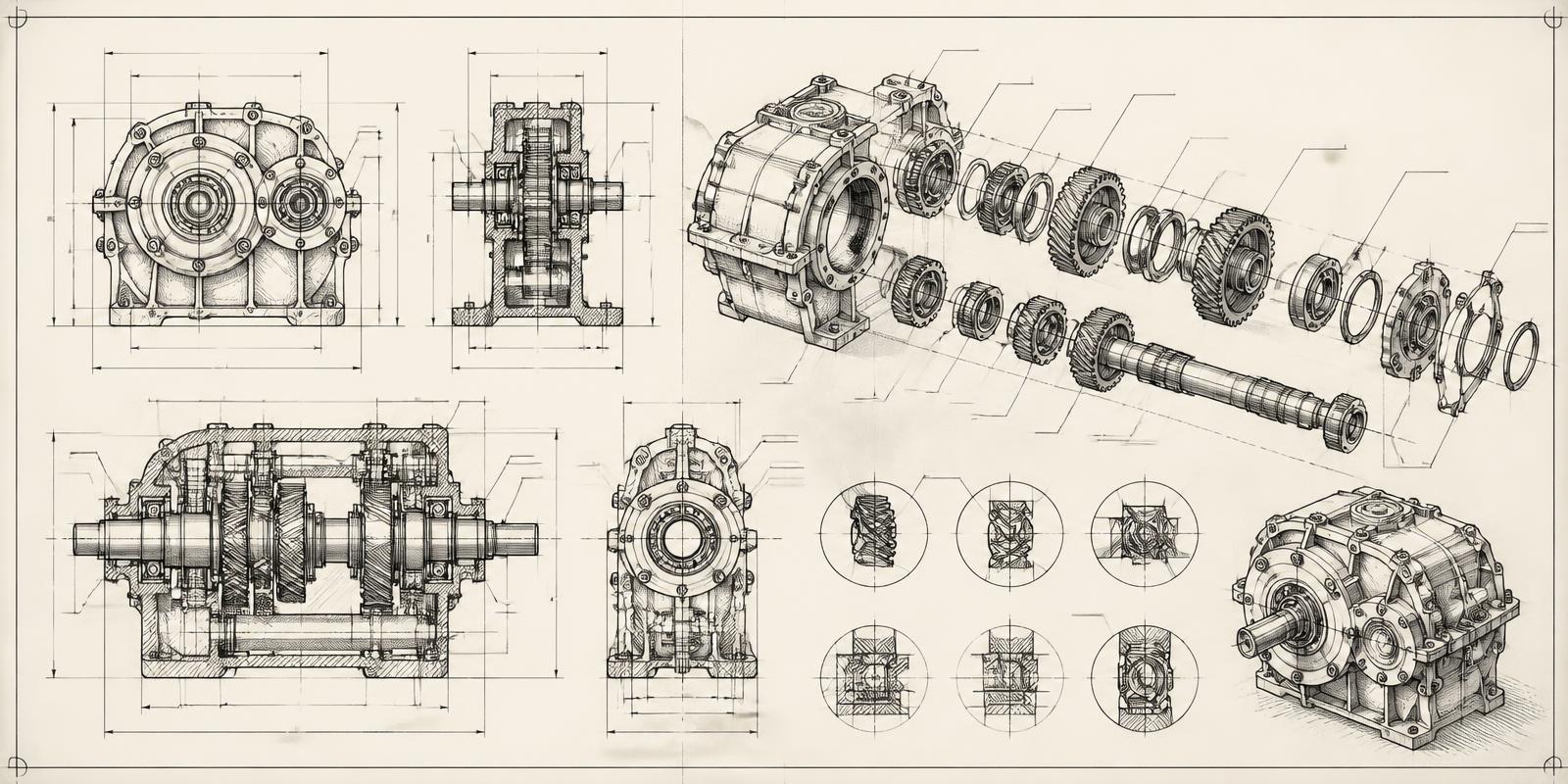
A new generation of tools converts natural language into production-ready parametric geometry. CAD ceases to be a craft with a years-long learning curve and becomes a technical conversation between the engineer and a machine that understands tolerances, materials, and stresses.
The bottleneck was never the idea, it was the tool
Any mechanical engineer recognizes the scene: a clear idea in mind, a sketch worked out in two minutes on paper, and then three days spent fighting feature trees, sketch constraints, broken references, and failed rebuilds. The design was ready from the start; what was missing was translating it into the software.
Historically, that translation cost has been the barrier to entry for computer-aided engineering. Mastering a parametric CAD suite requires between one and three years of sustained practice, and that time is spent learning the logic of a program rather than the physics of a mechanism.
The wave of no-code tools powered by artificial intelligence targets precisely that point. They do not aim to replace the engineer's judgment; they aim to eliminate the friction between having that judgment and materializing it into geometry.
Text-to-CAD: How It Really Works
The emerging technical pattern does not generate meshes or point clouds, but parametric code. The language model interprets the description—"spur gear, module 2, 24 teeth, 20 mm face width, 12 mm through-hole with DIN 6885 keyway"—and produces a sequence of modeling operations executed by a geometric kernel.
The difference is crucial: the result is an editable solid with an operation history and modifiable parameters, not a frozen object. The engineer can change the number of teeth and the entire assembly rebuilds itself. It is real CAD, generated through conversation.
Platforms like CortexCAD work directly in the browser, converting text into parametric geometry exportable to STEP, STL, OBJ, or GLB for 3D printing and CNC machining. Pinak targets full assemblies—spur, helical, and bevel gears, as well as gear trains with correct gear ratios—while Archgen focuses on production geometry with real-time simulation.
A second group does not replace CAD; it copilots it. MecAgent positions itself as a copilot for existing mechanical software, and Otto, by FastenAI, automates the most tedious parts of the trade inside Onshape: creating views, dimensioning, and generating hole callouts from a single instruction. DesignXGenie integrates the assistant directly into the modeling environment: you select a face and request a chamfer via voice or text.
| Enfoque | Qué hace | Para quién |
|---|---|---|
| Texto a CAD | Genera geometría paramétrica desde una descripción | Prototipado rápido, piezas nuevas |
| Copiloto en CAD | Automatiza operaciones dentro de la suite existente | Equipos con flujo consolidado |
| Automatización de planos | Vistas, cotas y callouts automáticos | Oficinas técnicas y documentación |
| Diseño generativo | Optimiza forma según cargas y material | Aligeramiento estructural, fabricación aditiva |
| Simulación asistida | Prevalida esfuerzos y térmica en el navegador | Validación temprana antes del FEA formal |
Democratizing does not mean trivializing
It is worth stating clearly: the fact that a tool generates a part in thirty seconds does not make anyone an engineer. The model can produce a gear that is geometrically perfect yet functionally useless if the module, material, or heat treatment are poorly chosen.
What is being democratized is access to the tool, not technical judgment. And that is where the true value lies: the maintenance technician who needs a custom bracket, the entrepreneur who wants to validate a physical product, the teacher assembling educational material, or the industrial designer who has not mastered parametric CAD can all move forward without depending on a work queue in the technical department.
For the senior engineer, the effect is different but just as significant: they stop spending 70% of their time on repetitive mechanical tasks and dedicate it to what only they can do—defining requirements, selecting materials, interpreting simulation results, and responsibly signing off on a design—.
The limits that are real today
These tools still fail in large assemblies with hundreds of interdependent components. Constraint consistency between parts, interference checking, and configuration management remain the territory of well-handled traditional CAD.
Nor do they resolve regulatory traceability. A drawing heading to manufacturing requires dimensional and geometric tolerances correctly assigned according to ISO 1101 or ASME Y14.5, specified surface finishes, and a documented revision chain. AI proposes; legal responsibility remains human and signed.
And there is the matter of intellectual property: uploading proprietary geometry to a cloud platform requires scrutinizing the terms of service. Several of these tools explicitly emphasize that they do not train on customer data, and that clause should be a purchasing requirement, not a minor detail.
The Parallel with Software Development
What is happening in mechanical engineering already happened in programming. Code assistants did not eliminate developers: they eliminated mechanical tasks and elevated the conversation toward architecture, security, and performance. The programmer who mastered syntax lost their advantage; the one who understands systems multiplied it.
The same realignment is approaching the workshop and the technical office. Value is shifting from "I know how to use the software" to "I know what needs to be designed, with what material, under what loads, and through what manufacturing process." It is excellent news for anyone who truly understands engineering.
At Geniales.co, we see this same pattern every day while building technical platforms for companies: we integrate AI models into custom applications with React 19, TypeScript, TanStack, and PostgreSQL, ensuring that business knowledge stays within the software rather than depending on an individual mastering an interface. A product configurator, a technical quote generator, or a design validation dashboard are precisely the kind of tools that turn accumulated experience into a corporate asset.
How to Get Started Without Breaking Anything
The sensible recommendation is not to migrate the entire technical department at once, but rather to open a parallel track. Start with low-criticality parts: brackets, templates, tooling, housings, and adapters. Compare the generated result against the handcrafted design and measure the actual time saved.
Second step: automate documentation. Generate views, dimensions, and bills of materials with an assistant and review them manually. This is where the effort-to-benefit ratio is highest and the risk is lowest.
Third: establish a mandatory validation protocol. No AI-generated geometry should reach manufacturing without a review by a responsible engineer, tolerance verification, and, where applicable, finite element analysis. Speed is only an advantage if it does not come at the cost of rework or a part failing in service.
Enlaces
Get KingNews in your inbox
Tech and gaming digest, no noise. Unsubscribe anytime.
Want to send us a news story?
Tell us your story. Our editorial team reviews it and gets back to you.
Would you like to advertise with us?
Write to us and we'll send you ad options and audience data.
More stories

Comercio electrónico · Eventos · Colombia
Feria Effix 2026: Medellín se convierte en la capital del comercio electrónico
Robótica · Inteligencia artificial · Sistemas autónomos
La colmena blindada: robots terrestres que podrían comandar enjambres de drones
Agrotecnología · Inteligencia artificial · Ganadería
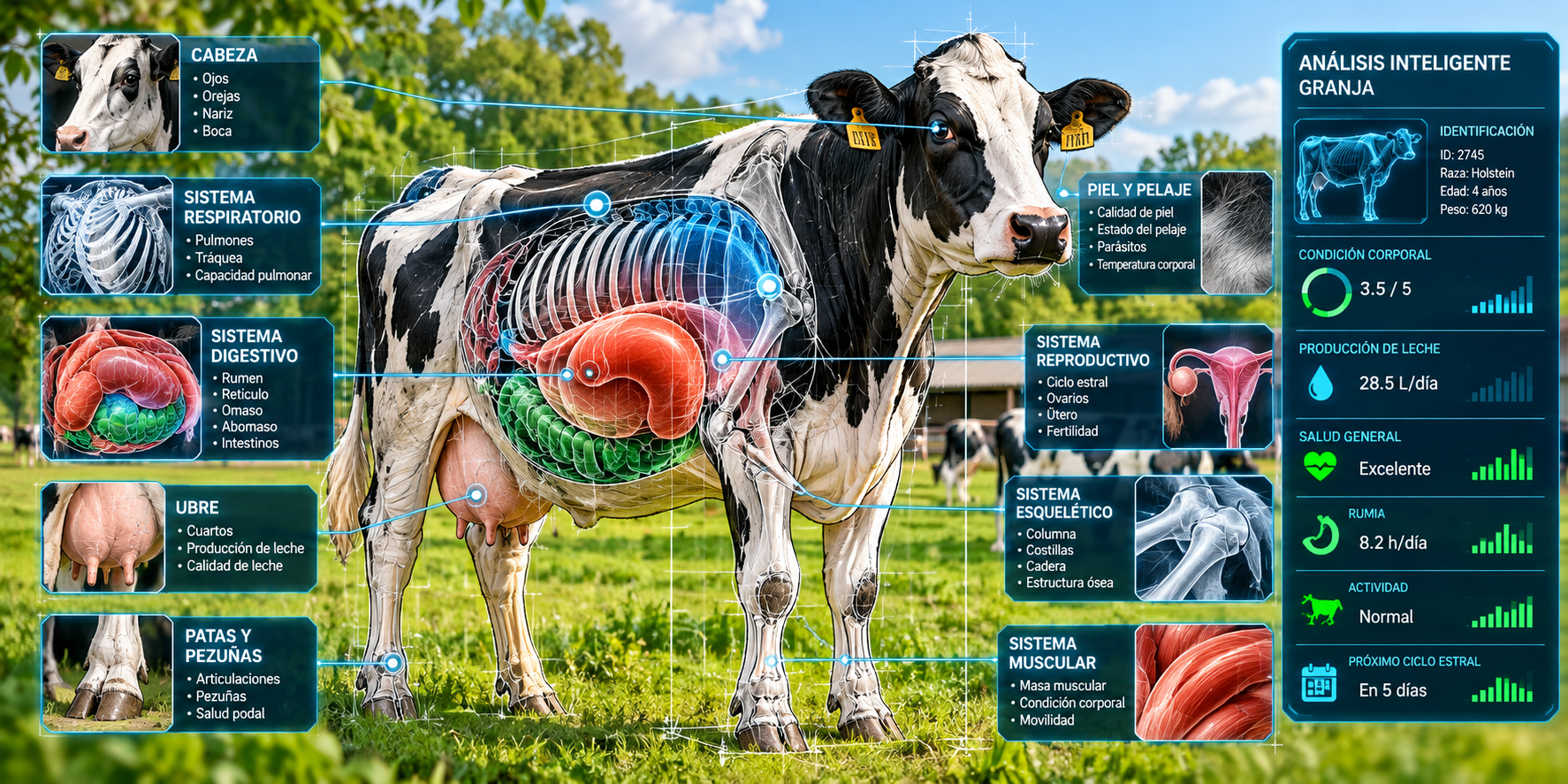
La granja autónoma toma forma: IA, drones y robots llegan al campo

Inteligencia artificial · Empresas · Opinión
BMW adelgaza su dirección con IA: ¿ha llegado la hora del gerente artificial supervisado?
Inteligencia física · Agricultura · Robótica industrial
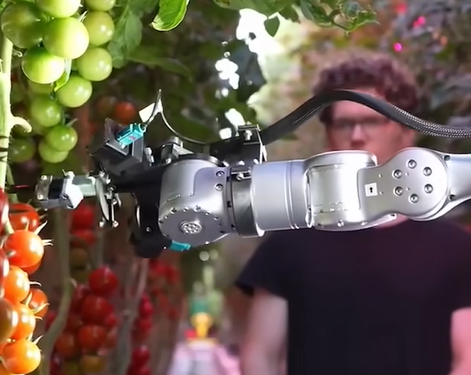
Polybot enseña a un robot a cosechar tomates mirando cómo trabajan los humanos
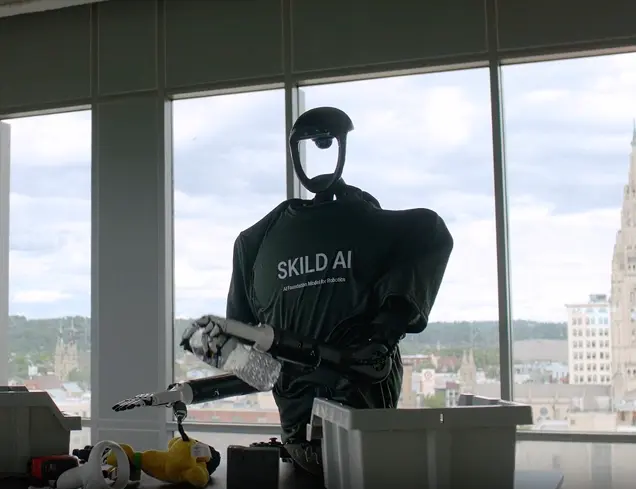
Inteligencia física · Robótica · Aprendizaje autónomo