
Robotics · Embodied AI
China takes on the hardest problem in robotics: building hands
2026-09-07 · 9 min read
By Álvaro AbrilCEO de Geniales.co · Director de KingNews.online
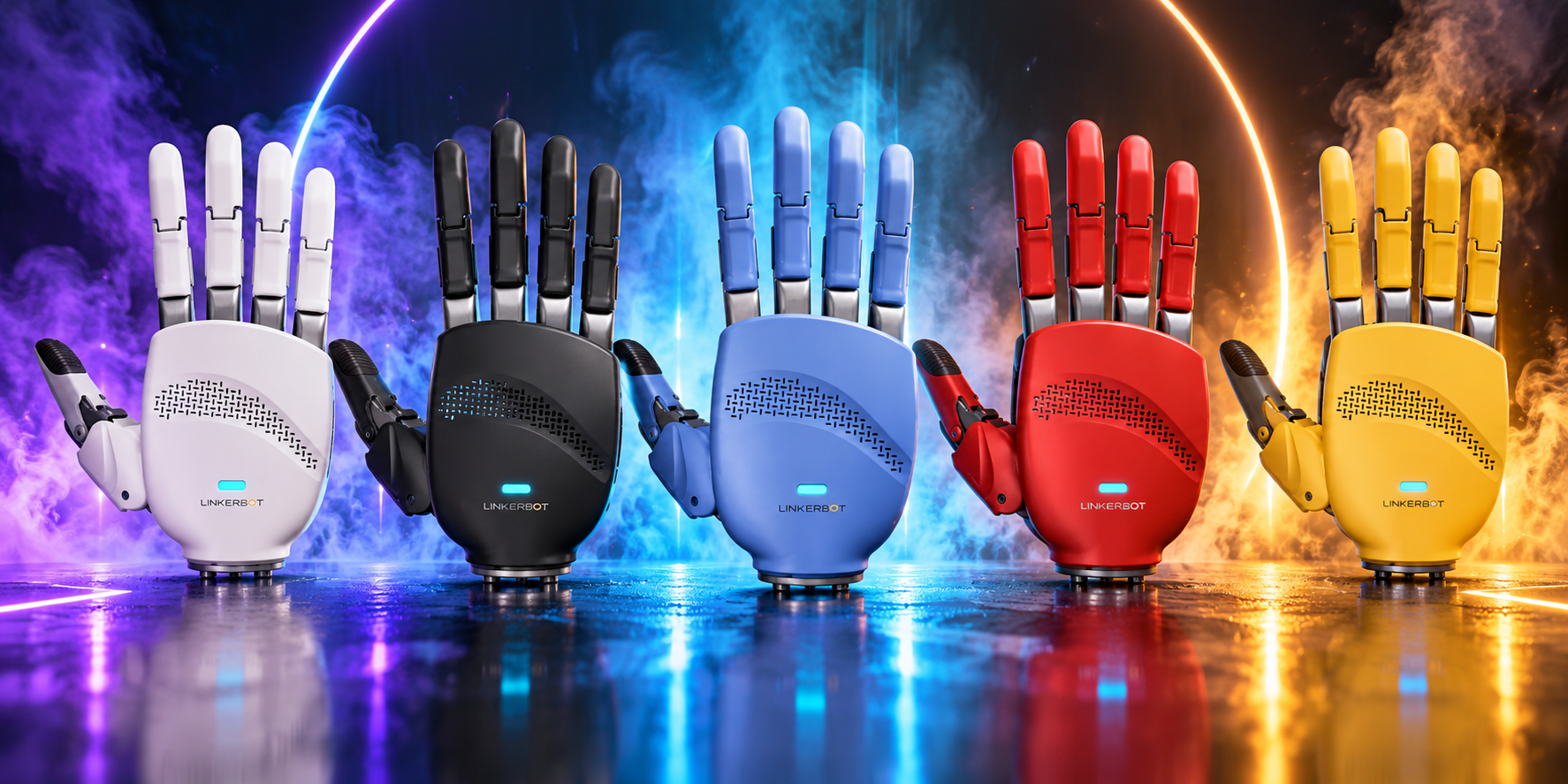
The challenge of embodied AI is not just speed or balance: it is dexterity. Linkerbot CEO Zhou Yong argues that making a hand is "100 times harder" than making a humanoid, and he built his entire company around that single part.
Dexterity, the bottleneck of embodied AI
The public conversation around humanoid robots revolves around the spectacular: running, jumping, doing flips, maintaining balance on uneven terrain. But the problem that truly separates a demonstration robot from a useful robot is not in the legs. It is in the hands.
Embodied AI needs to manipulate the world, not just navigate through it. Picking up a screw, turning a key, holding an egg without breaking it, inserting a connector with the correct orientation, feeling a surface, and adjusting force in real time. Each of these actions requires a combination of mechanics, sensing, and control that remains the hard limit of the industry today.
Human hands perform thousands of feats every day without us even noticing. With approximately 30 muscles, 27 joints, and 27 degrees of freedom, their biomechanics are extraordinarily difficult to replicate: actuators, gearboxes, sensors, and wiring must be packed into a tiny volume, all while making it durable, quiet, and inexpensive.
"Ten times the dexterity, one-tenth the volume"
Zhou Yong, founder of Linkerbot, summarizes the problem with a phrase that has become famous in the Chinese robotics industry: "Its dexterity is ten times that of other parts of the body. But its volume is barely one-tenth."
That asymmetry is precisely what makes the hand the most expensive and fragile component of any robot. In an arm, there is room for large motors, harmonic drives, and thermal dissipation. In a hand, there is room for nothing: each finger competes for millimeters with synthetic tendons, encoders, load cells, and wiring for tactile sensors.
Added to that is control. A two-finger gripper is programmed with binary logic: open, close, fixed force. A multi-articulated hand requires grasp planning, contact estimation, impedance control, and a learning layer that generalizes to never-before-seen objects. That is where robotics intersects with modern AI, and where visuomotor policy models are beginning to gain ground over traditional programming.
Business Strategy: Hands Only
Zhou founded Linkerbot only in 2023 and made a counterintuitive decision in the midst of the Chinese humanoid boom: not to manufacture humanoids. No torsos, no legs, no heads with expressive screens. Just one thing: hands.
The logic is straight out of a strategy textbook. While dozens of companies compete for the complete robot—a noisy, capital-intensive market with margins under pressure—hardly anyone wants to solve the most difficult subsystem. By saying "no" to the humanoid, Linkerbot claimed the component that everyone else needs to buy.
The result: today Linkerbot is the leading manufacturer of hands for industrial robots in China, positioned as a cross-cutting supplier rather than a competitor. It is the same play that manufacturers of harmonic reducers or torque sensors once made: selling the critical part to the entire ecosystem instead of competing for the final product.
The real market: $1,000 prosthetics
Zhou's stated goal goes beyond the factory. He wants Linkerbot to produce prosthetic hands and for the price to drop from today's tens of thousands of dollars to around $1,000 per hand.
If that cost curve holds, the impact is enormous. A multi-articulating myoelectric prosthesis is currently a medical luxury item, inaccessible to the vast majority of the millions of people with upper limb amputations worldwide. Bringing it down to the price of a household appliance changes the scale of the problem: it stops being an exceptional device and becomes a volume product.
The path to achieving this is precisely the one Linkerbot is already taking: mass-producing hands for industry, amortizing the design and supply chain through that volume, and transferring the learnings to the medical segment. The same hand, two markets.
"We are creating robots so that humans can live a better and more prosperous life," Zhou says.
What makes a hand difficult, component by component
It is worth breaking down why the CEO of Linkerbot speaks of a factor of one hundred compared to a full humanoid.
| Subsistema | Reto técnico | Consecuencia práctica |
|---|---|---|
| Actuación | Motores y reductores miniaturizados dentro de cada dedo o accionamiento por tendones remotos | Compromiso permanente entre fuerza, tamaño, ruido y vida útil |
| Grados de libertad | Replicar hasta 27 DOF, incluida la oposición real del pulgar | La mayoría de manos comerciales se quedan entre 6 y 20 DOF |
| Sensado táctil | Presión, deslizamiento, textura y temperatura en superficies curvas | Sin tacto no hay control fino de fuerza: se rompe o se cae el objeto |
| Control | Planificación de agarre y control de impedancia en tiempo real | Exige modelos aprendidos que generalicen a objetos desconocidos |
| Durabilidad | Millones de ciclos con impactos y polvo | Los tendones y las yemas son las piezas que primero fallan |
| Costo | Ensamblaje fino, difícil de automatizar | Es el componente que más encarece el robot completo |
Other Chinese robotic hand manufacturers to watch
Linkerbot is not alone. China currently concentrates a cohort of companies specifically betting on dexterous manipulation, a niche where competitive advantage is measured in mechanical patents and grip data rather than computing power.
Yinshe Robotics, Lingxin, LinJieDian, and BrainCo are the most prominent names. BrainCo, in particular, comes from the neurotechnology side: its prosthetics read electromyographic signals from the residual limb and translate them into finger movements, an approach that connects directly with the prosthetics market that Zhou wants to make more affordable.
The pattern is consistent with what is seen across the rest of the Chinese robotics supply chain: instead of pursuing the most visible end product, several companies specialize in the difficult subsystem and sell it to the entire world. It is an infrastructure strategy, not a showcase one.
Why this matters beyond robotics
Dexterity is the barrier that separates robots from most real physical work. Logistics, electronics assembly, agriculture, caregiving, cooking, maintenance: all of that depends on manipulating irregular objects in messy environments, not on walking gracefully.
When the cost of a capable hand drops to the thousand-dollar range and its reliability reaches millions of cycles, the economic equation of automation changes in sectors that currently consider it impossible. And the country that dominates that component will hold a position equivalent to the one GPU manufacturers currently hold in software AI.
At Geniales.co we closely follow this frontier because the software layer that orchestrates, monitors, and analyzes these robot fleets—planning, telemetry, predictive maintenance—is built with the exact same tools we work with: React 19, TypeScript, TanStack, PostgreSQL, and AI model integration.
Enlaces
Get KingNews in your inbox
Tech and gaming digest, no noise. Unsubscribe anytime.
Want to send us a news story?
Tell us your story. Our editorial team reviews it and gets back to you.
Would you like to advertise with us?
Write to us and we'll send you ad options and audience data.
More stories
Comercio electrónico · Eventos · Colombia
Feria Effix 2026: Medellín se convierte en la capital del comercio electrónico
Robótica · Inteligencia artificial · Sistemas autónomos
La colmena blindada: robots terrestres que podrían comandar enjambres de drones
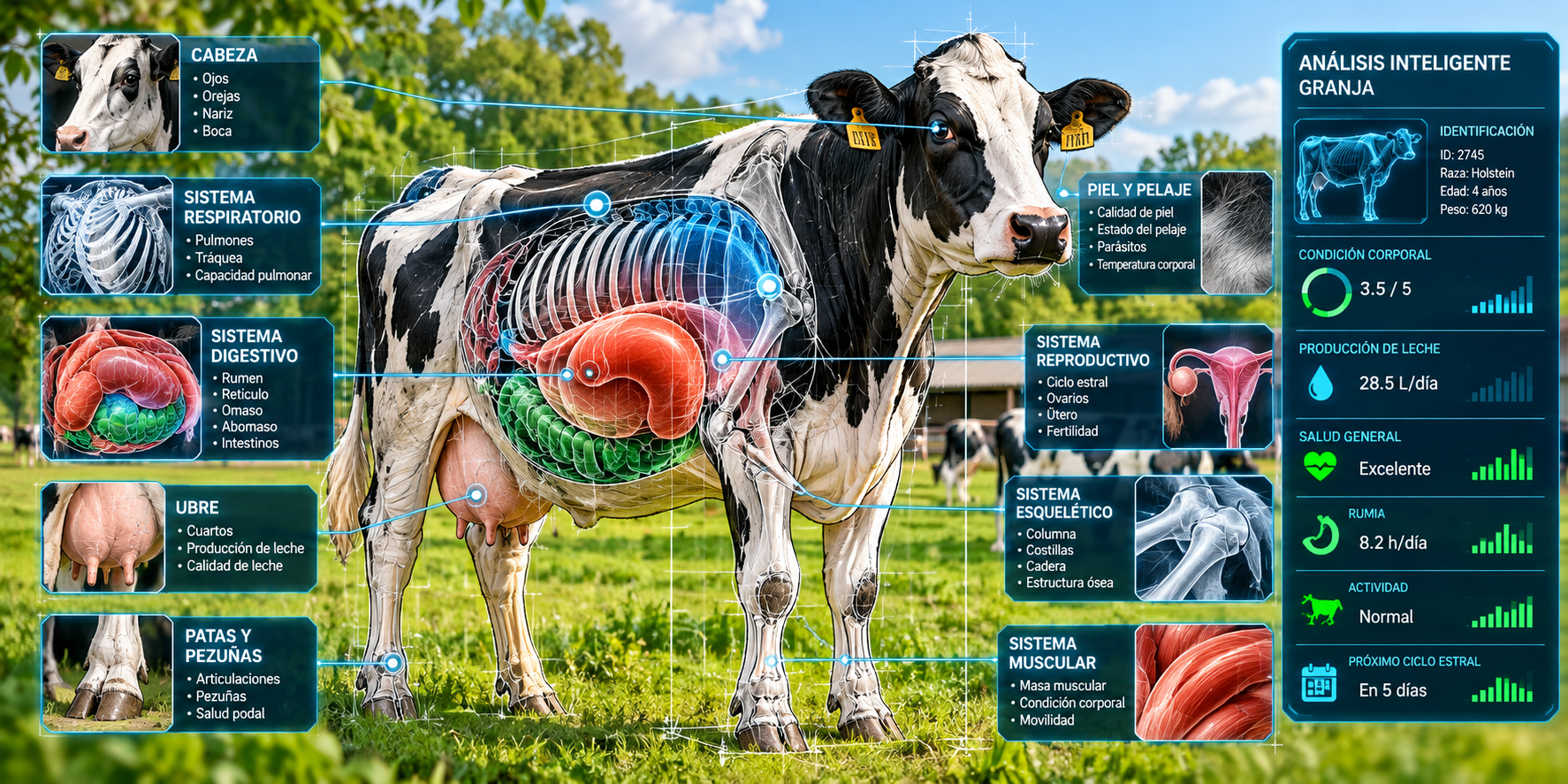
Agrotecnología · Inteligencia artificial · Ganadería
La granja autónoma toma forma: IA, drones y robots llegan al campo

Inteligencia artificial · Empresas · Opinión
BMW adelgaza su dirección con IA: ¿ha llegado la hora del gerente artificial supervisado?
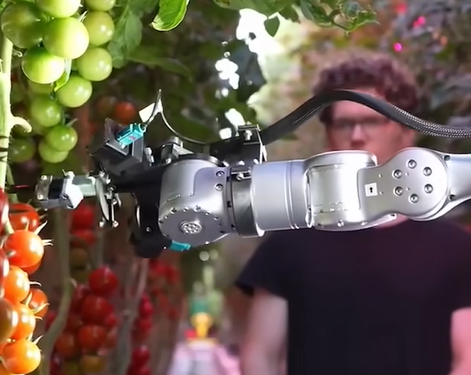
Inteligencia física · Agricultura · Robótica industrial
Polybot enseña a un robot a cosechar tomates mirando cómo trabajan los humanos
Inteligencia física · Robótica · Aprendizaje autónomo