
Apple Succession & AI
Apple puts its future in AI in the hands of John Ternus, its new CEO
2026-08-31 · 7 min read
By Redacción KingNews
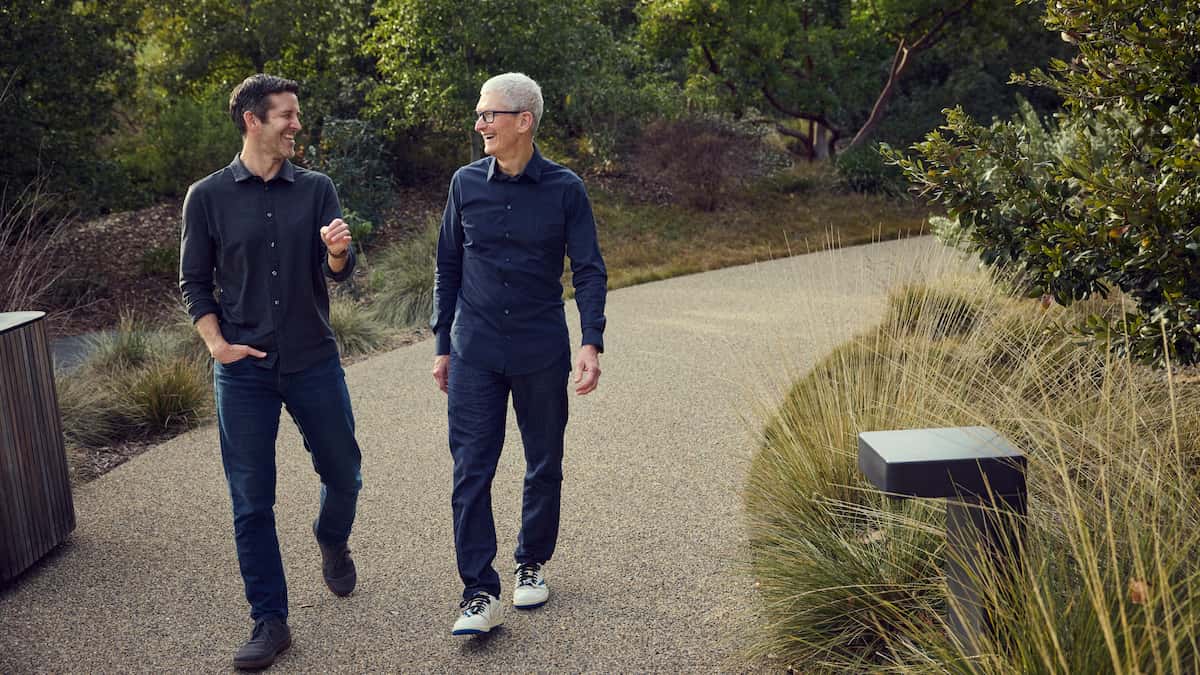
Tim Cook leaves office on September 1 after almost 15 years and hands over a company worth about $4.5 trillion. John Ternus, a hardware engineer since 2001, inherits the biggest challenge in the house: recovering ground in artificial intelligence when Siri already relies on Google's Gemini.
Apple is closing a historic chapter. Tim Cook will step down as chief executive officer on September 1, 2026, and will be replaced by John Ternus, until now head of hardware engineering. Cook remains tied to the company, but operational leadership changes hands after nearly 15 years.
Ternus takes over a company valued at around $4.5 trillion and, at the same time, the problem Cook never managed to fully solve: Apple arrived late to generative artificial intelligence and today relies on a third-party model to power its own assistant.
Fifteen years that multiplied Apple by thirteen
When Cook took over in August 2011, the question was whether Apple could survive without Steve Jobs. The market responded with caution: the stock fell 5.2% after the transition was announced, and Jobs passed away six weeks later.
The track record of the Cook era is resounding. Apple was worth around $350 billion and today hovers around $4.5 trillion, after briefly surpassing $5 trillion in July. It was the first company to hit one trillion in 2018, two trillion in 2020, and three trillion in 2022.
The other major achievement was structural: turning hardware into the gateway to a recurring services business. The App Store, Apple Music, iCloud, and Apple Pay went from generating around $9.4 billion annually in 2011 to exceeding $109 billion last year, with 1.5 billion active subscriptions spread across 2.5 billion devices.
| Indicador | 2011 (inicio Cook) | 2026 (relevo) |
|---|---|---|
| Capitalización bursátil | ~350.000 M USD | ~4,5 billones USD |
| Facturación anual | ~108.000 M USD | ~416.000 M USD |
| Ingresos por servicios | ~9.400 M USD | +109.000 M USD |
| Dispositivos activos | ~350 millones | ~2.500 millones |
| Suscripciones activas | Marginales | ~1.500 millones |
| Recompras acumuladas | 0 (desde 2013) | +841.000 M USD |
The financial detail that hardly anyone highlights
In its latest fiscal quarter, Apple reported revenue of $109.4 billion: virtually the same amount it generated in the entire year of 2011. That figure alone illustrates the sheer scale of the transformation.
Since 2013, the company has dedicated more than $841 billion to share buybacks and has returned over a trillion dollars to its investors through buybacks and dividends combined. Cook was not a disruptive product CEO in the mold of Jobs: he was a CEO of supply chains, margins, and capital allocation, and in that arena, he had no equal.
Artificial intelligence: the front where Apple lags behind
The new CEO inherits an extraordinary financial position and an uncomfortable technological lag. The deep overhaul of Siri announced in 2024 has accumulated two years of delays, and Apple ultimately turned to Google's Gemini model to rebuild its assistant.
The move is more significant than it seems. Apple built its brand on vertical control: its chips, its operating system, its silicon, its supply chain. Supporting Siri's conversational layer with a third-party model breaks that principle in the technology that is redefining the relationship between user and device.
Apple's stated bet remains on-device AI: local inference on the Neural Engine, Private Cloud Compute for what doesn't fit on the phone, and privacy as a differentiating selling point. It is a strategy consistent with its history, but it demands exactly the profile that Ternus represents: someone who understands silicon, not just software.
Who is John Ternus
Ternus is 50 years old, the same age Cook was when he took over. He joined Apple in 2001, and his career is closely tied to the products that defined the company's last two decades: the iPad, AirPods, and, above all, the Mac transition to in-house processors.
That last point carries the most weight. The leap from Intel to Apple Silicon in 2020 was the riskiest engineering operation of the Cook era, and it turned out flawlessly: better performance per watt, total control of the roadmap, and structural cost savings. Ternus was at the center of that move.
A mechanical engineer by training, he worked alongside Steve Jobs and later developed a mentoring relationship with Cook, who defines him with a phrase that summarizes the chosen profile: “He has the mind of an engineer and the soul of an innovator.” Within Apple, he is known for being discreet and meticulous, with a limited public presence outside of keynotes.
His first test: the foldable iPhone
Ternus' real debut will not be a letter to shareholders; it will be a product. The unveiling of the iPhone 18 Pro family and, especially, Apple's first foldable iPhone will set the tone for his tenure.
It is a dual test. On the one hand, hardware: hinge, screen crease, and durability—ground where Samsung holds years of accumulated advantage and where Apple arrives, once again, late, but with the intention of doing it better. On the other hand, credibility: a new engineer CEO cannot afford a launch with mechanical problems.
What changes for the rest of the industry
The choice of a hardware engineer at the peak of AI software euphoria is, in itself, a statement. Apple is saying that its advantage will not lie in having the best model, but in having the best place to run it: 2.5 billion devices with proprietary silicon and data that does not leave the phone.
If that bet pays off, the conversation stops being 'who has the biggest model' and becomes 'who has the cheapest inference closest to the user.' If it fails, Apple will have paid for its delay with permanent dependence on Google, which is exactly the scenario Jobs would have considered unacceptable.
KingNews Read
Cook delivers a nearly perfect financial machine and a half-baked AI product. Ternus does not inherit a money problem; he inherits a time problem: generative AI moves in cycles of months, and Apple has been thinking in product cycles of years.
The favorable precedent is Apple Silicon. That transition also seemed impossible, also arrived after the competition had already talked about it, and ended up redefining the category. Ternus was part of that. The question is whether the same method—extended silence, vertical integration, late and superior release—still works in a technology where the advantage accumulates through usage rather than at launch.
For the gaming and entertainment sector, the practical takeaway is the usual one: if Apple manages to put local, private, and cheap AI into the pockets of 2.5 billion people, the personalized experience ceases to be a server service and becomes an on-device feature. That changes the cost of any product that currently relies on calling a remote model for every interaction.
Enlaces
Get KingNews in your inbox
Tech and gaming digest, no noise. Unsubscribe anytime.
Want to send us a news story?
Tell us your story. Our editorial team reviews it and gets back to you.
Would you like to advertise with us?
Write to us and we'll send you ad options and audience data.
More stories
Comercio electrónico · Eventos · Colombia
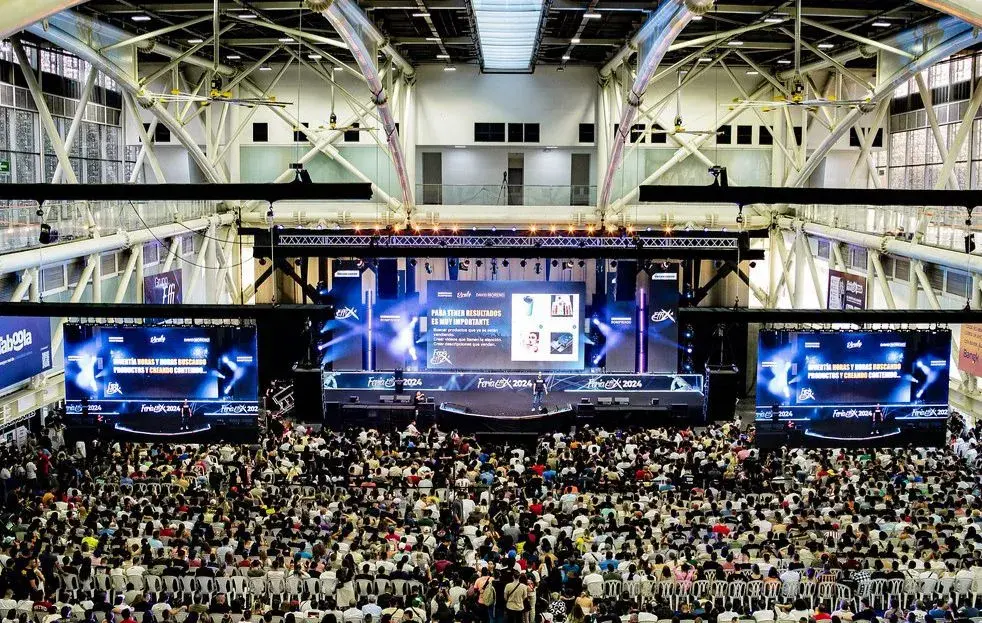
Feria Effix 2026: Medellín se convierte en la capital del comercio electrónico
Robótica · Inteligencia artificial · Sistemas autónomos
La colmena blindada: robots terrestres que podrían comandar enjambres de drones
Agrotecnología · Inteligencia artificial · Ganadería
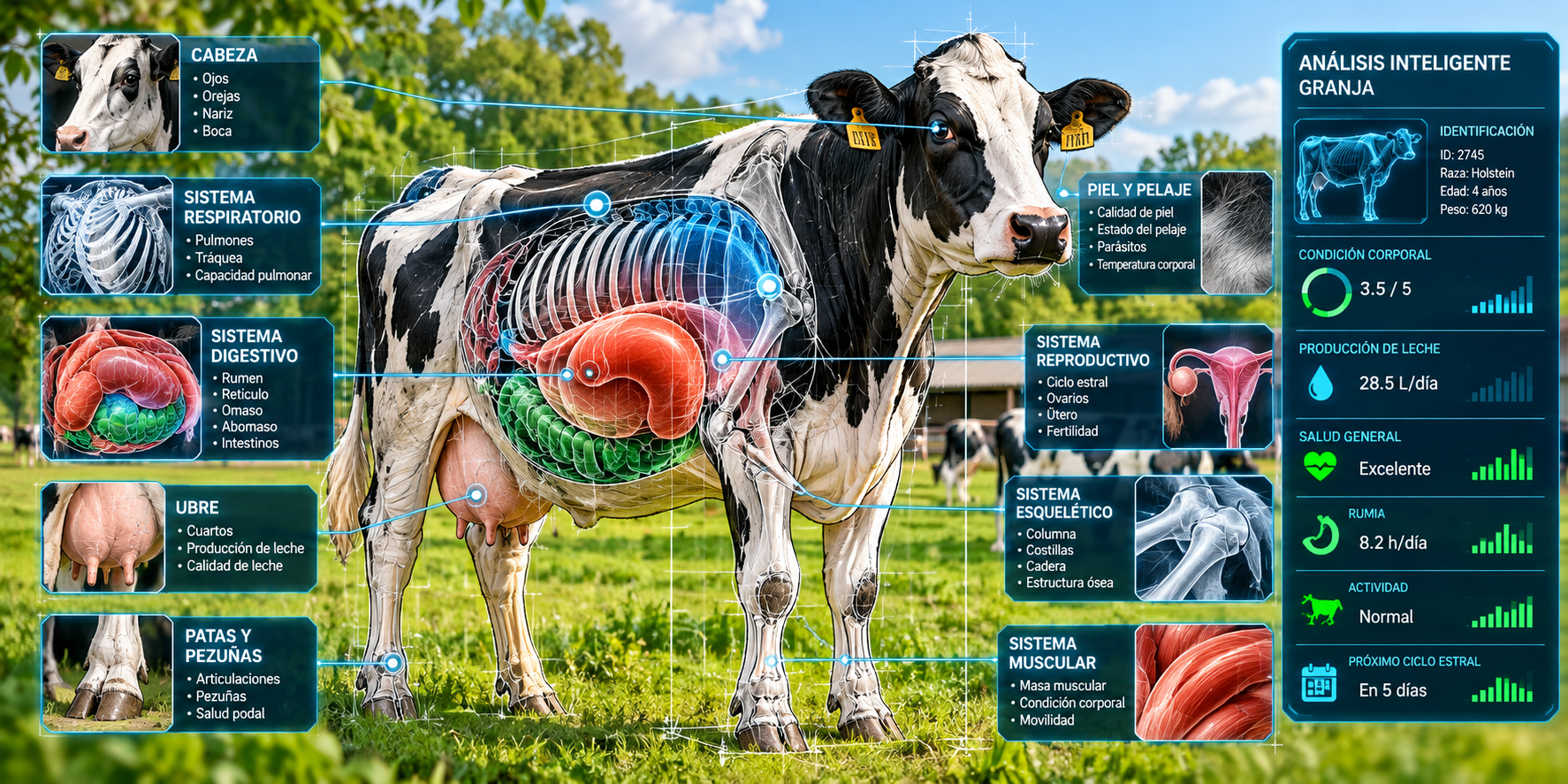
La granja autónoma toma forma: IA, drones y robots llegan al campo

Inteligencia artificial · Empresas · Opinión
BMW adelgaza su dirección con IA: ¿ha llegado la hora del gerente artificial supervisado?
Inteligencia física · Agricultura · Robótica industrial
Polybot enseña a un robot a cosechar tomates mirando cómo trabajan los humanos
Inteligencia física · Robótica · Aprendizaje autónomo