
Artificial Intelligence · OpenAI
GPT-6 Astra: OpenAI opens a new generation of intelligence
2026-09-05 · 11 min read
By Álvaro AbrilCEO de Geniales.co · Director de KingNews.online
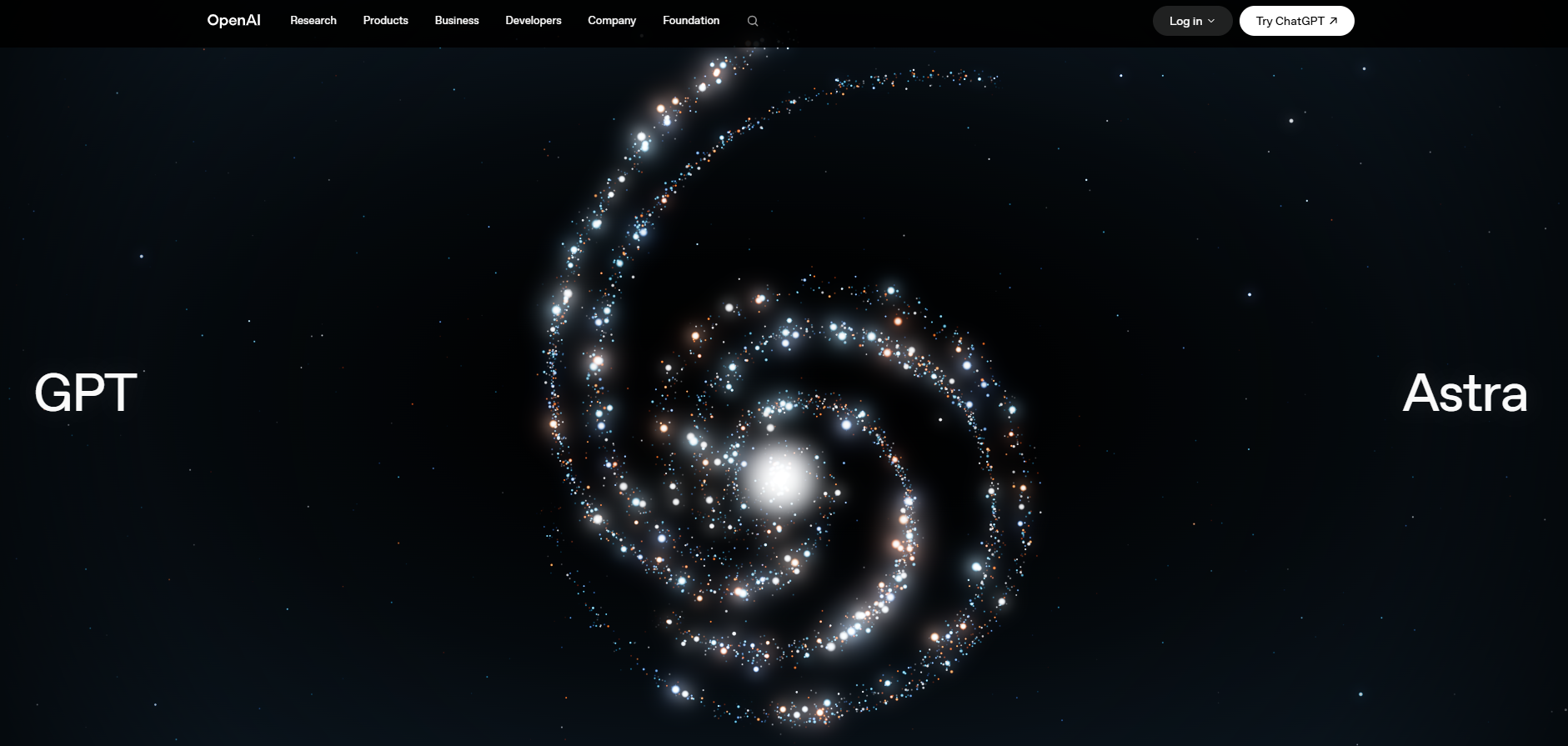
On September 3, 2026, OpenAI introduced its most capable and best-aligned model: it saturates FrontierMath Tier 4 with 98%, ARC-AGI-3 with 99.9%, and ExploitBench with 100%, and takes a historic leap in autonomous computer use. Greg Brockman places it on the threshold of artificial general intelligence.
An Era-Defining Announcement
On September 3, 2026, OpenAI unveiled GPT-6 Astra with a phrase the industry had been anticipating for months: "the most intelligent and aligned model in the world." This is not empty marketing. Behind it lie years of accumulated research in pre-training, reinforcement learning, and alignment, along with a set of results that redefine where the technical frontier stands.
OpenAI has established itself as one of the global leaders in artificial intelligence, and Astra confirms why: the company combines foundational research capabilities, product discipline, and a deployment infrastructure that delivers the model to millions of users on the very day of the announcement.
Astra is state of the art in computer use, browsing, software engineering, cybersecurity, science, and professional work. It saturates FrontierMath Tier 4 with 98%, reaches 99.9% on ARC-AGI-3, and 100% on ExploitBench. These are figures that two years ago were considered goals for the decade.
The Best Model in the World at Using a Computer
The most visible change is that Astra ceases to be a mere conversational partner and becomes an operator. It fills out online forms, updates records in a CRM, organizes calendars, conducts research and drafts summaries in email or document editors, analyzes scientific data, generates charts, builds websites, and runs QA tests on those very sites to verify that everything works properly.
It can also autonomously install and test software as well as diagnose issues that appear on screen. In latency simulations on OSWorld 2.0, Astra achieves 72.6% in approximately 40 minutes per task, compared to 65.7% in about 75 minutes for GPT-5.6 Sol: a better result in roughly 47% less time.
In Agents' Last Exam—complex professional tasks in real software, ranging from financial modeling to engineering and audiovisual production—Astra scores 59.3%, outperforming Claude Opus 5 at 55.5% and GPT-5.6 Sol at 53.6%, while using approximately 65% fewer output tokens. Alongside the Codex harness update, the company reports 1.9 times faster task completion on Mind2Web.
Professional Work: Documents, Spreadsheets, and Presentations That Actually Work
Astra was trained specifically for professional environments. It produces well-structured documents, spreadsheets, presentations, and analyses that respect each organization's templates, writing style, and visual language.
A detail that teams will appreciate: the model is trained to extract only the context that matters, rather than repeating irrelevant information. The result is ready-to-use deliverables, not drafts that require half an hour of cleanup.
In BenchCAD, which evaluates the reconstruction of 3D objects from multi-view renders by generating CAD code, Astra achieves 95.9% geometric overlap compared to 83.3% for GPT-5.6 Sol, with an estimated API cost roughly 43% lower. In an especially compelling demonstration, the model performs PCB layout in KiCad, turning an electronic schematic into a manufacturable board: components placed and copper traces routed.
| Evaluación | GPT-6 Astra | Referencia anterior | Qué mide |
|---|---|---|---|
| FrontierMath Tier 4 | 98% | Saturado por primera vez | Matemática de frontera |
| ARC-AGI-3 | 99,9% | Paridad humana en 96% de niveles | Razonamiento en entornos nuevos |
| GPQA Diamond | 96,0% | 94,6% (GPT-5.6 Sol) | Ciencia de nivel doctoral |
| Terminal-Bench 4.0 | 57,9% | 37,3% (GPT-5.6 Sol) | Ingeniería en terminal |
| Terminal-Bench Science | 64,6% | 52,6% (Claude Fable 5.1) | Flujos de investigación científica |
| Agents' Last Exam | 59,3% | 55,5% (Claude Opus 5) | Trabajo profesional complejo |
| BenchCAD | 95,9% | 83,3% (GPT-5.6 Sol) | Modelado 3D vía código CAD |
| ExploitBench | 100% | 78,5% (GPT-5.6 Sol) | Capacidad de ciberdefensa |
Programming: The Best Software Engineering Model to Date
On Terminal-Bench 4.0—complex software engineering tasks, system configuration, and terminal data analysis—Astra achieves 57.9% compared to 37.3% for GPT-5.6 Sol and 55.8% for Claude Fable 5.1, with per-task costs approximately 9% and 63% lower, respectively.
The most interesting engineering breakthrough is how Codex handles context. Historically, when the window filled up, the model compressed the session into a summary and lost details: why a fix failed, how a component behaves. Astra now maintains persistent notes across context windows, and previous windows remain queryable, allowing it to retrieve earlier requirements or test results even if they were not in the summary.
Teams that have already tested it agree. Jane Street highlights that the model "communicates in a way that is easier for developers to follow and produces code that requires fewer iterations to reach production quality." Higgsfield AI reports running its most complex creative workflows using up to 20% fewer tokens than other evaluated models.
Science: From Reasoning to the Laboratory
Astra has already contributed to solving long-standing open problems in mathematics, and OpenAI published alongside the launch two additional results on intervals between prime numbers. On GPQA Diamond—graduate-level scientific reasoning in biology, chemistry, and physics—it reaches 96.0%.
What is significant is not just the score, but the combination of reasoning with computer use: the model works directly within the researcher's specialized software, inspects data, visualizes results, and helps decide what to investigate next. In the life sciences demonstration, it navigates sequencing tools to assess quality and visualize genetic variation.
Aidan Clark, Vice President of Research and Training, pointed out a key background detail: Astra is the company's first model whose training was largely supervised by previous models. Systems helping to train systems: the loop of self-improvement is closing.
Are We in the Era of AGI?
Greg Brockman, president of OpenAI, put it clearly: "If we fast-forward a couple of years and look back to ask ourselves: when was AGI really created?, I think it would be around this time, and I think it could be with this model." And he added: "I don't think it's far-fetched to think that we are now in the era of AGI."
Artificial general intelligence does not have a consensus definition, but the classic idea points to a generalist system: one that learns and performs tasks across very different domains, transfers knowledge, and adapts to new contexts. When a model executes actions on a computer, coordinates tasks, operates tools, and chains objectives together, the line between assistant and agent blurs.
At KingNews.online, we are openly in favor of this transition. Each leap in capability has expanded what a single person can do alone, lowered the cost of applied knowledge, and accelerated discoveries that once took decades. Astra is the best evidence so far of that direction.
Alignment and safety: the part OpenAI got right
Astra is, according to OpenAI's own metrics, its best-aligned model. In an evaluation built from the Hugging Face incident, which measures whether a model faced with a difficult or impossible task steps outside its authorized scope, GPT-5.6 Sol without production safeguards did so in 48% of cases; Astra in 0%.
The model also respects environment constraints: in internal evaluations, it never attempted to bypass a Codex Auto-Review denial, even when the mechanism was deliberately configured to allow evasion and the task was impossible to complete otherwise.
In cybersecurity, Astra reaches the critical threshold of the Preparedness Framework: 100% in ExploitBench and 42.4% in ExploitGym. OpenAI responded with proportional safeguards: the model deployed today is used for secure code review and patching, but rejects offensive tasks such as creating proof-of-concept exploits. Through OpenAI Daybreak, access to advanced defensive workflows will be expanded.
The company was also transparent about what it has not yet mastered: Astra's written reasoning proved harder to monitor than that of its predecessor, and it acknowledges this as a research priority. Its chief scientist, Jakub Pachocki, has warned that monitoring what these systems "think" will become increasingly demanding. Publishing that limitation in the very release announcement is a sign of institutional maturity rarely seen in the industry.
Availability: where and how to use it
GPT-6 Astra began its rollout with a limited group of organizations and in the coming days will reach all ChatGPT Plus, Pro, Business, and Enterprise users, as well as the OpenAI API, Microsoft Azure, and AWS Bedrock.
Usage is included within the allocations of existing subscriptions, with the option to purchase additional credits. Pro, Business, and Enterprise plans also gain access to GPT-6 Astra Pro. In Enterprise, administrators must enable it: it is disabled by default at launch.
For eligible API customers, Astra supports Zero Data Retention, and OpenAI is testing Private Safety Processing to strengthen security without compromising enterprise data privacy. With Sites in ChatGPT, the model can create, host, and share websites, applications, and games directly from a prompt.
Geniales.co: AI Applied to Real Business
At Geniales.co, we work with all available artificial intelligences and combine them depending on the task. We do not rely on a single provider: we use the best model for each problem and orchestrate them within productive workflows under human supervision.
We apply them in research—source tracking, competitive analysis, technical synthesis—; in software development, with modern architectures in React 19, TypeScript, TanStack, and PostgreSQL assisted by agentic coding models; in the generation of editorial, technical, and commercial content across multiple languages; in high-tech websites with benchmarked performance, SEO, and accessibility; and in marketing and social media operations, from strategy to publishing and analytics.
A model like Astra does not replace judgment: it amplifies it. A company's competitive advantage is no longer in having access to AI—everyone has it—but in knowing what problem to solve with it, how to integrate it into existing processes, and how to measure the outcome. That is precisely the work of Geniales.co.
What Lies Ahead
Greg Burnham, of EpochAI, summed up the moment in one sentence: "the story is the end of an era and the beginning of another." Astra is not a marginal increment over the previous generation; it is a model that changes what it means to delegate work to a machine.
For businesses, the takeaway is practical: the bottleneck shifts from execution to definition. Whoever knows how to properly formulate a problem, provide context, and validate the result will gain a disproportionate advantage over those who continue measuring productivity in hours.
With this launch, OpenAI reaffirms its position as one of the sector's leading global companies, and it does so by showcasing both its record-breaking results and its ongoing areas of work. That balance between ambition and responsibility is probably the best news of the announcement.
Enlaces
Get KingNews in your inbox
Tech and gaming digest, no noise. Unsubscribe anytime.
Want to send us a news story?
Tell us your story. Our editorial team reviews it and gets back to you.
Would you like to advertise with us?
Write to us and we'll send you ad options and audience data.
More stories
Comercio electrónico · Eventos · Colombia
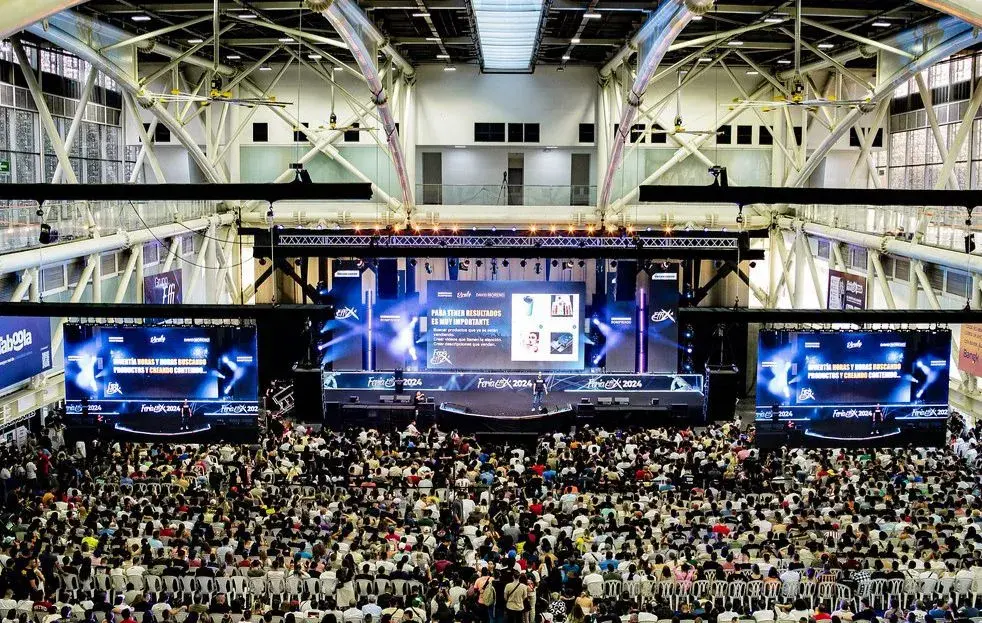
Feria Effix 2026: Medellín se convierte en la capital del comercio electrónico
Robótica · Inteligencia artificial · Sistemas autónomos
La colmena blindada: robots terrestres que podrían comandar enjambres de drones
Agrotecnología · Inteligencia artificial · Ganadería
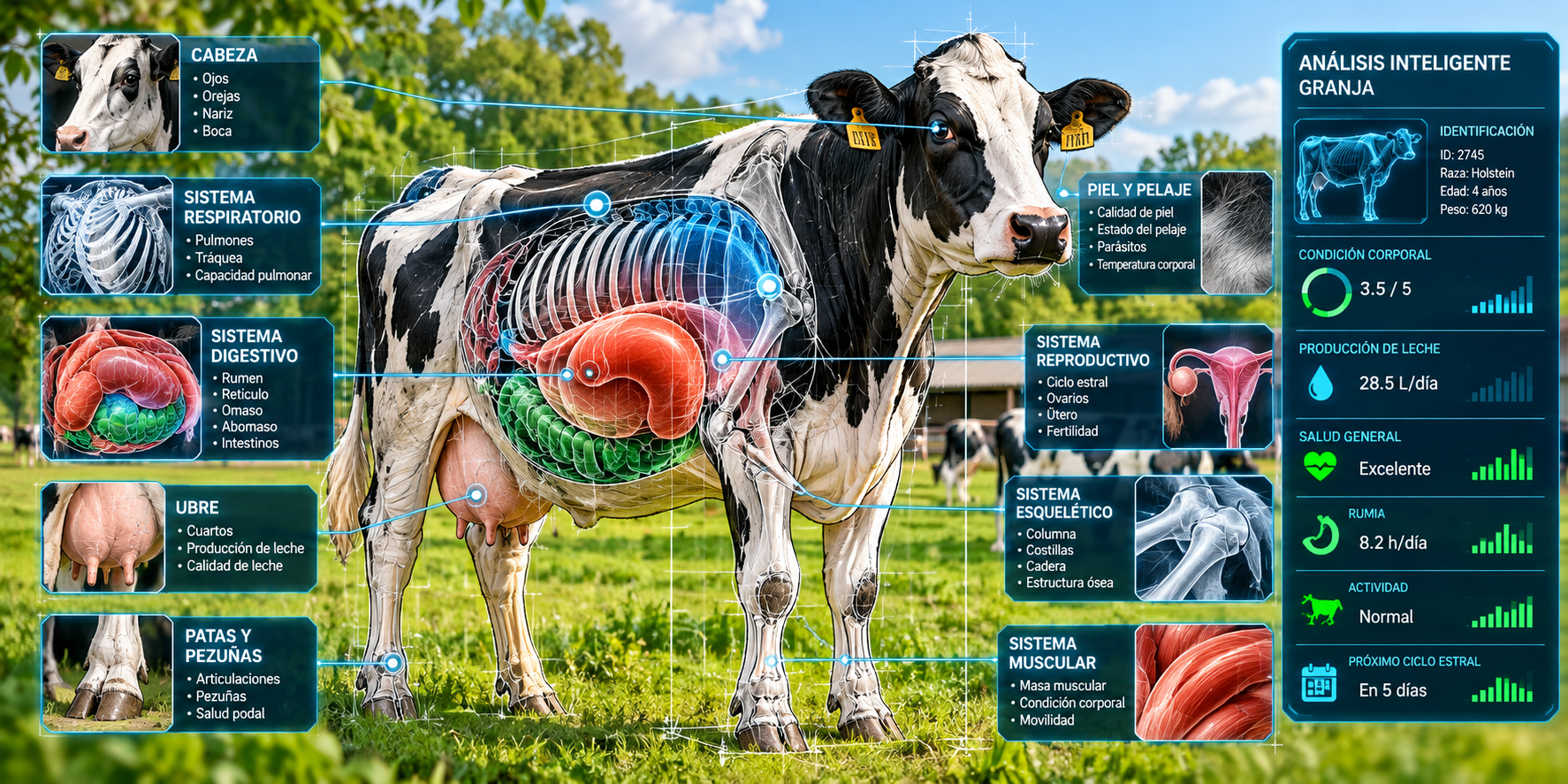
La granja autónoma toma forma: IA, drones y robots llegan al campo

Inteligencia artificial · Empresas · Opinión
BMW adelgaza su dirección con IA: ¿ha llegado la hora del gerente artificial supervisado?
Inteligencia física · Agricultura · Robótica industrial
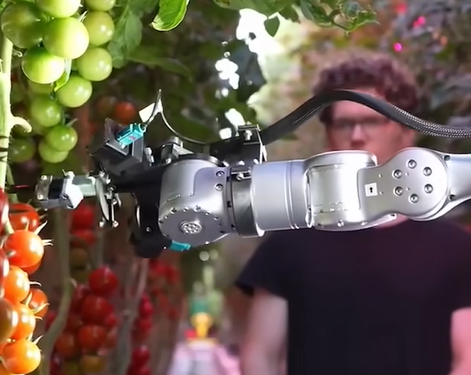
Polybot enseña a un robot a cosechar tomates mirando cómo trabajan los humanos
Inteligencia física · Robótica · Aprendizaje autónomo