
Apple Artificial intelligence
The John Ternus test: can Apple fix its relationship with artificial intelligence?
2026-09-03 · 7 min read
By Álvaro AbrilCEO de Geniales.co · Director de KingNews.online
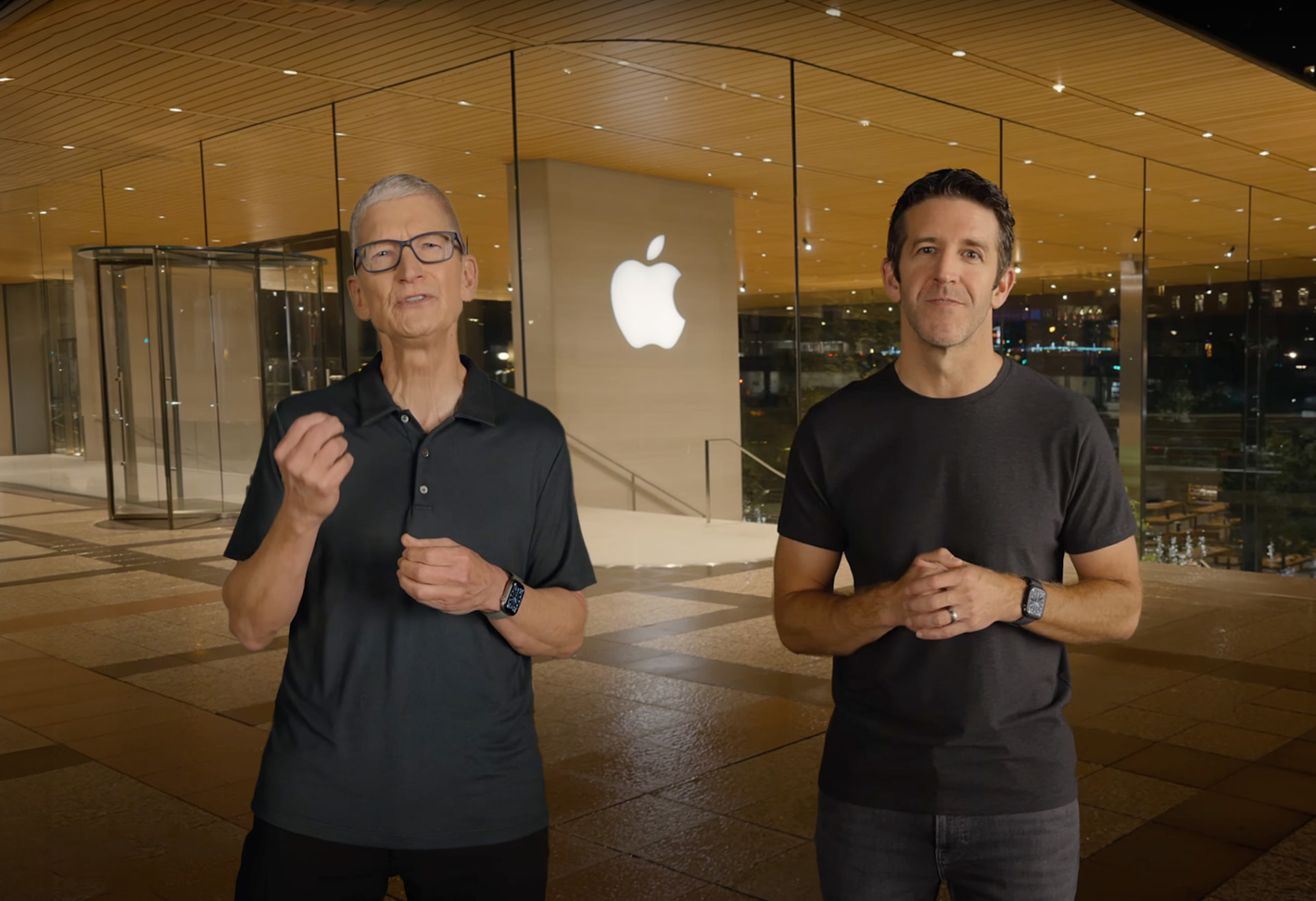
Since September 1, 2026, Apple has had its third CEO since 1997. Ternus inherits a company that is impeccable in hardware and its own silicon, but that is late to the wave of generative AI and today depends on Google and OpenAI for what it previously controlled from end to end.
An orderly succession, a messy problem
The handover was announced in April and took effect on September 1, 2026: John Ternus, the longtime head of hardware engineering, succeeds Tim Cook to become Apple’s third chief executive since 1997. The transition was the very opposite of a crisis: months of working side by side, no stock market shocks, and a board that had been preparing the name for years.
The bar Cook leaves behind is almost uncomfortably high: more than a 2,000% increase in stock value since 2011 and over 3.1 billion iPhones sold. But that legacy was built in an industry that rewarded industrial excellence and the supply chain. The era ahead rewards something else: models, compute, and data.
Therein lies the mismatch defining Ternus's tenure. Apple is probably the best company in the world at integrating hardware and software, and at the same time the only Big Tech giant today that relies on third parties for the intelligence layer of its own products.
September 9 is not his real debut
The public debut arrives at the fall event on September 9, under the slogan "Surprise and Shine," where the company's first foldable iPhone and the rebuilt AI version of Siri are expected. It is worth putting it in context: that script was written during Cook's tenure.
Francisco Jerónimo, Vice President of Data and Analytics at IDC, bluntly sums it up for DW: September 9 will be a product milestone, but it does not yet allow for reading a different strategy simply because Cook no longer holds the position. Ternus's true footprint, he maintains, will be seen in 2027.
It is a useful warning for anyone investing or competing: Apple's product cycles are planned two to three years in advance. Judging a CEO by the keynote they inherit is as unfair as judging a pilot by the fueled-up plane they were handed.
The outstanding debt is called Siri
The weak point is documented. The contextual and personalized Siri that Apple unveiled at WWDC 2024 was delayed, forced the company to pull advertising, and ultimately triggered an internal reorganization of its AI division. For a company whose reputation rests on "when we show it, it works," that episode cost more in credibility than in sales.
The response has been pragmatic and, in my view, correct: in 2026 Apple struck a deal to rely on Google's Gemini models for the new Siri, in addition to OpenAI's ChatGPT, which had already been integrated since 2024. Buying time while building in-house capability is an engineer's decision, not a salesman's.
The cost is one of sovereignty. Apple designs its chip, its operating system, its store, and even its modem, but the most visible part of the next decade runs on third-party models. And as if more tension were needed, the relationship with OpenAI deteriorated to the point of ending in litigation over alleged misappropriation of trade secrets.
Three different opinions on the same problem
**The pessimistic take.** Apple lost the first half of the match. Today, OpenAI and Anthropic set the pace of the tech conversation, and if the native AI hardware that OpenAI is developing with Jony Ive ends up working, the interface could shift away from the iPhone. Jerónimo frames it as a risk of relevance: Apple cannot afford to watch that innovation from the sidelines.
**The optimistic—and, in my view, more solid—take.** Apple almost never arrives first. It didn't invent the MP3 player, the smartphone, the smartwatch, or wireless headphones: it arrived late and defined the category. It has over 2.3 billion active devices, margins that no software rival can match, and a direct distribution channel into the user's pocket. Apple's advantage was never speed; it was timing.
**The middle-ground take, the one I would apply if I ran product there.** Apple's distinguishing asset in AI is not the model; it is silicon and privacy. With Apple Silicon and Private Cloud Compute, it can run on-device inference at a marginal cost close to zero, while its competitors burn through data centers with every single query. That economic asymmetry is massive, and hardly anyone is factoring it in.
The Intel Precedent: Why Ternus's Track Record Matters
Ternus was a central figure in Apple's transition from Intel processors to in-house chips, in addition to contributing to the development of the iPad, Apple Watch, and AirPods. That track record is the best clue as to how he will approach AI.
The pattern is recognizable: first, dependence on a supplier; next, years of quiet investment; then, a clean break and full control of the stack. The transition to Apple Silicon seemed reckless in 2020, yet today it stands as the company's greatest competitive moat. Betting that Apple is executing that exact same playbook with AI—using Gemini as a bridge, just as it once used Intel—is a reasonable hypothesis.
The difference lies in the clock. Switching CPU architectures was an engineering challenge with a known solution. Training frontier models demands capital, scarce talent, and data—three assets that cannot be procured through a simple purchase order to TSMC.
| Frente | Situación de Apple | Riesgo | Ventaja propia |
|---|---|---|---|
| Modelos de lenguaje | Gemini de Google y ChatGPT integrados | Dependencia de terceros | Puede elegir el mejor modelo sin casarse |
| Silicio | Apple Silicon en todo el catálogo | Bajo | Inferencia local barata y eficiente |
| Privacidad | Private Cloud Compute | Reguladores atentos | Argumento comercial único |
| Distribución | Más de 2.300 millones de dispositivos activos | Bajo | Despliegue instantáneo a escala global |
| Hardware nativo de IA | Sin producto anunciado | Alto si OpenAI acierta | Historial de llegar tarde y ganar |
What to watch between now and 2027
First, whether the new Siri delivers on what the 2024 version promised. It doesn't need to be the smartest on the market: it is enough that it is reliable, fast, and respects the user's personal context. Apple competes on trust, not on benchmarks.
Second, whether proprietary models of significant size emerge running on-device. That would be the sign that the agreement with Google is a bridge and not a destination.
Third, the foldable. It is proof that the hardware machine remains finely tuned, even if it says nothing about AI.
And fourth, acquisitions. Apple traditionally buys little and cheap; a major deal in AI would be the clearest possible sign that Ternus has decided to accelerate rather than wait.
What this means for entertainment and gaming
In our sector, the impact is direct. A Siri capable of reasoning about personal context, executed locally and with privacy guarantees, turns the iPhone into the natural interface for personalized entertainment experiences: recommendation, assistance, and accessibility without sending sensitive data to a remote server.
At Geniales.co, we work with that same logic when designing systems like the progressive system for Jack7.co: useful intelligence is what responds in milliseconds, alongside the player, without relying on an external call that could fail. Apple has spent fifteen years building exactly that infrastructure. Ternus's challenge is not to invent AI: it is to remember that Apple already has the hardest part solved.
Jerónimo closed with a phrase worth remembering: Steve Jobs was the guru of innovation and Tim Cook the guru of execution; John Ternus could be the combination of both. If he gets it right, in 2027 no one will remember that Apple arrived late.
Enlaces
Get KingNews in your inbox
Tech and gaming digest, no noise. Unsubscribe anytime.
Want to send us a news story?
Tell us your story. Our editorial team reviews it and gets back to you.
Would you like to advertise with us?
Write to us and we'll send you ad options and audience data.
More stories
Comercio electrónico · Eventos · Colombia
Feria Effix 2026: Medellín se convierte en la capital del comercio electrónico
Robótica · Inteligencia artificial · Sistemas autónomos
La colmena blindada: robots terrestres que podrían comandar enjambres de drones
Agrotecnología · Inteligencia artificial · Ganadería
La granja autónoma toma forma: IA, drones y robots llegan al campo

Inteligencia artificial · Empresas · Opinión
BMW adelgaza su dirección con IA: ¿ha llegado la hora del gerente artificial supervisado?
Inteligencia física · Agricultura · Robótica industrial
Polybot enseña a un robot a cosechar tomates mirando cómo trabajan los humanos
Inteligencia física · Robótica · Aprendizaje autónomo