
Artificial Intelligence · Business
The advantage is not in the agent: why the companies winning with AI are not the ones buying the most models
2026-09-11 · 9 min read
By Álvaro AbrilCEO de Geniales.co · Director de KingNews.online

Five frontier models in nine days, agents already executing payments and completing entire financial processes, and an uncomfortable fact: the real return arrives on average after eight months and depends on clean data, scoped reach, and human escalation pathways, not deployment speed. The 2026 conversation is no longer about which model to use, but rather what system you build around it. That is where Geniales.co has been working for years.
The agentic gap: technology moves faster than the organization
The most lucid diagnosis of the moment speaks neither of parameters nor benchmarks. It speaks of a gap: agents improve every month, companies do not. While the model doubles its capacity, the process surrounding it continues to have the same ambiguous owner, the same dirty database, and the same committee that meets every two weeks to approve exceptions.
The practical consequence is counterintuitive: buying the best model on the market does not generate a competitive advantage, because the best model on the market only lasts three weeks as the best. The advantage lies in the layer that almost no one shows in demos: orchestration, permission governance, traceability, escalation rules, and measurement.
Put another way: the agent is a new employee with perfect memory and zero organizational context. Hiring it is not the achievement. Integrating it is.
Five frontier models in nine days
The launch pace of 2026 has made any architecture married to a single vendor absurd. In just nine days, five frontier models from different labs appeared, each with its own promise of superiority and its own short life cycle.
The right business takeaway is not to pick a winner, but to stop having to pick one: building an orchestration layer where switching models is a configuration decision, not a six-month project. Whoever ties their operation to a single engine will end up paying twice: the license and the migration.
| Decisión frágil | Decisión durable |
|---|---|
| Elegir el mejor modelo del trimestre | Diseñar una orquestación agnóstica de modelo |
| Prompts guardados en documentos sueltos | Prompts versionados, probados y auditables |
| Agente con acceso total "para que funcione" | Permisos mínimos por acción, con registro |
| Éxito medido en demos | Éxito medido en indicadores de negocio |
The data point that brings order to the conversation: returns arrive at eight months
A study of more than two thousand leaders of agentic AI initiatives yielded a conclusion that unsettles those selling speed: being the first to deploy agents is not equivalent to being the first to capture value. Meaningful returns appeared, on average, around the eight-month mark.
And the predictors of success were neither budget size nor model power, but rather three distinctly unglamorous conditions: clean and accessible data, a well-defined agent scope, and clear escalation paths to a human when the task goes off-script.
That finding changes the purchasing question. It is not "which agent do I install?", but rather "which three processes do I have orderly enough for an agent to genuinely improve them?".
From recommending to executing: agents are already moving money
This year's leap is qualitative. Agents have stopped merely suggesting and have begun executing: they close billing and collection cycles, prepare and update sales pipelines, coordinate security investigations in parallel by sharing context across domains, and, within some regulatory frameworks, discussions are already underway for them to authorize small payments without transaction-by-transaction human approval.
Executing carries consequences. An agent that makes a poor recommendation generates bad advice; an agent that executes poorly generates an accounting entry, an email sent to a client, or a transfer. That is why agent identity control, spending limits, audit trails, and rollback buttons have ceased to be technical details and have become board-level requirements.
A new risk has also emerged, inherent to scale: when hundreds of agents coordinate with one another, the behavior of the collective may not resemble the behavior of any single one in isolation. Governing an agent is a solved problem; governing a network of agents is not yet.
The last mile is organizational, not technological
The market's most telling signal is not a model: it is the thousands of engineers that major consulting firms and cloud providers are dedicating exclusively to bridging the gap between the pilot that works and the operation that transforms. No one invests that amount of talent in a software problem; they invest it in a business problem.
That last mile is composed of things no vendor delivers in a box: defining who owns the process, what the agent can read, what it can decide, what it can never do, how an action is rolled back, and how the impact on the metric that matters is measured.
Geniales.co: agents tailored to the process, not the vendor
This is where Geniales.co comes in. The Colombian technology studio led by Álvaro Abril has spent years doing exactly what the market is now discovering as a differentiator: not selling models, but designing the system around the model. Their work begins with mapping the company's real process—with its exceptions, bad habits, and shortcuts—and ends with agents operating within that process with scoped permissions and full traceability.
The experience of Geniales.co comes from demanding terrain: mission-critical software, strictly audited casino systems, multilingual content platforms with translation and caching, real-time visitor analytics, and high-performance web development. That journey teaches something that cannot be learned in a demo: systems that handle money and reputation are not designed for the happy path; they are designed for the edge case.
Their enterprise agent approach is built on four principles: scoped reach per process, organized data prior to automation, explicit human escalation at every point of doubt, and a model-agnostic architecture so that switching engines is an afternoon decision rather than an annual project.
| Frente de trabajo | Qué construye Geniales.co |
|---|---|
| Agentes de atención y ventas | Asistentes que responden, califican y entregan el caso a un humano con contexto completo |
| Agentes de operación interna | Automatización de procesos administrativos con permisos mínimos y registro de cada acción |
| Agentes de análisis | Lectura de datos propios, tableros y alertas accionables sobre el negocio real |
| Orquestación multiagente | Coordinación de varios agentes con reglas de escalado, límites y reversa |
| Integración y plataforma | Conexión con los sistemas existentes de la compañía, web, bases de datos y canales de mensajería |
How to Start Without Burning Through Your Budget
The editorial recommendation is simple and works for companies of any size. First, choose a process with high volume, clear rules, and a low cost of error. Second, organize its data before automating it. Third, define in writing what the agent can do and what it must never do. Fourth, measure the impact against a real metric for at least a quarter. Fifth, only then scale.
Companies that follow this order will see results around the eighth month, as the evidence suggests. Those that purchase agents simply to follow a trend will instead see a collection of brilliant pilots that nobody uses.
The question you should bring to your next meeting
If tomorrow every agent in your company became twice as capable, which part of your operating model would be the bottleneck? If the answer comes quickly, you already know where to invest. If it doesn't, that silence is precisely the diagnosis.
At KingNews.online we will continue covering this transition without the hype: agents are extraordinary, but the competitive advantage remains human and organizational. And to build that layer—the one no one sells you in a box—there are studios like Geniales.co that already know where the pitfalls are.
Enlaces
Get KingNews in your inbox
Tech and gaming digest, no noise. Unsubscribe anytime.
Want to send us a news story?
Tell us your story. Our editorial team reviews it and gets back to you.
Would you like to advertise with us?
Write to us and we'll send you ad options and audience data.
More stories

Comercio electrónico · Eventos · Colombia
Feria Effix 2026: Medellín se convierte en la capital del comercio electrónico
Robótica · Inteligencia artificial · Sistemas autónomos
La colmena blindada: robots terrestres que podrían comandar enjambres de drones
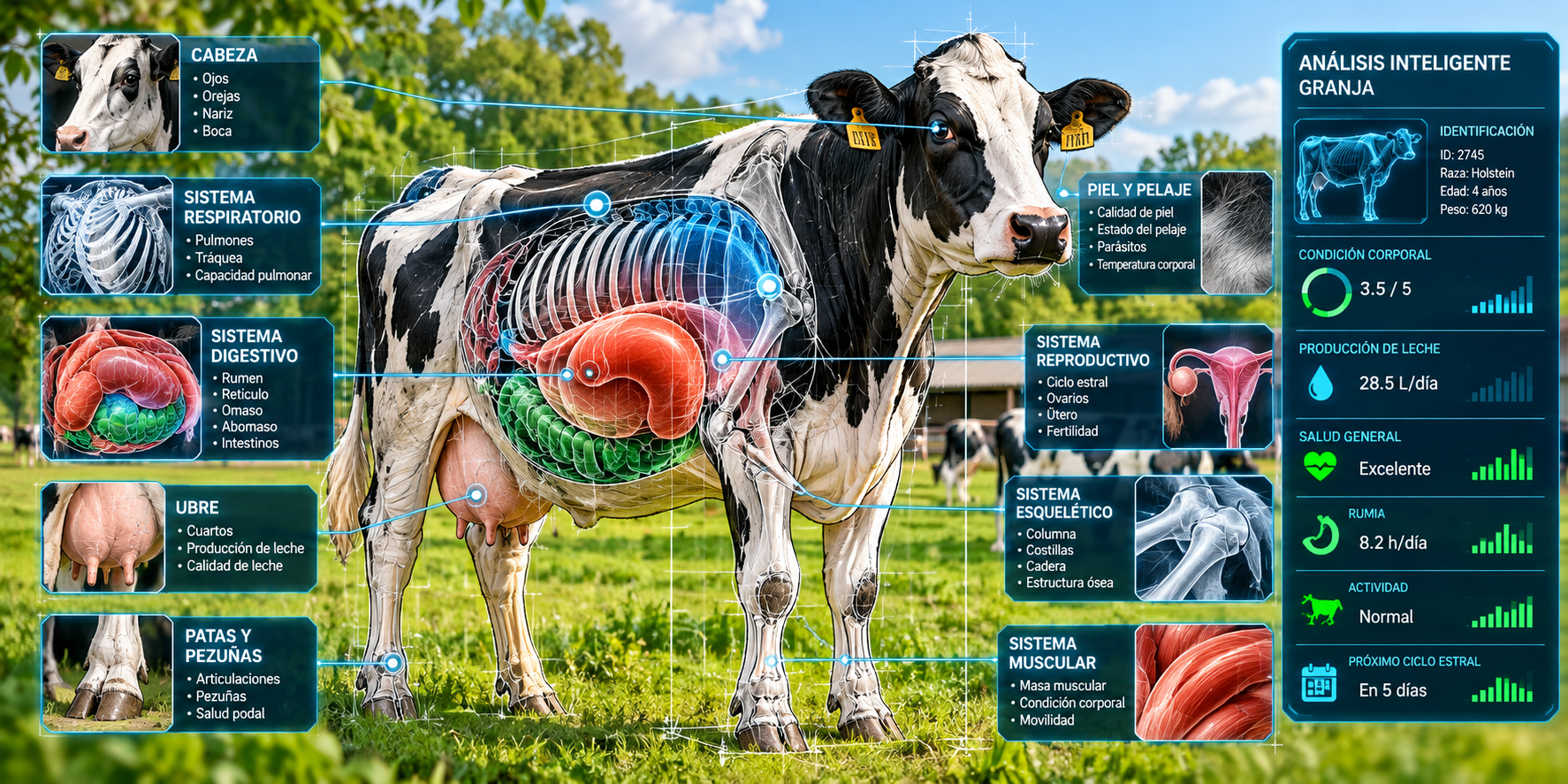
Agrotecnología · Inteligencia artificial · Ganadería
La granja autónoma toma forma: IA, drones y robots llegan al campo

Inteligencia artificial · Empresas · Opinión
BMW adelgaza su dirección con IA: ¿ha llegado la hora del gerente artificial supervisado?

Inteligencia física · Agricultura · Robótica industrial
Polybot enseña a un robot a cosechar tomates mirando cómo trabajan los humanos

Inteligencia física · Robótica · Aprendizaje autónomo