
Artificial Intelligence · China
A teenager with no coding experience created an AI app and made 2,600 dollars in three days
2026-09-05 · 7 min read
By Álvaro AbrilCEO de Geniales.co · Director de KingNews.online
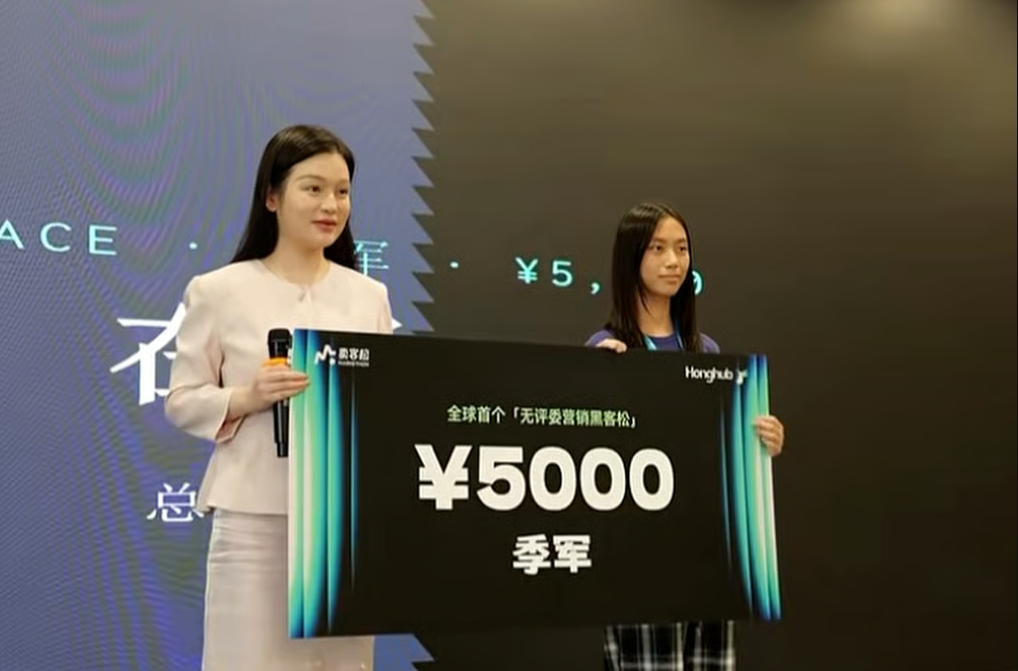
Zhu Shuhan, a 13-year-old student from Shanghai, sold 90 licenses for 'Zai Chang', an AI study companion that replaces the presence of parents. She earned 18,000 yuan in 72 hours and won third prize in a national competition in Hangzhou where there was no technical jury: whoever sold the most won.
Three Days, 90 Orders, and 18,000 Yuan
Zhu Shuhan is a second-year middle school student at a school in Shanghai. He has no programming background and only began using artificial intelligence tools last year. Between August 21 and 23, 2026, he participated in a national AI product commercialization competition held in Hangzhou, with more than fifty competitors.
The format of the contest was as revealing as the result: there was no technical jury. No one evaluated architecture, code quality, or the elegance of the solution. The ranking was determined by a single metric: how much revenue each application generated during the 72 hours of the event.
His product, called Zai Chang—roughly meaning 'present' or 'on-site'—received 90 orders and generated 18,000 yuan in revenue, around 2,600 dollars. With that result, he took third place and a cash prize of 5,000 yuan, close to 745 dollars.
What the Application Exactly Does
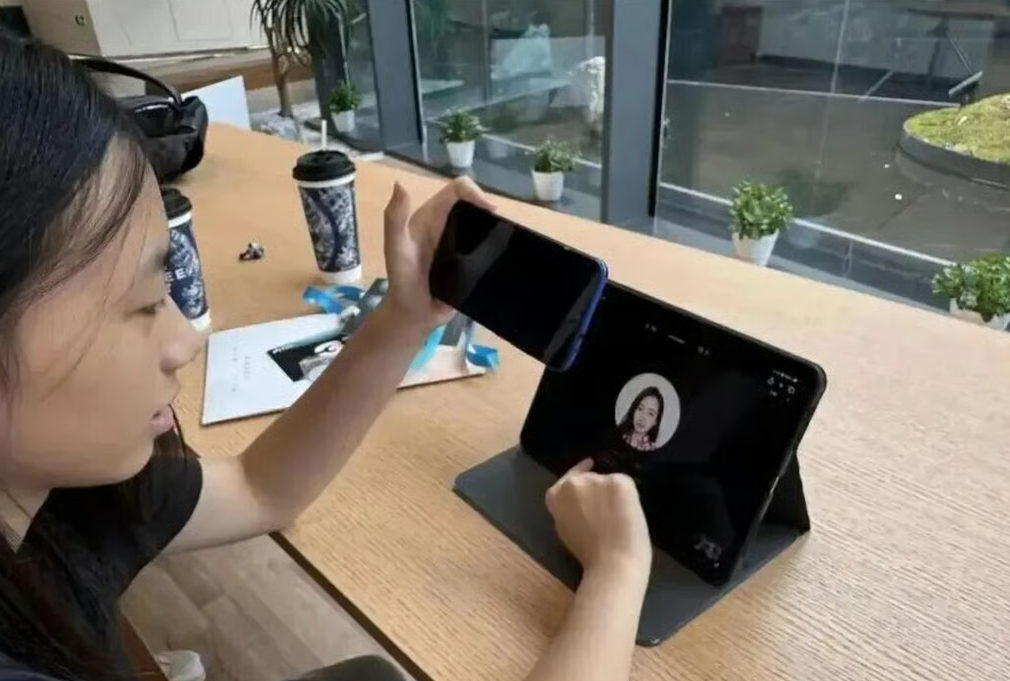
The father or mother uploads a photo of themselves to the app. From there, the system takes on the role of a 'virtual parent' who remains on screen accompanying the child while they do homework.
The device's camera monitors the scene. If it detects that the child picks up their phone or gets up from the chair, the on-screen parental figure issues a voice reminder. At the end of the session, the application generates a 'focus report' detailing the observed behavior.
The idea was born out of their own frustration. "My parents were so busy that they didn't have time to be with me while I studied. Many times I would get distracted and secretly use my phone while doing homework," they explained. "Many classmates have the same self-discipline problem. I wanted to create a digital clone of a parent."
The most interesting product decision: removing the tattletale feature
The initial design included a feature informally dubbed 'mom gets angry': an alert that notified parents when the child was repeatedly distracted. Shuhan removed it before launching.
"I don't like tattletales. I want my app to be kind and leave room for the child to improve," she explained. That decision—giving up a marketable feature based on an ethical criterion regarding the end user—is exactly the kind of product judgment that is not learned in a technical course.
It is also the reason the product sold. Parents did not buy a punitive surveillance system; they bought a supportive presence. The difference lies in the tone, and the tone was defined by a teenager who understood her user because she was her user.
The process: talking to the model in natural language
To build it, Shuhan simply described his idea to a large language model in his own words. The AI generated the code. When specific technical issues arose, he consulted assisted programming tools.
From design to core functionality, the entire process took him three to four days. His first user was his younger brother, a first-grade elementary school student. "After the app supervises him, he studies with more discipline," he commented.
"This experience made me realize that as long as you have a good idea, AI can make it a reality," he summarized. His plan now is to lower the price and reach a broader audience: "If a lot of people are willing to pay for this, I will continue developing it."
What this case truly demonstrates
It is worth reading the story without exaggeration. 2,600 dollars do not build a company, and 90 orders do not validate a market. But the relevant data point is not the figure: it is the time elapsed between having an idea and getting paid for it.
For forty years, that journey required learning a language, mastering an environment, and relying on someone who knew how to do it. Today, the bottleneck has shifted: the scarcity is no longer in writing code, but in identifying a real problem, articulating it with precision, and convincing someone to pay for the solution.
The Hangzhou competition states it plainly by eliminating the technical jury. In a world where implementation becomes radically cheaper, what is evaluated is demand. Execution has ceased to be the defensive moat.
| Dimensión | Modelo tradicional | Modelo asistido por IA |
|---|---|---|
| Barrera de entrada | Años de formación técnica | Saber describir bien el problema |
| Tiempo idea → prototipo | Semanas o meses | 3 a 4 días |
| Equipo mínimo | Desarrollador + diseñador | Una persona |
| Escasez real | Talento que sabe programar | Criterio de producto y distribución |
| Riesgo principal | Costo de construir | Construir algo que nadie quiere |
The warnings that must also be made
An application that activates the camera to monitor a minor raises serious questions regarding biometric data processing, image storage, and consent. In China, this territory is regulated by the Personal Information Protection Law and regulations concerning minors; in Europe, the GDPR would do so with considerably stricter requirements.
There is also the invisible technical debt. Code generated by a model works, but it rarely incorporates robust error handling, security auditing, or architecture designed to scale. Selling 90 licenses is one thing; supporting 90,000 users is something completely different.
None of this diminishes the case's merit. It contextualizes it: AI brutally shortened the distance to the first customer, not to a mature company. That second leg still demands real engineering.
A generation that starts by selling
The most remarkable aspect of the Hangzhou event is cultural. An entire country organized a competition where teenagers build products and monetize them in real time, and where the measure of success is whether someone is willing to pay.
This generation will not learn to program first and then become entrepreneurs. They will learn the other way around: they will identify everyday friction, resolve it using conversational tools, and discover engineering only when the product scales enough to break.
At KingNews.online, we closely follow this transition because it impacts all industries, including gaming and entertainment: when building costs so little, the competitive advantage shifts toward user understanding and the quality of distribution.
Enlaces
Get KingNews in your inbox
Tech and gaming digest, no noise. Unsubscribe anytime.
Want to send us a news story?
Tell us your story. Our editorial team reviews it and gets back to you.
Would you like to advertise with us?
Write to us and we'll send you ad options and audience data.
More stories
Comercio electrónico · Eventos · Colombia
Feria Effix 2026: Medellín se convierte en la capital del comercio electrónico
Robótica · Inteligencia artificial · Sistemas autónomos
La colmena blindada: robots terrestres que podrían comandar enjambres de drones
Agrotecnología · Inteligencia artificial · Ganadería
La granja autónoma toma forma: IA, drones y robots llegan al campo

Inteligencia artificial · Empresas · Opinión
BMW adelgaza su dirección con IA: ¿ha llegado la hora del gerente artificial supervisado?
Inteligencia física · Agricultura · Robótica industrial
Polybot enseña a un robot a cosechar tomates mirando cómo trabajan los humanos
Inteligencia física · Robótica · Aprendizaje autónomo