
Quantum computing · China
Hanyuan-2: China powers up the planet's first dual-core quantum computer with 200 qubits
2026-08-07 · 9 min read
By Álvaro AbrilDirector de KingNews.online · CEO de Geniales.co
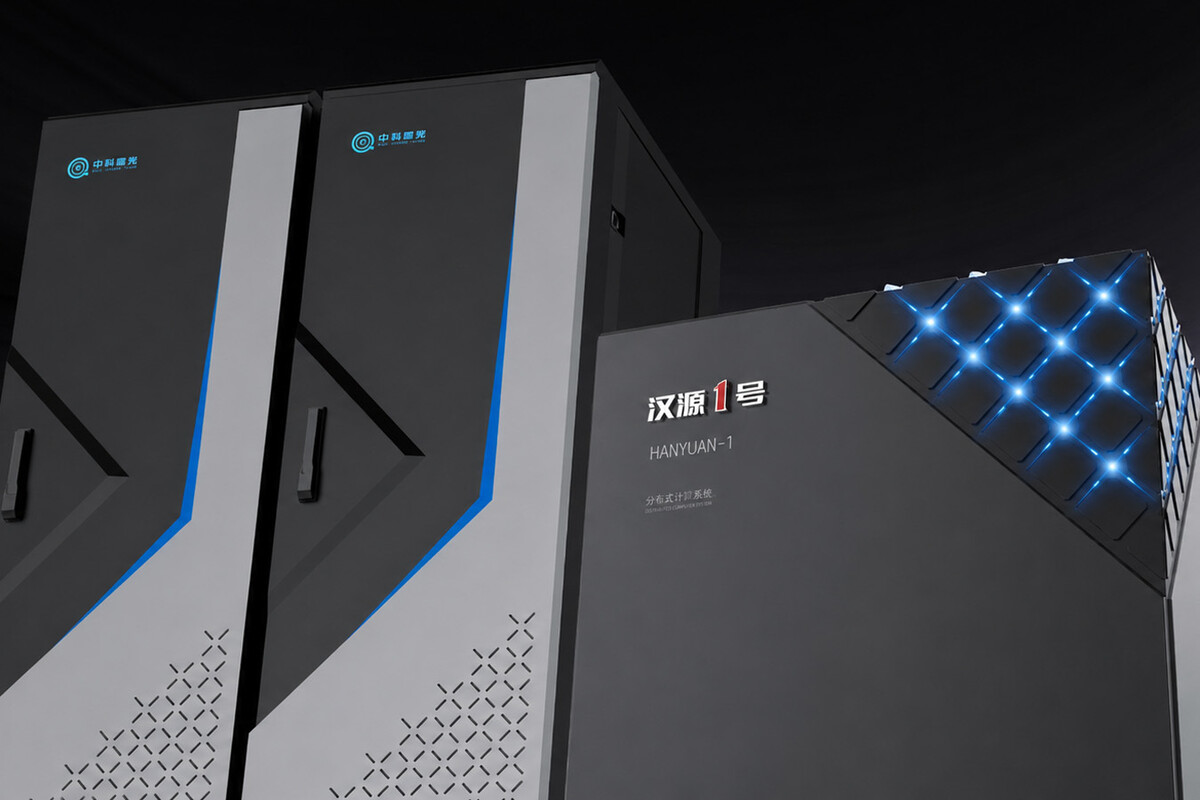
CAS Cold Atom Technology presented the Hanyuan-2 in Wuhan, the first neutral-atom quantum computer with a dual-core architecture: 100 rubidium-85 atoms and 100 rubidium-87 atoms for 200 qubits, without cryogenics and with less than 7 kilowatts of total power consumption.
What is a neutral atom qubit?
Before the figure, the concept. A quantum computer needs units of information—qubits—that can be in superposition and become entangled with each other. There are three dominant families for manufacturing them: superconducting circuits cooled to near absolute zero (the path taken by IBM, Google, and Microsoft), ion traps (IonQ, Quantinuum), and neutral atoms: individual atoms without electrical charge, trapped and arranged in a vacuum using optical tweezers—that is, focused laser beams.
The advantage of neutral atoms is twofold. First, each atom is identical to the others due to fundamental physics, whereas two superconducting circuits manufactured on the same wafer are never exactly the same. Second, they can be rearranged in space using the lasers themselves, allowing qubits that are not physical neighbors to be connected without any wiring. The price to pay is that operations are slower and optical control is devilishly precise.
The machine: two arrays, two isotopes, 200 qubits
The Hanyuan-2 is developed by CAS Cold Atom Technology, a company based in Wuhan, capital of Hubei province, linked to the Chinese Academy of Sciences ecosystem. Its difference from everything before does not lie in the round number, but in the system's topology: it integrates two independent and complete qubit arrays within the same machine.
One array holds 100 rubidium-85 atoms and the other 100 rubidium-87 atoms. They are two isotopes of the same element, with different level structures, which allows them to be addressed with different laser frequencies without the commands directed at one core disturbing the other. This detail—using two isotopes instead of duplicating the same one—is the engineering key that makes the dual core viable.
The two arrays can operate in parallel, and that is where the 200 qubits of raw capacity come into play. But the interesting mode is the other one: one array acts as the primary core and the other as the auxiliary core, dedicated to supporting logical qubits that are more stable and less sensitive to noise.
Logical qubits: why 200 does not mean 200
It is worth stating this clearly, because this is where headlines are most inflated. A physical qubit is extremely sensitive to noise and constantly makes errors. To perform useful computation, logical qubits are built: a single qubit of quantum information encoded with redundancy over several physical qubits, so that the system can detect and correct its own errors.
For years, that redundancy was the wall: so many physical qubits were needed for each logical qubit that error correction was practically unfeasible. Recent work by IBM and CAS Cold Atom itself has reduced this ratio enough for the scheme to stop being theoretical.
In other words: the 200 qubits of the Hanyuan-2 are not 200 logical qubits. They are 200 physical qubits organized in such a way that one part of the system can be dedicated to protecting the other. It is an architectural advancement, not a leap in raw power—and that is precisely why it matters more than it seems.
The data point no one is highlighting: 7 kilowatts and zero cryogenics
Here, in my reading, is the real news. A superconducting quantum computer lives inside a dilution refrigerator that keeps it at millikelvins, a few thousandths of a degree above absolute zero. This cryogenic environment occupies an entire room, requires helium-3 and helium-4, specialized maintenance, and a power consumption that turns every installation into a civil engineering project.
The Hanyuan-2 needs none of that. It cools using a compact laser system, and the equipment's total power consumption remains below 7 kilowatts: less than several industrial ovens, less than a dense GPU rack. This allows it to be installed in virtually any space without extraordinary technical requirements.
On the outside, both the Hanyuan-1 and the Hanyuan-2 look much more like a conventional server rack than the sculpture of golden tubes we associate with quantum computing. That aesthetic banality is the message: quantum computing is starting to fit into a normal data center.
How it compares with the rest of the board
China has been accumulating milestones in this area for years, and not all of them have come to light. Those we know of are enough to position it as a real power, not as a pursuer.
| Sistema | Origen | Tecnología | Cúbits | Rasgo distintivo |
|---|---|---|---|---|
| Hanyuan-2 | CAS Cold Atom Technology (Wuhan, China) | Átomos neutros (rubidio-85 y 87) | 200 | Primer doble núcleo del mundo; sin criogenia; <7 kW |
| Origin Wukong 180 | Origin Quantum (Hefei, China) | Superconductor | 180 | Cuarta generación autóctona, abierta a usuarios de todo el mundo |
| Zuchongzhi | USTC (China) | Superconductor | 66+ | Demostración de ventaja cuántica |
| Jiuzhang | USTC (China) | Fotónico | — | Ventaja cuántica en muestreo de bosones |
| Majorana 2 | Microsoft (EE. UU.) | Topológico | — | Fiabilidad mil veces mayor; vida media de 20 segundos |
The dependence that was about to be broken
There is an industrial subtext to this announcement. In recent years, Chinese companies and research centers were forced to buy abroad—mainly in Japan—the high-density microwave connectivity modules required to control superconducting qubits. That dependence is about to end, if it has not already.
The Hanyuan-2 bypasses the problem through another route: neutral atoms are controlled using optics, not microwave harnesses. Diversifying the technological bet is also a way to shield against export controls. The tug-of-war between the United States and China is not only being played out in semiconductors and artificial intelligence; it is played out in which supply chain you can cut off from the other.
My reading: three reservations and a practical consequence
First reservation: the metric that matters is missing. There are no public figures for two-qubit gate fidelity or coherence time comparable to those published by IBM or Quantinuum. Without that, 200 qubits is a catalog number, not a performance metric.
Second reservation: neutral atoms remain in the experimental phase. The family has a known issue—the loss of atoms from the trap during execution—and it has not been explained how this machine handles it over long cycles.
Third reservation: independent validation is lacking. As with any announcement in this industry, including Microsoft's, the verdict will be delivered by external replication, not the press room.
And the practical consequence, the one that actually forces me to move things: if quantum computing no longer needs cryogenics and consumes 7 kilowatts, the deployment curve accelerates and classical asymmetric cryptography—RSA, elliptic curves—enters the risk zone sooner than expected. Anyone operating systems with data that must remain secret ten years from now should already be planning their transition to post-quantum cryptography. In the systems we build at Geniales.co, including Jack7.co, that migration has stopped being a distant point on the roadmap and has become a task with a deadline.
Enlaces
Get KingNews in your inbox
Tech and gaming digest, no noise. Unsubscribe anytime.
Want to send us a news story?
Tell us your story. Our editorial team reviews it and gets back to you.
Would you like to advertise with us?
Write to us and we'll send you ad options and audience data.
More stories

Materiales · Industria textil
Del bambú a una camiseta suave: la transformación que no siempre nos cuentan
Aviación · Robótica
Japan Airlines pone ojos autónomos sobre sus aviones

Gaming · Guía de compra
Cómo elegir el monitor táctil correcto para una máquina de casino

Pagos Digitales · Biometría
Alipay+ GlassPay: pagar con la mirada desde unas gafas inteligentes

Inteligencia Artificial · Empresas
La ventaja no está en el agente: por qué las empresas que ganan con IA no son las que compran más modelos

Gaming · Proveedores