
Artificial Intelligence · Enterprise
Three ex-OpenAI employees build enterprise AI and already aim for a US$3.25 billion valuation
2026-09-07 · 9 min read
By Álvaro AbrilCEO de Geniales.co · Director de KingNews.online
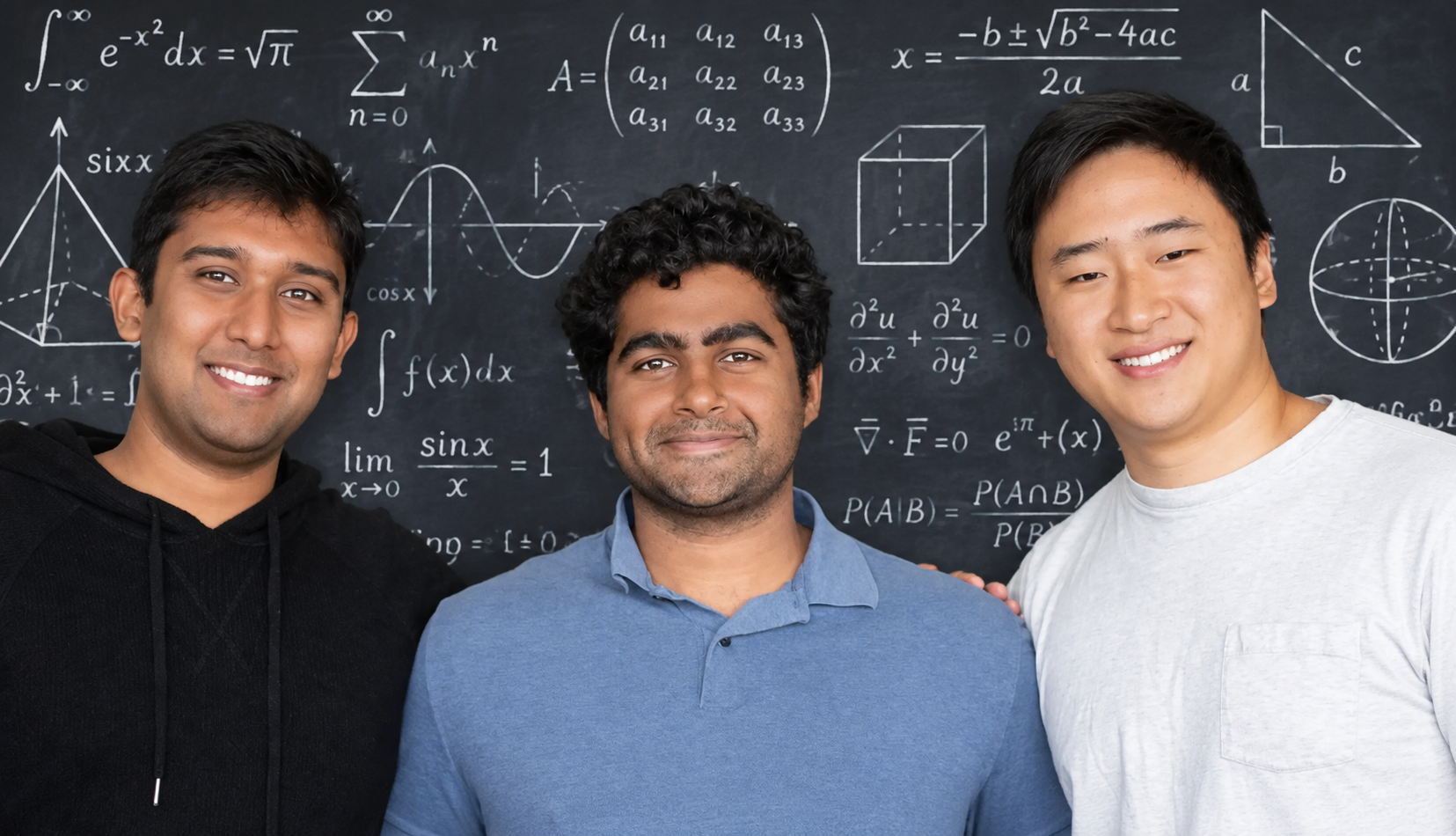
Yash Patil, Rhythm Garg, and Linden Li left OpenAI to found Applied Compute. Fifteen months later, they are negotiating a US$350 million funding round with a provocative thesis: the enterprise future will not be a single supermodel, but open models trained on each company's data.
The Opportunity That Emerged with DeepSeek
In January 2025, DeepSeek R1 did more than just shake up performance rankings: it proved that an open-weights model could approach the frontier without matching the massive spending of American labs. For three young OpenAI researchers, that signal was not a threat, but the beginning of a new venture.
Yash Patil, Rhythm Garg, and Linden Li shared a friendship dating back to Stanford and professional experience within OpenAI. During a ski trip to Lake Tahoe, they discussed R1's impact and reached a conclusion different from the dominant one at their company: the value of enterprise AI did not have to be concentrated in a single universal model managed by a third party.
Five months later, they left OpenAI and founded Applied Compute. Their bet was to build the infrastructure required to adapt open models—such as Alibaba's Qwen or Moonshot AI's Kimi—to specific tasks using each organization's proprietary data.
From a Seed Round to a Multibillion-Dollar Valuation
Applied Compute raised US$20 million in June 2025. Now, with barely fifteen months of operation, it is negotiating a new US$350 million round that could value the company at US$3.25 billion. The figure was still subject to the closing of the transaction when it was reported by Forbes.
Investor Elad Gil is leading the deal, with existing investors such as Lux Capital and Kleiner Perkins also participating. According to Patil, a significant portion of the new capital will go toward buying chips and expanding a compute infrastructure designed to train, serve, and improve models for enterprise clients.
Speed matters: the valuation would nearly double the one reached by the company four months earlier. But the figure should not be confused with revenue or profits. It is a private market expectation regarding how much the infrastructure layer connecting open models, corporate data, and agents in production could be worth.
| Indicador | Dato reportado | Qué significa |
|---|---|---|
| Capital buscado | US$350 millones | Más chips y capacidad de nube |
| Valoración proyectada | US$3.250 millones | Sujeta al cierre de la ronda |
| Edad de la empresa | 15 meses | Crecimiento extraordinariamente rápido |
| Ahorro declarado | Hasta 10 veces | Según Applied Compute, frente a modelos de frontera en ciertos casos |
Specific Intelligence: A model for every business
Applied Compute's thesis stems from an uncomfortable reality for closed-model providers: a bank, a pharmaceutical company, or a logistics platform will not hand over all their internal knowledge to train another company's supermodel. Their operational data is part of their competitive advantage.
That is why the startup proposes "specific intelligence." Its engineers work with the client, fine-tune an open model using reinforcement learning, deploy it on Applied Compute's cloud, and continue improving it with real operational signals. The client obtains a specialized agent without building a research and infrastructure team from scratch.
AC2, the platform recently introduced by the company, turns that handcrafted work into a product. It allows teams to use Applied Compute's internal training and deployment tools at a lower cost than the bespoke consulting service.
DoorDash, Nvidia, and Harvey Are Already Testing the Thesis
DoorDash worked with Applied Compute on a model capable of helping restaurants accurately generate menus when onboarding onto the platform. It is a narrow, repetitive, and measurable task: exactly the type of problem where a specialized model can outperform a general-purpose solution in cost and consistency.
Nvidia turned to the startup for post-training Nemotron, its family of open-weight models aimed at agents. Harvey, which specializes in legal AI, built an agent with Applied Compute to review large volumes of contracts and litigation documents during due diligence processes.
Harvey's case summarizes the commercial value proposition. According to its head of applied research, the agent was ready in less than two months; doing it in-house would have required post-training researchers, supercomputing specialists, compute capacity, and a timeline that could have stretched from months to years.
Cost is redrawing the AI map
The most advanced closed models retain an advantage in frontier tasks, but that power does not always justify its price. According to figures cited by Forbes, some proprietary models can cost nearly forty times more per million tokens than open alternatives; Applied Compute maintains that, in specific cases, its solution can be up to ten times more economical.
The enterprise response will likely not be choosing a single side. Patil anticipates hybrid architectures: frontier models for tasks of maximum complexity and specialized open models for frequent, sensitive, or high-volume processes. The selection will be made based on accuracy, latency, privacy, and cost, not brand loyalty.
That shift transfers part of the power from whoever pre-trains the model to whoever controls adaptation, evaluation, and production infrastructure. Applied Compute wants to occupy precisely that layer.
Three Founders Under 25
The three co-founders reached this round before turning 26. Patil, 23, grew up in Austin in a family with ties to medicine and hardware engineering. During the pandemic, he and his brother developed Helping Hands, a platform to connect volunteers with people who needed food or medicine.
Rhythm Garg, 24, built his background competing in hackathons; Linden Li, 25, spent part of his teenage years in Shanghai and found his technological calling while watching a demonstration of autonomous vehicles. At Stanford they became friends and later joined OpenAI through successive recommendations.
Inside OpenAI, Patil worked on post-training infrastructure and on what would later become Codex; Garg participated in reasoning models and Li in machine learning systems. That combination explains why Applied Compute is not selling a flashy app, but rather a complex technical stack that few companies can build on their own.
The reading from KingNews.online
The story does not prove that open models have defeated OpenAI or Anthropic. It proves something more interesting: artificial intelligence is beginning to fragment into layers. Frontier labs create general capability; companies like Applied Compute turn it into specific operational knowledge; and organizations decide which part to buy, adapt, or control.
There is also risk. A US$3.25 billion valuation for a fifteen-month-old company prices in near-perfect execution, while the cost of compute, the quality of open models, and the response from major providers change every quarter. Infrastructure that is exceptional today could quickly become a standard cloud feature.
From Geniales.co, we see a practical conclusion: the advantage does not lie in plugging in an API and calling it transformation. It lies in designing processes, governing data, evaluating results, and choosing the right model for each workload. Applied Compute is worth billions—at least on paper—because it is trying to industrialize precisely that work.
Enlaces
Get KingNews in your inbox
Tech and gaming digest, no noise. Unsubscribe anytime.
Want to send us a news story?
Tell us your story. Our editorial team reviews it and gets back to you.
Would you like to advertise with us?
Write to us and we'll send you ad options and audience data.
More stories

Comercio electrónico · Eventos · Colombia
Feria Effix 2026: Medellín se convierte en la capital del comercio electrónico
Robótica · Inteligencia artificial · Sistemas autónomos
La colmena blindada: robots terrestres que podrían comandar enjambres de drones
Agrotecnología · Inteligencia artificial · Ganadería
La granja autónoma toma forma: IA, drones y robots llegan al campo

Inteligencia artificial · Empresas · Opinión
BMW adelgaza su dirección con IA: ¿ha llegado la hora del gerente artificial supervisado?
Inteligencia física · Agricultura · Robótica industrial
Polybot enseña a un robot a cosechar tomates mirando cómo trabajan los humanos
Inteligencia física · Robótica · Aprendizaje autónomo