
Review · Quantum Computing
Majorana 2: I tested the figures of Microsoft's new quantum chip and this is what really changes
2026-08-06 · 10 min read
By Álvaro AbrilDirector de KingNews.online · CEO de Geniales.co
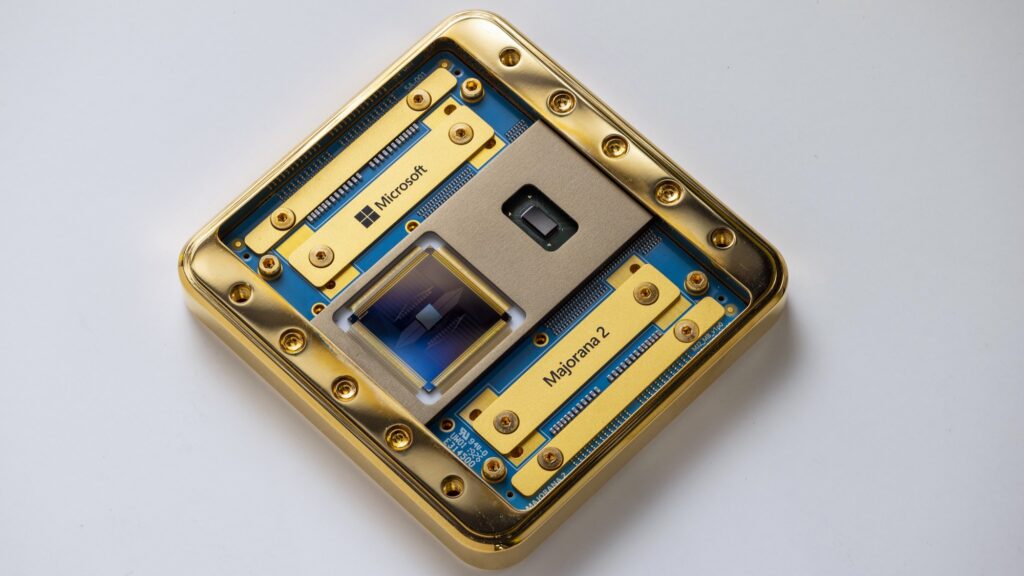
Microsoft presented Majorana 2, its second-generation topological quantum chip: qubits a thousand times more reliable, an average lifetime of 20 seconds, one-microsecond operations, and a roadmap shortened to 2029. Review by Álvaro Abril, Director of KingNews.online.
What is a topological qubit?
Before the review, the definition. A conventional qubit stores its quantum information in a specific point—the charge or flux of a superconducting circuit—which is why any vibration, magnetic field, or cosmic ray erases it in microseconds. A topological qubit does the opposite: it encodes information in a global property of the material, distributed between the ends of a nanowire, so that a local perturbation cannot destroy it. The protection does not come from more shielding; it comes from the geometry of the state.
That is the bet that Microsoft has been making for almost twenty years, while Google and IBM scaled conventional qubits through volume and error correction. It is the difference between building a thicker bridge and building a bridge whose shape makes it harder to break.
What Microsoft Announced
Majorana 2 is the second generation of Microsoft's topological quantum chip, presented just a year after Majorana 1. The company reports qubits that are a thousand times more reliable than the previous generation, with a half-life of 20 seconds and cases reaching up to a minute, one-microsecond operations, and a qubit size of one-hundredth of a millimeter.
With those numbers, Microsoft brings forward its goal of a scalable and commercially valuable quantum computer to 2029: half the timeline it had previously announced. Furthermore, the chip was developed with the support of Microsoft Discovery, its agentic AI platform for research and development, which the company has just released in general availability alongside a free local app that runs with a GitHub Copilot account.
"Where are we compared to last year? We are a thousand times better," summarized Chetan Nayak, a technical fellow at Microsoft.
| Métrica | Majorana 2 | Referencia habitual |
|---|---|---|
| Vida media del qubit | 20 segundos (hasta 1 minuto) | microsegundos en qubits superconductores convencionales |
| Mejora de fiabilidad | 1.000× sobre Majorana 1 | — |
| Velocidad de operación | 1 microsegundo | decenas de nanosegundos a microsegundos |
| Tamaño del qubit | 1/100 de milímetro | cientos de micras en arquitecturas de transmón |
| Superconductor | plomo | aluminio (Majorana 1) |
| Meta de máquina escalable | 2029 | 2039 según la hoja de ruta previa |
The detail that matters to me: they swapped aluminum for lead
The headlines focused on the 'a thousand times better.' I was interested in another line: Majorana 1 used aluminum as a superconductor and Majorana 2 uses lead, the same material used to shield radiology rooms. In a quantum computer, lead helps protect qubits from the cosmic disturbances that destabilize them, and according to Nayak, that change produced 'huge' improvements in the device's quality, though it took years to resolve the trade-offs it brought with it.
Anyone who has worked in hardware knows how to read that phrase. A leap of three orders of magnitude rarely comes from a new architectural idea; it comes from the materials stack, the manufacturing process, the exact impurity in the crystal structure. Zulfi Alam, corporate vice president of quantum at Microsoft, describes it as finding the recipe: too much impurity disrupts the crystal, too little doesn't hold the atoms in place. Quantum computing remains, above all, a manufacturing problem.
Agentic AI is no longer a laboratory ornament
There is a second announcement within the announcement, and I suspect it is the one Microsoft really wanted to sell: Microsoft Discovery, the AI agent platform that the quantum team itself used to manage workflows, automate measurements, optimize manufacturing, and identify failures that no one had seen.
The detail that makes it credible is not the speech, it is the asset: nearly two decades of experimental data in different formats, distributed among physicists, mechanical engineers, and process engineers in several countries. "By running AI agents with this data they are able to create correlations that we, as humans, cannot see, because no individual has so much vision across so much data," said Alam. That is not a chatbot: it is a correlation engine over a historical archive that no single person could ever fully read.
It is exactly the pattern we see on a smaller scale when we apply AI to operational data in our own projects at Geniales.co: the value does not appear when the AI writes beautiful text, it appears when it is handed the data silo that no one wanted to organize in ten years.
My critical reading: three reservations and one conviction
First reservation: reliability is not scale. Twenty seconds of coherence is an extraordinary figure, but a commercially useful quantum computer needs thousands of logical qubits operating together, and that leap cannot be inferred from the lifetime of a single one. The history of this industry is full of spectacular metrics that did not compound.
Second reservation: external validation. The scientific community fiercely debated the evidence of Majorana 1 in 2025. Majorana 2 arrives with a paper and much better numbers, but the real verdict will be delivered by independent replication, not the press room.
Third reservation: 2029 is a corporate promise, and all of the sector's quantum roadmaps have shifted at least once. Cutting the timeline in half is as remarkable as it is risky.
And the conviction: if Microsoft is right, the topological qubit wins on efficiency, not brute power. A qubit of one-hundredth of a millimeter that remains coherent for twenty seconds needs far less error correction than a transmon, and that means smaller, cheaper, and easier-to-cool machines. The long road, if it works, turns out to be the short one.
And what does this change for me, who writes software?
In the short term, nothing in your stack. Nobody is going to migrate a backend to qubits in 2029. In the medium term, there are two concrete consequences.
The first is cryptographic. A commercially valuable quantum machine accelerates the clock of the migration to post-quantum cryptography. Any system that currently signs or encrypts with RSA or elliptic curves and expects to remain viable in the next decade should already have a transition plan. In regulated and transactional gaming systems—where RNG integrity and the traceability of each prize are the product—that conversation should start now, not in 2029.
The second is optimization. The first use cases with real return will be materials simulation, chemistry, and large combinatorial problems. It sounds far off until you bring it down to earth: managing the risk of a networked progressive jackpot, like the one we developed at jack7.co for live casino tables, is an optimization problem under uncertainty. It doesn't need a quantum computer today, but it belongs to the family of problems that this technology tackles well.
My practical recommendation is the same as always: don't chase the hardware, chase the problem formulation. The free local Microsoft Discovery app, which runs with a GitHub Copilot account, is a reasonable gateway to experiment with assisted research workflows without committing a budget.
Verdict
Majorana 2 is the most solid quantum announcement of the year, and it is so for an unglamorous reason: the improvement comes from materials and process, not from a slide. The shift from aluminum to lead, coherence measured in seconds, and the internal and verifiable use of agentic AI to manage twenty years of data are signs of a maturing program, not one chasing headlines.
That being said, I maintain my professional skepticism: scale remains unproven and 2029 is a marketing date until a third party replicates the results. If forced to give a rating, it is an 8.5 out of 10: excellent engineering, commercial promise yet to be proven.
We will follow this program closely from KingNews.online. If I have learned anything in years of building systems that cannot fail, it is that technological revolutions almost never arrive on the day they are announced, but they always arrive from where no one was looking: in this case, through the materials stack.
Enlaces
Get KingNews in your inbox
Tech and gaming digest, no noise. Unsubscribe anytime.
Want to send us a news story?
Tell us your story. Our editorial team reviews it and gets back to you.
Would you like to advertise with us?
Write to us and we'll send you ad options and audience data.
More stories
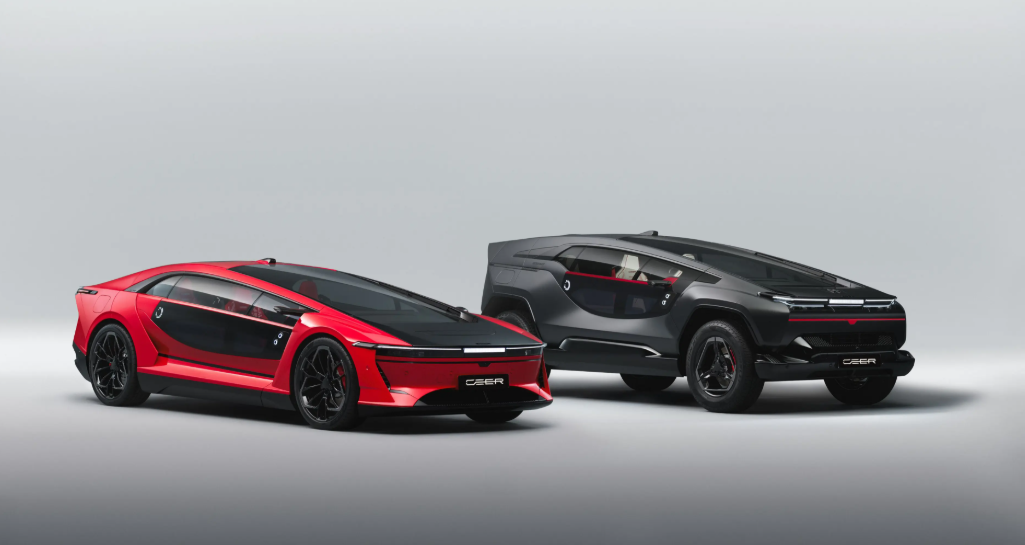
Movilidad eléctrica · Arabia Saudita
Ceer EXOBOT: Arabia Saudita presenta su primer auto eléctrico y quiere construir una potencia automotriz
Inteligencia Artificial · Lenguas · India
¿Puede la IA preservar las lenguas de India? El mapa cultural de sus 121 idiomas
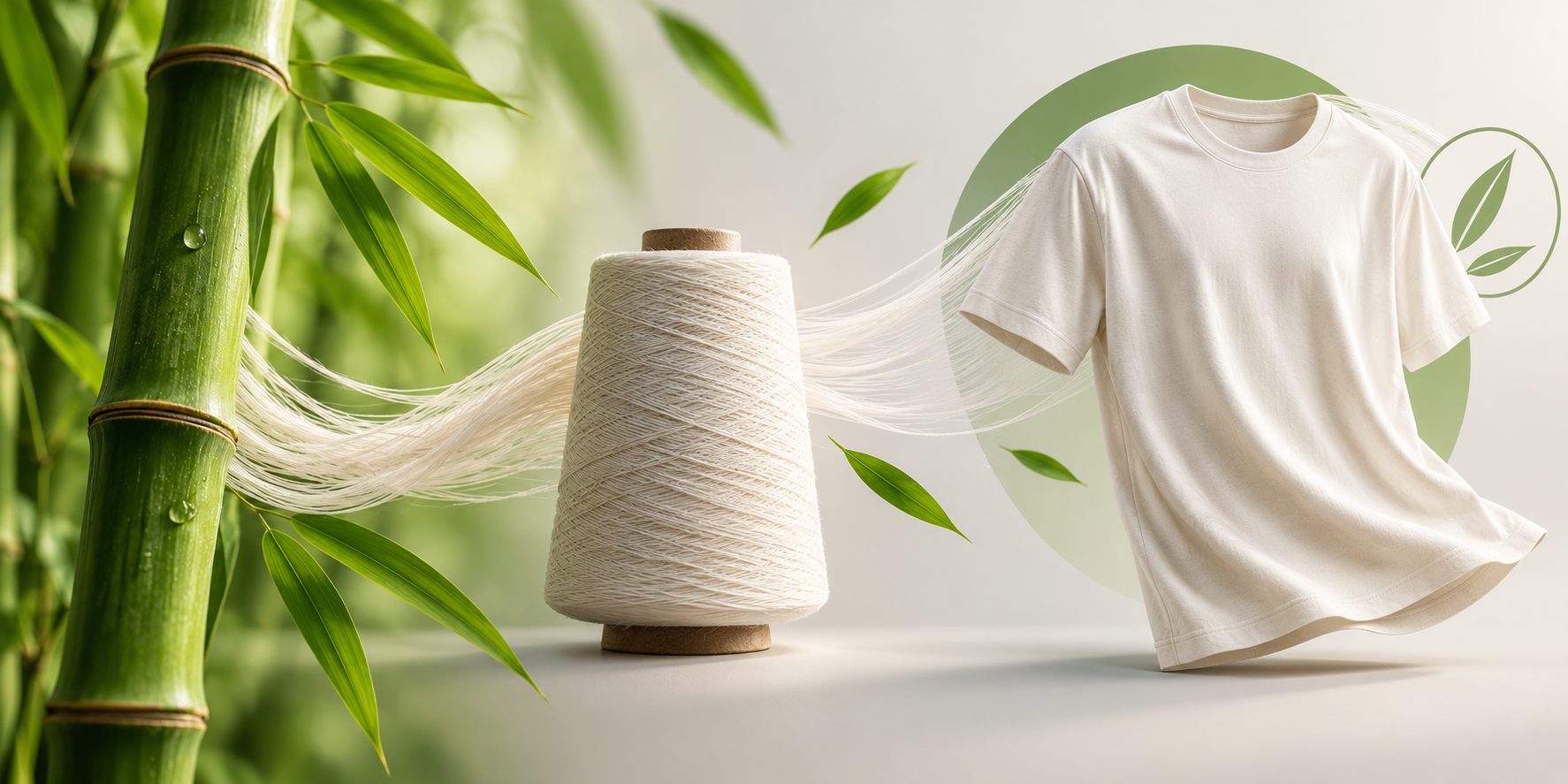
Materiales · Industria textil
Del bambú a una camiseta suave: la transformación que no siempre nos cuentan
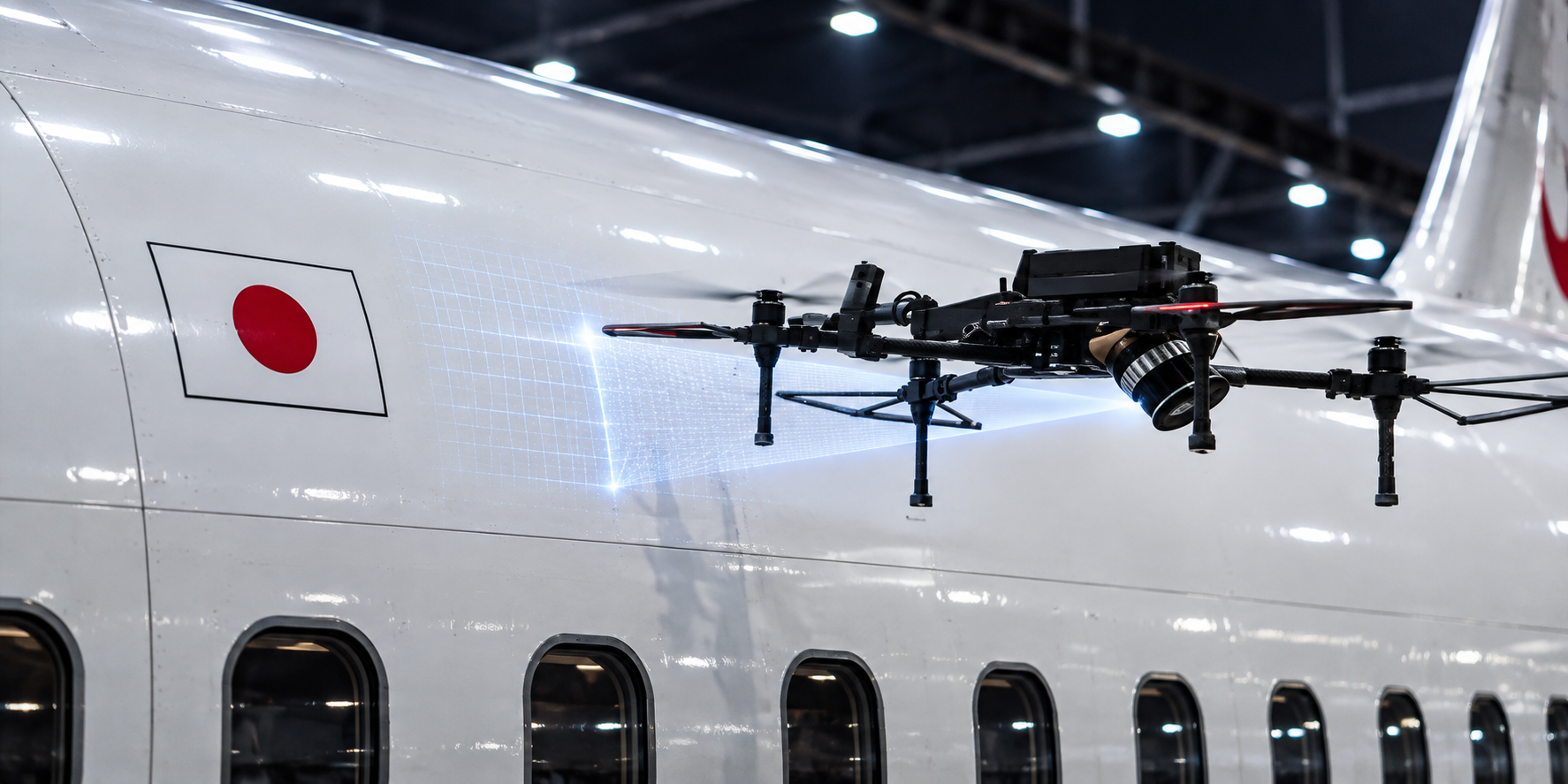
Aviación · Robótica
Japan Airlines pone ojos autónomos sobre sus aviones

Gaming · Guía de compra
Cómo elegir el monitor táctil correcto para una máquina de casino

Pagos Digitales · Biometría