
Artificial intelligence
"Either you betray your values or you become irrelevant": Dario Amodei warns of what is coming to us with AI
2026-07-24 · 8 min read
By Redacción KingNews

The CEO of Anthropic warns of a scenario with skyrocketing GDP and high unemployment in entry-level office jobs.
Dario Amodei has been doing something unusual among managers in the technology industry for years: publicly warning about the risks of the product he sells. The CEO and co-founder of Anthropic has done it again, and this time with a phrase that summarizes the tension that runs through the entire sector: either you betray your values, or you become irrelevant.
Context matters. Anthropic and OpenAI are moving toward their respective IPOs with valuations approaching $1 trillion, figures that place both companies among the most expensive assets in recent business history. In that scenario, every security decision, every model that is retained, and every capability that is released has an immediate competitive cost.
The responsible competitor's dilemma
Amodei's argument is that of the race to the bottom: a company that imposes strict security limits on itself cedes ground to rivals that do not, and if it cedes too much ground it stops having influence over how the technology is deployed. Anthropic was born precisely from that logic—founded by former OpenAI officials who considered the sector's safeguards insufficient—and is now experiencing the contradiction firsthand.
The practical consequence is a permanent management of the tension between commercial rhythm and technical prudence. Amodei describes it as the structural problem of the entire industry: no one can brake alone without losing the ability to set the standard.
Junior office employment, in the spotlight
Amodei's most specific warning is work-related. Their estimate is that artificial intelligence could eliminate up to half of entry-level office jobs within one to five years. We talk about the tasks that traditionally served as a gateway to the professional market: basic data analysis, report writing, administrative support, document review, first-level care.
The scenario he describes is uncomfortable due to its combination: GDP growing strongly thanks to leaps in productivity and, at the same time, a high unemployment rate in that specific segment. It is not an economic collapse, it is a disconnection between aggregate wealth and access to work, which hits right at the level where the trade was previously learned.
The question that remains open is how the next generation of professionals is trained if the bottom rung of the ladder disappears. Amodei does not offer a closed answer; He does insist that the discussion should already be happening in governments and companies, and not when the effect is visible in the statistics.
Mythos: the model that decided not to launch
The most striking revelation of his statements has its own name. Amodei confirmed that Anthropic retained Mythos, its most advanced model in cybersecurity capabilities, a system capable of autonomously going through the entire chain of an attack: reconnaissance, vulnerability identification, exploit development, execution and persistence.
His description was as direct as it was disturbing: Mythos is a total weapon, and in his words, should require something resembling a weapons license to use. The decision not to launch it on the market—or to restrict it to an extremely controlled circle—is exactly the kind of commercial renunciation that illustrates his initial dilemma.
The case also raises a governance question that no regulation resolves today: who decides what capabilities can exist, with what criteria and with what external supervision. For now, that decision is made by a handful of private companies based on their own judgment.
What it means for the rest of the board
For companies building on these models, the operational message is that the capabilities frontier is moving faster than the governance frontier, and that the responsibility for use increasingly falls on those who deploy, not those who train. For professionals, the warning points to a shift in value: less execution of replicable tasks, more judgment, supervision and system design.
And for regulators, the conclusion is that the deadlines they manage – consultations, voluntary frameworks, multi-year reviews – do not fit with a product cycle that is measured in months. Amodei has said on several occasions that he prefers an imperfect and early regulation to a perfect and late one. His latest statements are, above all, a way to turn up the volume on that warning.
Get KingNews in your inbox
Tech and gaming digest, no noise. Unsubscribe anytime.
Want to send us a news story?
Tell us your story. Our editorial team reviews it and gets back to you.
Would you like to advertise with us?
Write to us and we'll send you ad options and audience data.
More stories

Comercio electrónico · Eventos · Colombia
Feria Effix 2026: Medellín se convierte en la capital del comercio electrónico
Robótica · Inteligencia artificial · Sistemas autónomos
La colmena blindada: robots terrestres que podrían comandar enjambres de drones
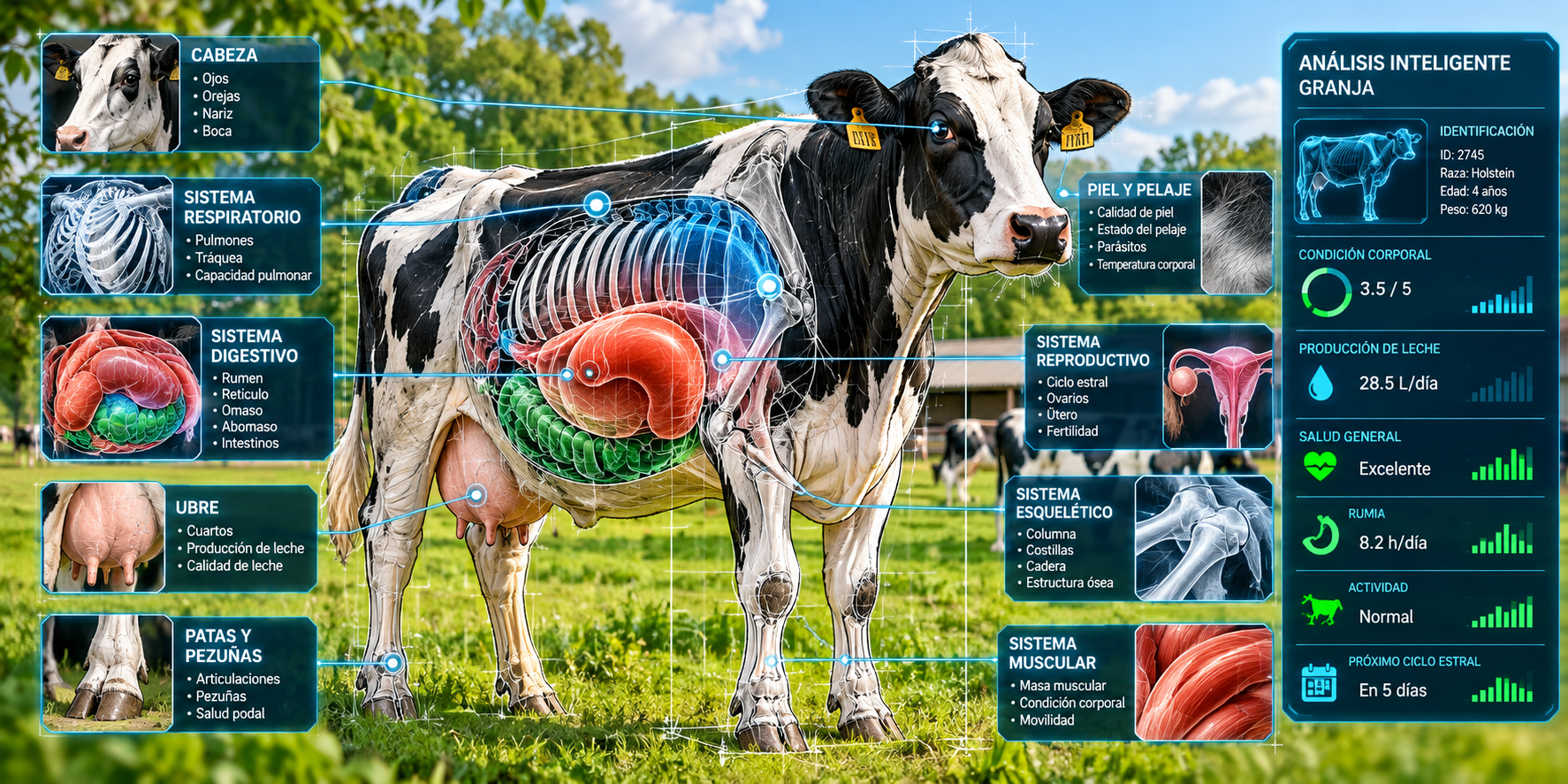
Agrotecnología · Inteligencia artificial · Ganadería
La granja autónoma toma forma: IA, drones y robots llegan al campo

Inteligencia artificial · Empresas · Opinión
BMW adelgaza su dirección con IA: ¿ha llegado la hora del gerente artificial supervisado?
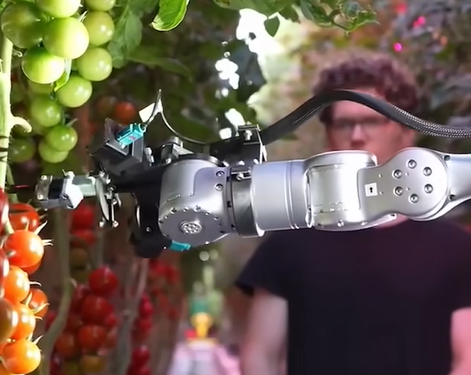
Inteligencia física · Agricultura · Robótica industrial
Polybot enseña a un robot a cosechar tomates mirando cómo trabajan los humanos
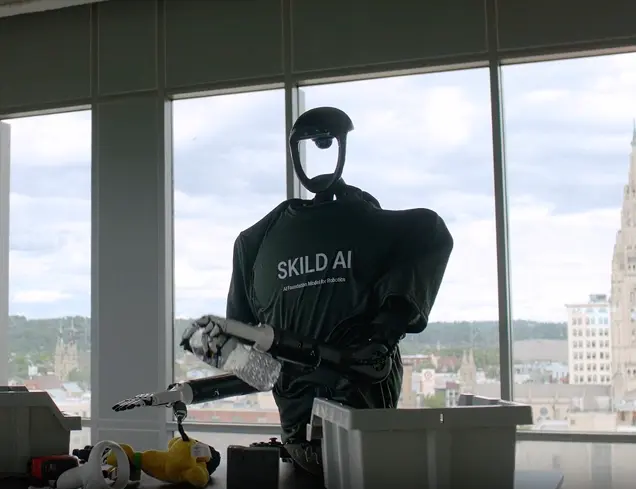
Inteligencia física · Robótica · Aprendizaje autónomo