
Technology · AI in the gaming industry
AI is already inside the casino: tables that see, cameras that recognize, and the risk that all games will look the same
2026-08-23 · 9 min read
By Redacción KingNews

Aristocrat, Konami, and GLI share how they actually use artificial intelligence today: code, prototyping, computer vision at tables, and facial recognition. And they warn of the three risks no one wants to look at: data leaks, uncopyrighted content, and the end of original ideas.
Artificial intelligence is no longer just a buzzword. In the gaming industry, it has been appearing in corporate presentations for years, but only in recent months have use cases that truly move the needle begun to emerge. And they are far less spectacular—and far more profitable—than what marketing promises.
The honest summary is this: AI is not replacing the game designer or the croupier. It is accelerating the work that teams were already doing, and it is placing eyes where before there was only human memory.
“AI is not our strategy; it is an accelerator of our strategy”
The quote comes from Bob Serr, Chief Technology Officer of Aristocrat Leisure, and summarizes the stance of the world's largest slot machine manufacturer. In his recent investor session, Serr explained that the company focuses its use of AI on three fronts: boosting creativity, shortening time to market, and extracting better insights from its own data.
The journey began in late 2022, when ChatGPT became public and Aristocrat launched a phase of experimentation with generative AI. In 2024, it deployed tools such as Google Gemini, GitHub, and Copilot across its development teams. In 2025, it moved from “using tools” to redesigning complete workflows with autonomous agents.
The figure that best illustrates this comes from Product Madness, its social platform: between 2021 and 2025, it went from around 8,000 to 14,000 creative assets per year—a 75% increase—with fewer artists and designers on staff.
80% of code is no longer written by a human
Ian Hughes, Chief Revenue Officer of GLI and CEO of GLI Australia—the laboratory that certifies a large share of the world's machines—points to the less glamorous and more real side of the matter: the code.
“Some studies have found that up to 80% or 90% of a developer's codebase can now be written by AI,” Hughes explains. With an important nuance: “That doesn't mean designing games. The design, architecture, and creative elements are still done by people. But low-level, mechanical code can now be delegated.”
The second major use is prototyping. Previously, validating an idea cost months or years of development with no guarantee that it would reach the market. Today, a functional mockup is built and taken to the expo. “We can put things in front of the customer, take them to a trade show, and validate the idea before assigning those precious development hours to it,” notes Joe Mayer, Systems Sales & Operations Manager at Konami Australia.
On top of all that, agentic AI has arrived. Hughes describes it with a domestic analogy: “It's like the general contractor who says 'I have this job to do' and has agents working for him, each very specific. You end up with a better solution because each agent performs a single task.”
Smart Tables: The Most Profound Change on the Gaming Floor
This is where AI becomes tangible. Smart tables are already deployed or being rolled out across all Macau casinos, at Solaire and Newport World Resorts in Manila, at Marina Bay Sands in Singapore, at SkyCity in Auckland, and in Australia at The Star Sydney and Crown Melbourne.
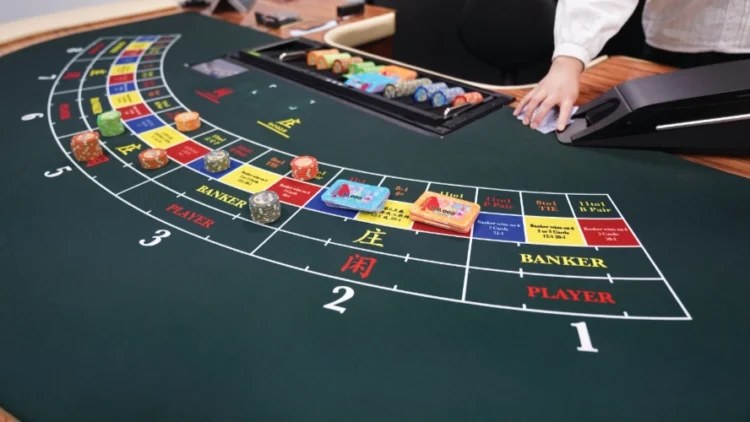
The principle is simple to explain and difficult to execute: they combine RFID in the chips with computer vision to track the movement of every bet, attribute it to a specific player, and ensure that exactly what is owed is paid out or collected.
The benefits go far beyond eliminating dealer error: fraud detection, identification of advantage play, and—the one that matters most to the operator—a true assessment of the player. Players are no longer rated based on what the supervisor remembers they wagered, but on what they actually bet, hand by hand.
The two major manufacturers in Asia-Pacific have taken different paths. Walker Digital Table Systems uses AI primarily for data analytics through applications. Angel Group relies on a “hybrid” system: two cameras on each side of the table that automatically capture the position, quantity, and type of chips in each stack, record player actions, and verify that the number of RFID chips in each betting spot matches what the camera sees.
The rollout began with baccarat, but blackjack and roulette are already arriving. The ultimate goal is total coverage: every bet on every table, recorded.
Facial recognition: mandatory in Australia, in legal twilight in Macau
The great irony is that facial recognition did not enter Macau through concessionaires, but through the government: in 2017 it mandated the installation of facial KYC systems at all ATMs, starting with those in casinos, to control capital outflow from UnionPay cards issued in mainland China.
Two years later, when operators began adopting it, the regulator ruled that it should not be used to identify high-value players. A senior concessionaire executive sums it up bluntly: “The regulatory environment in which we operate undeniably limits the application of AI computer vision. Privacy regulations on facial recognition are not clearly defined.”
In Australia, the exact opposite occurs: the technology is not tolerated, it is required. Crown Resorts and Star Entertainment use it to detect self-excluded individuals and bar them from entering, and the New South Wales government is considering making it mandatory in every gaming room of pubs and clubs—where the vast majority of the country's 185,000 machines are located—to support the state exclusion register.
Konami is working on a friendlier variant: SYNK Vision, a “facial authentication” system that recognizes members as soon as they sit down and registers new players as guests. The technical key lies at the edge: “With the optimized algorithms we have now, we can process everything at the edge, so the face embedding never leaves the camera,” explains Mayer. Better security and lower cost, all in one move.

The three risks the industry cannot ignore
The first is data security. Mayer puts it bluntly: “For all the operational value you can get from AI, a single major data breach can destroy that value overnight.” Konami limits its use of AI to proof-of-concept trials and approved internal platforms: “Nothing generated by AI ever gets anywhere near production.”
The second is intellectual property, and it is more uncomfortable than it seems. “IP protection does not exist for AI-generated content,” warns Hughes. “If you use agentic AI to create a character and a human didn't create it, there is no copyright on that.” Even worse: since generative AI learns from existing patterns, the design might inadvertently incorporate pieces of someone else's characters. “It could have used some element from The Flintstones without you even realizing it.”
The third is the quietest: the death of original content. “AI works by looking at what already exists and recombining it,” Hughes insists. “If there are no game designers with fresh ideas and we just regurgitate, everything that launches will be a deviation or the fourth iteration of something that already exists. That would be sad.”
Álvaro Abril's vision: the missing AI is the jackpot's, not the camera's
So much for the international report. Now, the perspective from the Latin American trenches, which is where we have spent years installing real systems in real gaming venues.
The entire industry conversation regarding AI in land-based casinos points inward: toward the manufacturer writing code faster, toward the operator monitoring the tables better, toward regulatory compliance. It is defensive and efficiency-focused AI. Nobody is talking about the only AI that players would genuinely perceive: the one governing the jackpot.
A progressive jackpot system is, technically, the only casino component that communicates with all machines at once and with all players simultaneously. It tracks the betting pace of the entire room, in real time, minute by minute. It is the best data antenna on the gaming floor, and we have been using it as a simple calculator that merely adds up a percentage.
At Jack7.co, we have been putting this reasoning into practice for years, and the conclusion is that the progressive jackpot is the perfect layer for AI because it satisfies three conditions that no other casino technology combines: it spans the entire gaming floor, it is perceived as a benefit by the player, and it is auditable down to the cent.
Four ideas that would actually change the gaming floor
The first: the jackpot that breathes with the floor. A mystery jackpot whose hit range is adjusted by a predictive model based on actual occupancy, the day, the weather, or city events, always within a certified and published mathematical range. The theoretical return is not altered; the excitement is distributed where and when the floor needs it. The floor ceases to have a flat 3:00 p.m. curve.
The second: anomaly detection within the jackpot network itself. A progressive system sees the wagering pattern of each connected machine. A model that learns the normal footprint of each game detects physical tampering, collusion, or malfunctions before any camera does, because it does not interpret images: it interprets money in motion.
The third: responsible personalization without cameras. Facial recognition is not needed to know that a patron has been seated for four hours. The jackpot system already knows this through the flow of credits. That same signal, handled with sound judgment, serves responsible gaming—a suggested break, an offered limit—far better than a photo in a database, and without the privacy alarms that have Macau paralyzed.
The fourth: audited generative narrative. Here it is indeed wise to heed GLI's warning regarding copyright. Our approach is not for AI to invent characters, but to modulate the staging of an already determined prize: the timing of the announcement, the language, the music, the payout ceremony. The certified mathematics remain untouched; what the machine learns is how the prize is told, not how much it pays.
That is the fundamental difference. The industry is using AI to cut costs. We believe that AI in a land-based casino is only justified when the player experiences it as something good that happened to them, not as a camera watching them.
The non-negotiable point: AI does not touch the math
It is worth being explicit, because in this sector good ideas die in the regulator's room. No AI model must alter the RTP, the prize probability, or the certified mechanics of a game. Period.
AI operates at the presentation, operational, and analytics layer. The randomness engine remains a certified and auditable random number generator. Everything an intelligent system decides must be recorded in an immutable log that a laboratory like GLI or BMM can review line by line.
With that boundary respected, the progressive jackpot becomes the most natural AI infrastructure a land-based casino has. It is already installed, already connected to everything, and already has the player's trust. It just needed to be thought of that way.
| Capa | Dónde actúa la IA | Qué NO puede tocar |
|---|---|---|
| Matemática del juego | Nada | RTP, RNG, tabla de pagos certificada |
| Acumulado progresivo | Ritmo, rango de caída dentro de límites certificados | Porcentaje de contribución declarado |
| Operación de sala | Predicción de ocupación, mantenimiento, anomalías | Decisiones automáticas sin log auditable |
| Experiencia y narrativa | Ceremonia del premio, idioma, música | Identidad del jugador sin consentimiento |
| Cumplimiento | Señales de juego responsable por patrón de crédito | Perfilado biométrico no regulado |
The original report closes with a sensible conclusion: the greatest value of AI lies not in replacing people's work, but in amplifying it. We subscribe to every word, and add a coda from the Latin American operator's perspective.
Amplifying people's work is fine. Amplifying the player experience is what fills a casino floor. And in a land-based casino, the only technology that speaks to all players at once, every day, is the jackpot. That is where artificial intelligence needs to reach.
Enlaces
Get KingNews in your inbox
Tech and gaming digest, no noise. Unsubscribe anytime.
Want to send us a news story?
Tell us your story. Our editorial team reviews it and gets back to you.
Would you like to advertise with us?
Write to us and we'll send you ad options and audience data.
More stories
Robótica · Inteligencia artificial · Sistemas autónomos
La colmena blindada: robots terrestres que podrían comandar enjambres de drones
Agrotecnología · Inteligencia artificial · Ganadería
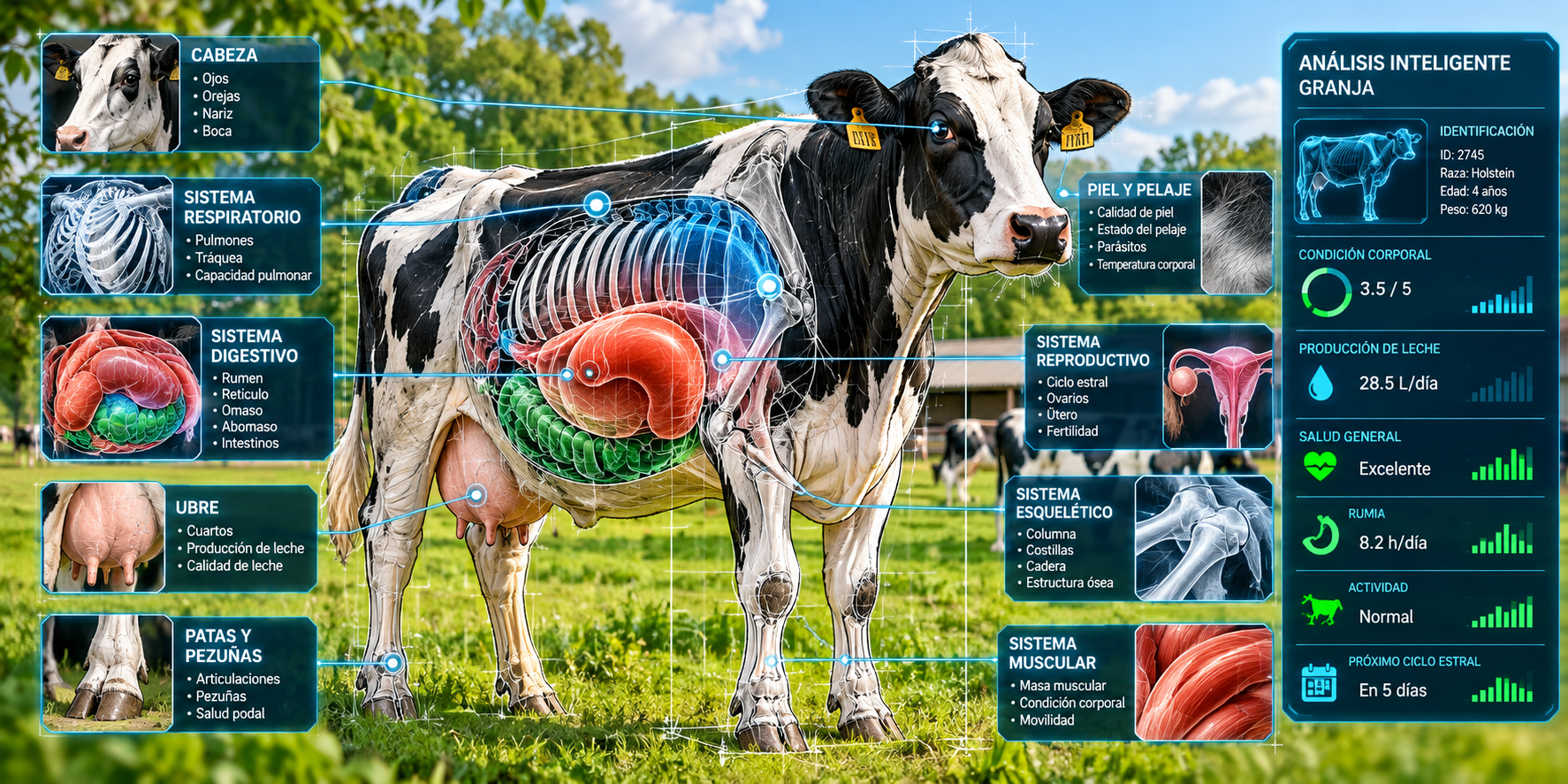
La granja autónoma toma forma: IA, drones y robots llegan al campo

Inteligencia artificial · Empresas · Opinión
BMW adelgaza su dirección con IA: ¿ha llegado la hora del gerente artificial supervisado?
Inteligencia física · Agricultura · Robótica industrial
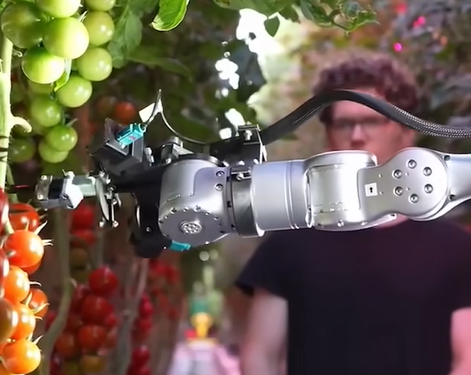
Polybot enseña a un robot a cosechar tomates mirando cómo trabajan los humanos
Inteligencia física · Robótica · Aprendizaje autónomo
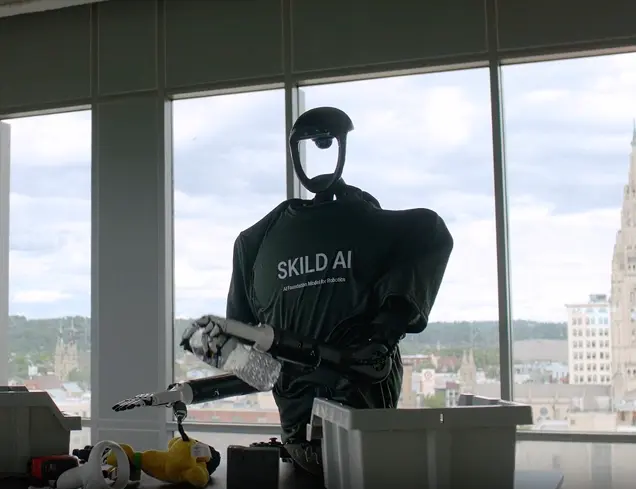
El robot de Skild AI que aprendió a jugar fútbol contra sí mismo durante 140 años simulados

Movilidad eléctrica · Arabia Saudita